The New Era of Smart Farming in India
Farming in India is shifting rapidly. With unpredictable monsoons, dipping water tables, and skyrocketing input costs, traditional flood irrigation is no longer viable.
While drip and overhead sprinklers have been the standard upgrades for years, a new technology is quietly taking over Indian fields: Rain Pipe Irrigation.
If you are evaluating your options or looking for a trusted plastic pipe dealer in Indore to upgrade your setup, here is a breakdown of why Indian farmers are making the switch, and how Vishal Pipe is leading this agricultural evolution.
What is a Rain Pipe Irrigation System?
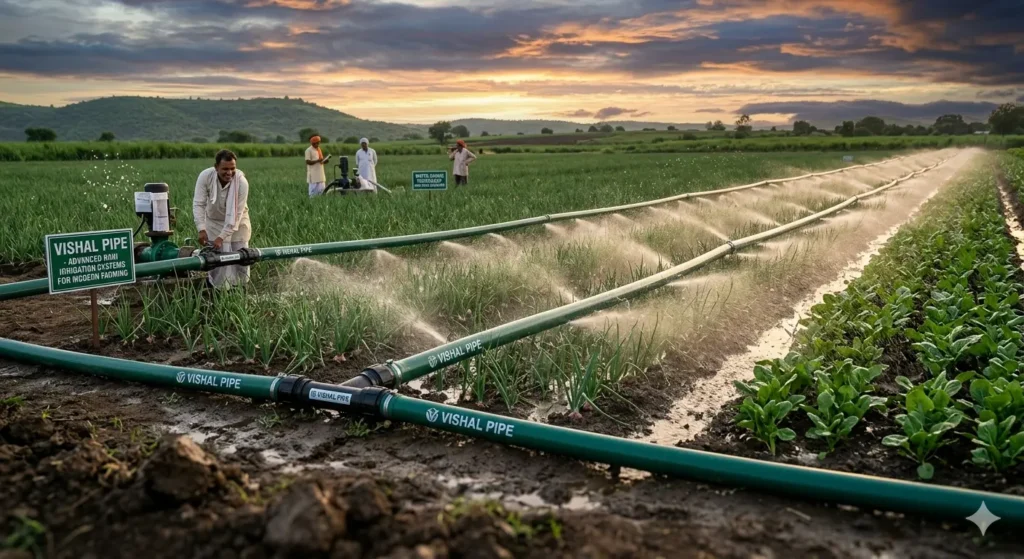
A rain pipe is a flexible, multi-layered HDPE (High-Density Polyethylene) pipe with ultra-fine, laser-punched holes. When water passes through it under moderate pressure, it creates a uniform, gentle micro-spray that perfectly mimics natural rainfall.
Unlike traditional overhead sprinklers that require high water pressure and heavy metallic stands, rain pipes lie flat on the ground, making them incredibly lightweight and easy to manage.
Why Indian Farmers are Upgrading to Rain Pipes
1. Massive Water Savings (Up to 50%)
Traditional flood irrigation wastes water through deep soil seepage and evaporation. Rain pipes distribute water as a fine mist directly over the crop canopy and root zone. This reduces water consumption by 40% to 50% compared to flooding, making it an absolute lifesaver in water-scarce regions.
2. Low Operating Pressure = Lower Electricity Bills
Conventional sprinkler systems need heavy-duty, high-horsepower pumps to force water through large nozzles. Rain pipes operate efficiently at much lower pressure (typically around $1.0 \text{ to } 1.5 \text{ kg/cm}^2$).
- Lower pressure means your existing motor pump consumes less electricity or diesel.
- It works flawlessly even in fields with low water discharge.
3. Drastic Reduction in Labor and Setup Costs
Moving heavy metal or rigid plastic pipes across a muddy field is backbreaking, labor-intensive work. Rain pipes are incredibly flexible and lightweight:
- One farmer can easily roll up, move, and reinstall an entire acre’s system in minutes.
- It requires zero specialized tools or technical labor to install.
4. Better Yields and Soil Health
Heavy flood watering often compacts the soil, choking the roots, while high-impact sprinklers can damage delicate flowers and wash away nutrients. Rain pipes deliver a gentle, soft spray. This maintains the perfect soil-air balance (porosity), prevents topsoil erosion, and ensures uniform growth across the entire plot.
Rain Pipes vs. Traditional Sprinklers: A Quick Comparison
| Feature | Rain Pipe Irrigation | Traditional Sprinkler System |
| Water Droplet Size | Ultra-fine nano mist (mimics gentle rain) | Large, heavy droplets |
| Required Pressure | Low ($1.0 – 1.5 \text{ kg/cm}^2$) | High ($2.5 – 4.0 \text{ kg/cm}^2$) |
| Labor for Moving | Very low (flexible, roll-and-go) | High (heavy rigid sections) |
| Crop Suitability | Leafy greens, vegetables, pulses, onions | Grain crops, sturdy orchards |
| Soil Erosion Risk | Nil | Moderate to High |
Finding the Right Partner for Your Farm
Choosing the right system comes down to material quality. Cheap, non-branded pipes degrade quickly under the harsh Indian sun, clogging up or bursting under pressure within a single season.
If you are searching for a reliable sprinkler system dealer in Indore or want to explore high-grade agricultural solutions, looking for trusted manufacturing standards is essential. Vishal Pipe provides UV-stabilized, high-pressure-tolerant polymer and HDPE solutions designed specifically to withstand tough Indian weather conditions.
Instead of dealing with frequent cracks or uneven spraying, investing in durable engineering ensures your system lasts for years without constant maintenance.