The Right Pipe Can Save You Years of Trouble
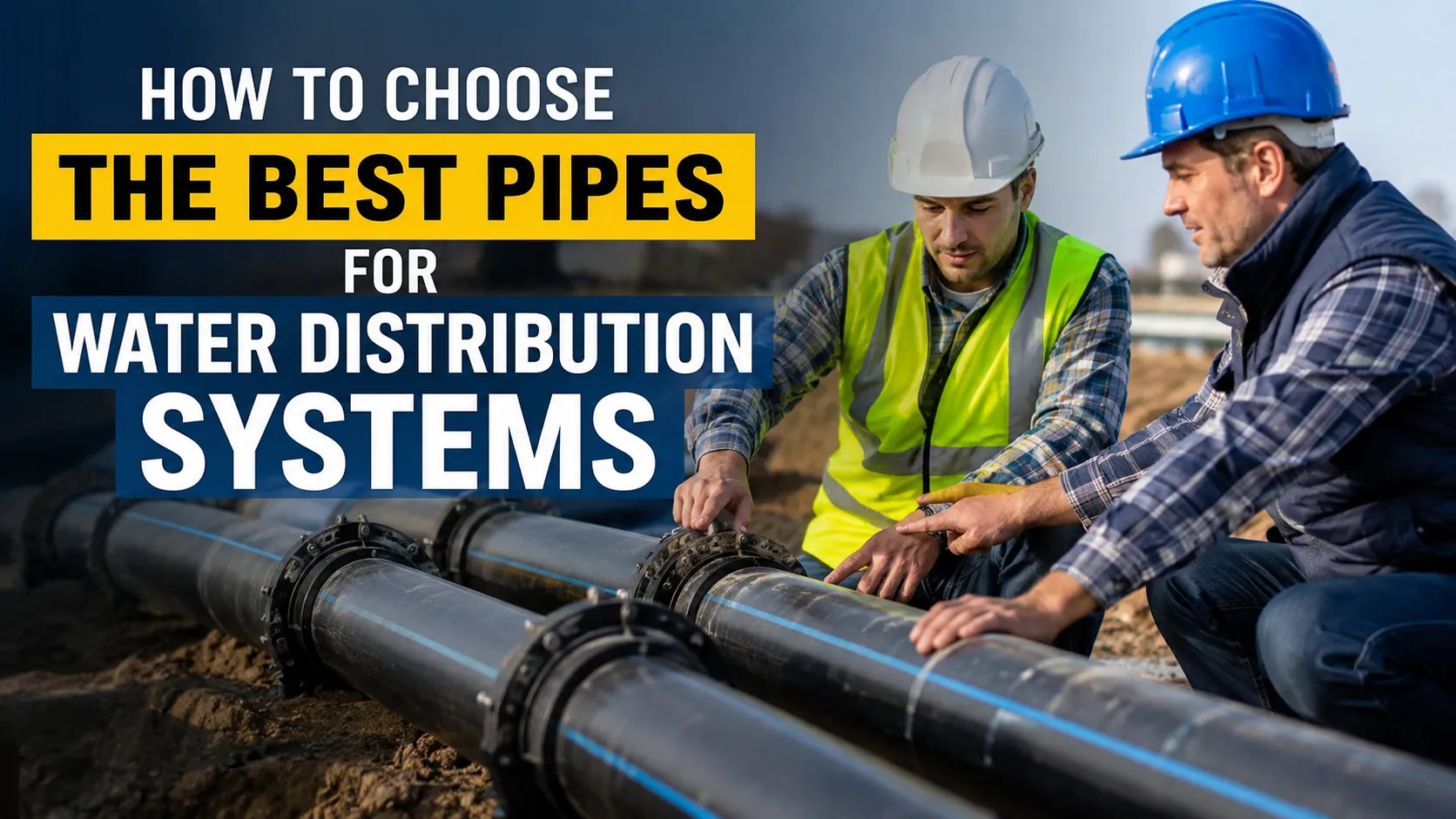
Water Distribution Systems may look simple from the outside, but the pipe you choose can decide how efficiently water moves, how often repairs are needed, and how much money you spend over time. A farmer planning irrigation, a contractor working on a large project, or a builder developing a new property needs pipes that match the pressure, soil, water quality, distance, and application.
Imagine two farms using the same water source. One uses pipes selected according to pressure and flow requirements, while the other chooses pipes mainly because they are cheaper. After a few seasons, the second farm starts facing leakage, pressure loss, damaged joints, and frequent replacement costs. The initial saving quickly turns into a bigger expense.
That is why choosing the right pipe is not simply about buying plastic pipes. It is about selecting a reliable solution for your specific application.
Whether you are a farmer, pipe dealer, irrigation contractor, builder, infrastructure department, or construction company, this guide will help you understand the major factors that matter when selecting pipes for modern water distribution projects.
Why Pipe Selection Matters in Water Distribution Systems
A water distribution network has one basic job: move water from the source to the point of use safely and efficiently. However, different projects have very different requirements.
A farm irrigation network may need flexible and lightweight pipes that can handle pressure changes. A residential project may require durable pipes for long-term water supply. A large infrastructure project may focus on hydraulic performance, service life, installation requirements, and overall project cost.
Choosing the wrong material or pipe size can result in poor water flow, pressure problems, leakage, and unnecessary maintenance.
For example, installing a pipe that is too small can restrict flow. Using a pipe with inadequate pressure capacity can increase the risk of failure. A poor-quality joint can also become a weak point even when the pipe itself is strong.
This is why experienced contractors generally consider the complete application before selecting a product from an HDPE Pipe Manufacturer in Indore or PVC Pipe Manufacturer in Indore.
HDPE vs PVC: Which Pipe Is Better?
Two common choices for many water distribution applications are HDPE and PVC. Both have useful properties, but they are not identical.
| Factor | HDPE Pipes | PVC Pipes |
|---|---|---|
| Flexibility | High | Lower |
| Corrosion resistance | Excellent | Excellent |
| Weight | Lightweight | Lightweight |
| Jointing | Heat fusion or mechanical methods | Solvent cement/mechanical methods depending on system |
| Underground applications | Very suitable | Suitable |
| Resistance to impact | Very good | Good |
| Installation around curves | Easier | Requires more fittings |
| Typical applications | Irrigation, water supply, distribution | Water supply, irrigation, plumbing |
HDPE is often considered when flexibility, impact resistance, and long continuous runs are important. PVC can be attractive where rigid pipe installation, cost considerations, and established joining methods fit the project.
A reliable HDPE Pipe Supplier in Indore can help contractors identify the appropriate pipe specification based on the project requirements rather than simply choosing the cheapest option.
For projects that need PVC, working with a dependable PVC Pipe Supplier in Indore can make it easier to select the correct diameter, pressure class, and accessories.
The better choice is therefore not always “HDPE” or “PVC.” The right answer depends on where the pipe will be installed and what it needs to handle.
7 Factors to Consider Before Choosing Pipes
1. Understand the Water Application
Start by identifying how the water will be used.
Is it drinking water? Farm irrigation? Sprinkler irrigation? Industrial use? Construction? Groundwater distribution? A garden network?
The application determines the material, pressure requirements, diameter, fittings, and installation method.
For agricultural projects, an Irrigation Pipe Manufacturer in Indore can be a useful source of guidance when selecting pipes for field distribution, pumping systems, or irrigation networks.
For sprinkler-based applications, it is equally important to consider pipe compatibility with the sprinkler system, operating pressure, and required flow.
2. Check Required Water Pressure
Pressure is one of the most important factors in pipe selection.
A pipe must be capable of safely handling the operating pressure of the system. The pressure can vary depending on pump capacity, elevation changes, pipe length, valves, fittings, and water demand.
Do not select a pipe only by looking at its outside diameter.
Ask about its pressure rating and whether that rating suits your actual working conditions.
A professional Sprinkler Pipe Manufacturer in Indore can help irrigation users understand the relationship between pipe size, pressure, and sprinkler performance.
3. Select the Correct Pipe Diameter
Bigger is not automatically better.
A very small pipe can restrict flow and increase pressure losses. An unnecessarily large pipe can increase material and installation costs.
The correct diameter should be selected according to:
- Required flow rate
- Pipe length
- Available pressure
- Pump capacity
- Elevation difference
- Number of outlets
- Number of bends and fittings
- Type of irrigation equipment
For a large farm, for example, the mainline may require a different diameter from the laterals supplying individual sections.
This approach helps farmers and contractors avoid buying pipes based only on guesswork.
4. Consider Soil and Installation Conditions
Where will the pipe be installed?
A pipe placed underground may experience soil pressure, movement, moisture, stones, and occasional impact from machinery. Above-ground pipes can experience sunlight, temperature changes, physical movement, and accidental damage.
HDPE is often useful where flexibility is important. PVC may be suitable for rigid installations when the system is properly designed and supported.
If your project requires specialized plastic piping, consulting a Plastic Pipe Manufacturer in Indore can help you compare available solutions for the installation environment.
5. Look at Water Quality
Water quality can influence the long-term performance of a distribution network.
Some water sources may contain minerals, chemicals, sediments, or other substances that can affect certain materials or fittings.
Plastic pipes are generally valued in water applications because they do not rust like conventional metallic pipes. However, the complete system still needs to be designed according to the water characteristics and intended use.
Before purchasing, discuss your water source and application with the supplier.
6. Evaluate Installation and Jointing
A pipe network is only as reliable as its weakest connection.
Poorly made joints can lead to leakage, pressure loss, contamination, and maintenance problems. The joining method should therefore match the pipe material and project requirements.
HDPE systems may use heat fusion or suitable mechanical connections. PVC systems can use appropriate solvent-welded or mechanical joining methods depending on the product and application.
Installation should always follow the manufacturer’s recommendations.
7. Think About Long-Term Cost
The cheapest pipe is not necessarily the most economical pipe.
Consider the total cost:
Purchase Cost → Transport → Installation → Fittings → Maintenance → Repairs → Replacement
A slightly higher initial investment may be justified if it delivers better durability, fewer failures, and lower maintenance requirements.
This is particularly important for government projects, large agricultural networks, commercial developments, and infrastructure work where repair can disrupt operations.
Choosing the Right Pipe for Different Users
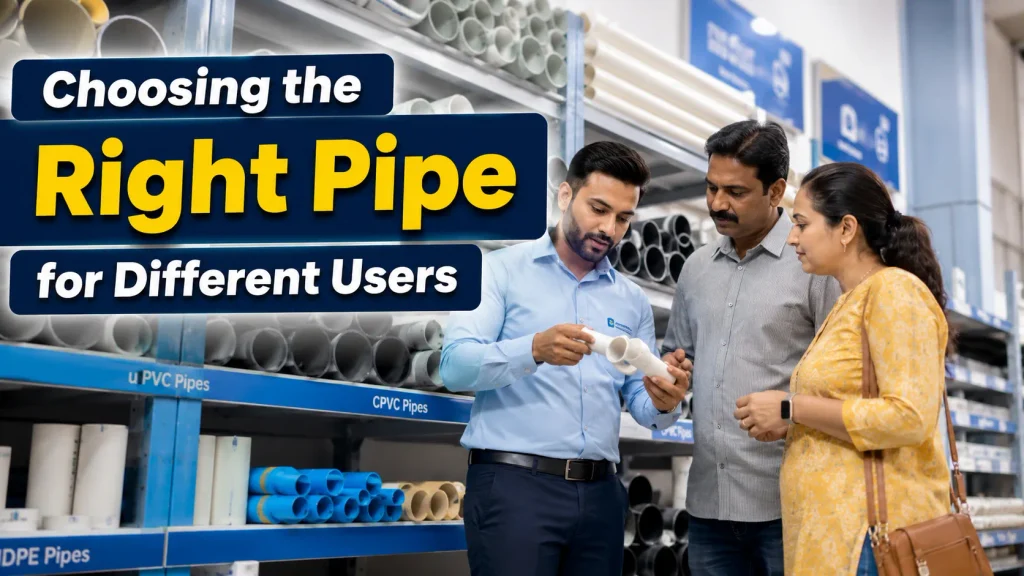
For Farmers
Farmers need dependable irrigation with controlled water distribution. The right pipe can help reduce unnecessary leakage and support consistent water delivery across the field.
If you are looking for a Sprinkler irrigation pipe dealer in Indore, compare pipe specifications, pressure requirements, fittings, and after-sales support instead of selecting products only on price.
For farms using different irrigation methods, ask suppliers whether the pipe is suitable for your pump, sprinkler, drip, or other irrigation equipment.
For Contractors
Civil and irrigation contractors usually work with multiple site conditions. They need products that are easy to transport, install, connect, and maintain.
A trusted Pipe Manufacturer in Indore should be able to provide clear product specifications and help contractors select suitable options for different applications.
Contractors should also check whether the required sizes and fittings are consistently available before finalizing the system design.
For Builders and Construction Companies
Builders should consider long-term reliability because replacing pipes after a project is occupied can be expensive and disruptive.
For a residential or commercial development, pipe selection should be coordinated with the complete water supply design. Pipe diameter, pressure rating, fittings, installation method, and future maintenance access should all be considered.
A dependable Best Pipe Manufacturer in Indore should focus on product consistency and application suitability rather than making one product fit every project.
For Dealers and Distributors
Dealers need more than a product catalogue. They need reliable supply, consistent specifications, packaging, technical information, and customer support.
A dealer working with a recognized manufacturer can better serve customers who need products for agriculture, construction, plumbing, and infrastructure.
Where to Find the Right Pipe and Accessories
Local availability can make a significant difference when a project is time-sensitive.
A contractor searching for a Pipe Supplier Near Me may find several options, but the closest supplier is not automatically the best choice. Compare product quality, specifications, stock availability, pricing, and technical support.
Farmers who need flexible irrigation products may search for a HDPE Pipe Dealer Near Me and compare available pressure classes and sizes before purchasing.
For specialized water movement applications, buyers may also look for a Suction pipe delear in indore when sourcing suction-related products for pumps.
Similarly, customers searching for Sprinkler pipe dealers near me should confirm that the available pipe is designed for the intended sprinkler pressure and flow.
If you need complete irrigation equipment, a Sprinkler system dealer in indore may be able to provide pipes, fittings, sprinklers, and related components as part of a coordinated system.
A Simple Water Distribution Systems Selection Process
Use this practical process before placing your order:
Step 1: Identify the application
Determine whether the system is for agriculture, domestic water supply, construction, commercial use, or infrastructure.
Step 2: Calculate water demand
Estimate the required flow rate and number of outlets.
Step 3: Determine operating pressure
Check pump pressure, elevation, and expected pressure changes.
Step 4: Choose the material
Compare HDPE, PVC, or another suitable material based on project conditions.
Step 5: Select diameter and pressure class
Match the pipe specification to the calculated system requirements.
Step 6: Check fittings and joints
Make sure compatible elbows, tees, valves, couplers, and other components are available.
Step 7: Compare suppliers
Review quality, specifications, availability, delivery, and support.
Step 8: Plan installation
Follow recommended handling, trenching, jointing, testing, and commissioning practices.
Step 9: Test the network
Check for leaks and pressure problems before full operation.
This process can prevent many avoidable problems.
Quick Infographic: How to Choose a Pipe
Application
↓
Required Flow Rate
↓
Operating Pressure
↓
HDPE / PVC Selection
↓
Correct Diameter
↓
Suitable Fittings
↓
Professional Installation
↓
Pressure & Leakage Testing
↓
Efficient Water Distribution
The important point is that pipe selection should happen after understanding the system, not before.
Common Mistakes to Avoid
One of the biggest mistakes is choosing pipes only according to price. A low purchase price can become expensive when leakage, replacement, and downtime are added later.
Another common mistake is ignoring pressure. A pipe that works well under one operating condition may not be suitable for a higher-pressure application.
Some buyers also select the wrong diameter because they assume a larger pipe will always improve the system. In reality, hydraulic design should determine the appropriate size.
Poor installation is another major issue. Even high-quality pipes can experience problems when joints are improperly made or pipes are damaged during transportation and installation.
Buyers should also avoid mixing incompatible products without checking specifications.
For example, when visiting a Pipe hose shop near me, do not assume every hose or pipe available will work with your existing pump or irrigation equipment. Check pressure, diameter, connection type, and intended application.
What About Garden and Small-Scale Watering?
Not every water distribution project is large.
For homes, nurseries, landscaping, and small gardens, buyers may search for a Garden pipe dealer near me. Here, flexibility, handling convenience, length, connection options, and durability may matter more than the specifications required for a large underground network.
The same basic principle still applies: choose the product according to the application.
How to Check a Pipe Before Buying
Before purchasing, ask the supplier for clear product information.
Check the pipe size, material, pressure rating, intended application, manufacturing details, and compatibility with fittings.
For specialized requirements, buyers may also search for a High density pipe dealer in indore and compare the available HDPE options according to their project specifications.
Agricultural users who need vertical or borewell-related applications may also search for a Best column pipe dealer in indore and confirm that the selected product matches the pump and installation conditions.
Remember that the correct product is one that meets the technical requirements of your project, not simply the one with the most attractive price.
Water Distribution Systems: Quality Checklist
Before finalizing your purchase, ask yourself:
- Have I identified the exact application?
- Do I know the required flow rate?
- Have I checked the operating pressure?
- Is the pipe diameter suitable?
- Is the material appropriate for the site?
- Are compatible fittings available?
- Have I considered installation conditions?
- Have I compared long-term cost?
- Is the supplier reliable?
- Have I planned pressure and leakage testing?
If you can answer “yes” to these questions, you are much closer to making a practical buying decision.
Industry Trend: Smarter and More Efficient Water Networks
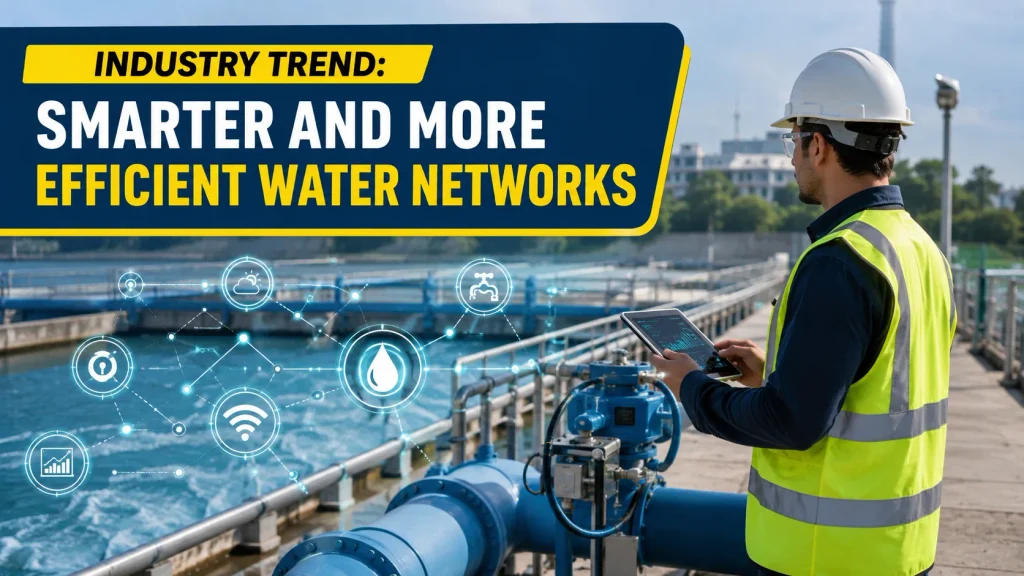
Water management is becoming increasingly important as agriculture, urban development, and infrastructure projects look for better efficiency.
Modern irrigation is moving toward systems that deliver water more precisely and reduce unnecessary losses. Efficient piping, sprinkler systems, drip irrigation, pumps, valves, automation, and monitoring technologies are increasingly being considered together rather than as separate products.
This shift is especially relevant for agriculture, where better water management can support more consistent irrigation.
For contractors and infrastructure departments, the trend is also toward durable systems that are easier to install, maintain, and monitor over their service life.
The role of a reliable Plastic pipe dealer in indore is therefore becoming broader. Customers increasingly need help understanding which pipe, fitting, and system combination suits their actual application.
A Real-World Example: Why Planning Matters
Consider a farmer who needs to move water from a borewell to several irrigation zones.
Instead of selecting a pipe simply because it is inexpensive, the farmer first determines the pump capacity, required flow, distance, elevation, and number of sprinklers.
The mainline is then selected according to the hydraulic requirements, while smaller distribution lines are planned for individual irrigation zones.
The result is a more balanced system where water reaches the required areas without unnecessarily stressing the network.
Now imagine the opposite approach: a small-diameter pipe is selected without calculating flow requirements. The pump runs, but pressure at the far end drops. Sprinklers do not perform consistently, and the farmer eventually spends more money modifying the system.
The lesson is simple: good pipe selection starts with good planning.
Expert Insight: Don’t Buy a Pipe Before Understanding the System
An experienced supplier or contractor should ask questions before recommending a pipe.
What is the application? What pressure will the pipe experience? How long is the pipeline? Will it be underground or above ground? What fittings are required?
These questions are more valuable than simply asking, “Which pipe is cheapest?”
A professional HDPE pipe manufacturer in indore or PVC pipe manufacturer in indore can help buyers understand the differences between available products and select options based on actual project requirements.
For irrigation projects, the same principle applies when dealing with a Sprinkler system dealer in indore or irrigation supplier.
FAQs
Which pipe is best for water distribution?
There is no single pipe that is best for every application. HDPE and PVC can both be suitable depending on pressure, flow, installation conditions, water use, and project requirements.
Is HDPE better than PVC?
HDPE offers high flexibility and good impact resistance, while PVC is valued for rigid installations and established joining methods. The better option depends on the project.
How do I choose the correct pipe size?
Start with the required flow rate, pipe length, available pressure, elevation, and number of outlets. Hydraulic calculations should determine the appropriate diameter.
Can these pipes be used for agricultural irrigation?
Yes, suitable HDPE and PVC products are widely used in irrigation applications. The pipe should be selected according to the irrigation method, pressure, flow, and installation conditions.
Should I buy pipes only from the lowest-price supplier?
No. Compare quality, specifications, consistency, availability, installation support, and long-term value along with price.
How can I find a reliable pipe supplier in Indore?
Compare established manufacturers and suppliers based on product specifications, application knowledge, availability, customer support, and project suitability. Buyers can explore options from an HDPE Pipe Manufacturer in Indore, PVC Pipe Supplier in Indore, or specialized irrigation supplier according to their needs.
Final Thoughts: Choose for the Project, Not Just the Price
The best pipe is not necessarily the cheapest one or the largest one. It is the pipe that matches your water source, pressure, flow, installation conditions, application, and long-term expectations.
Farmers should focus on dependable irrigation. Contractors should focus on installation and system performance. Builders should consider durability and future maintenance. Dealers should prioritize consistent supply and product quality. Government and infrastructure departments should look at long-term value and reliable project performance.
If you are planning a new agricultural, residential, commercial, or infrastructure water project, start by understanding the system first. Then compare the right pipe materials, sizes, pressure ratings, fittings, and suppliers.