Why Water Pressure Matters More Than You Think
Imagine a farmer running an irrigation system early in the morning. The pump is working, the pipes are connected, and water is reaching the field. Yet, some plants receive too much water while others barely receive enough. In another project, a contractor notices repeated pipe leaks even though the pipeline was installed correctly. In both situations, uncontrolled pressure may be part of the problem Pressure Management Systems help control, balance, and maintain the right water pressure throughout a pipeline network. They are important for agricultural irrigation, domestic water supply, industrial applications, construction projects, and large infrastructure networks.
For farmers, proper pressure means more uniform irrigation. contractors, it can mean fewer failures and easier system management. For builders and government departments, it supports dependable water distribution across larger networks.
A well-designed pressure system is not simply about increasing or decreasing pressure. It is about delivering the right pressure at the right location and at the right time.
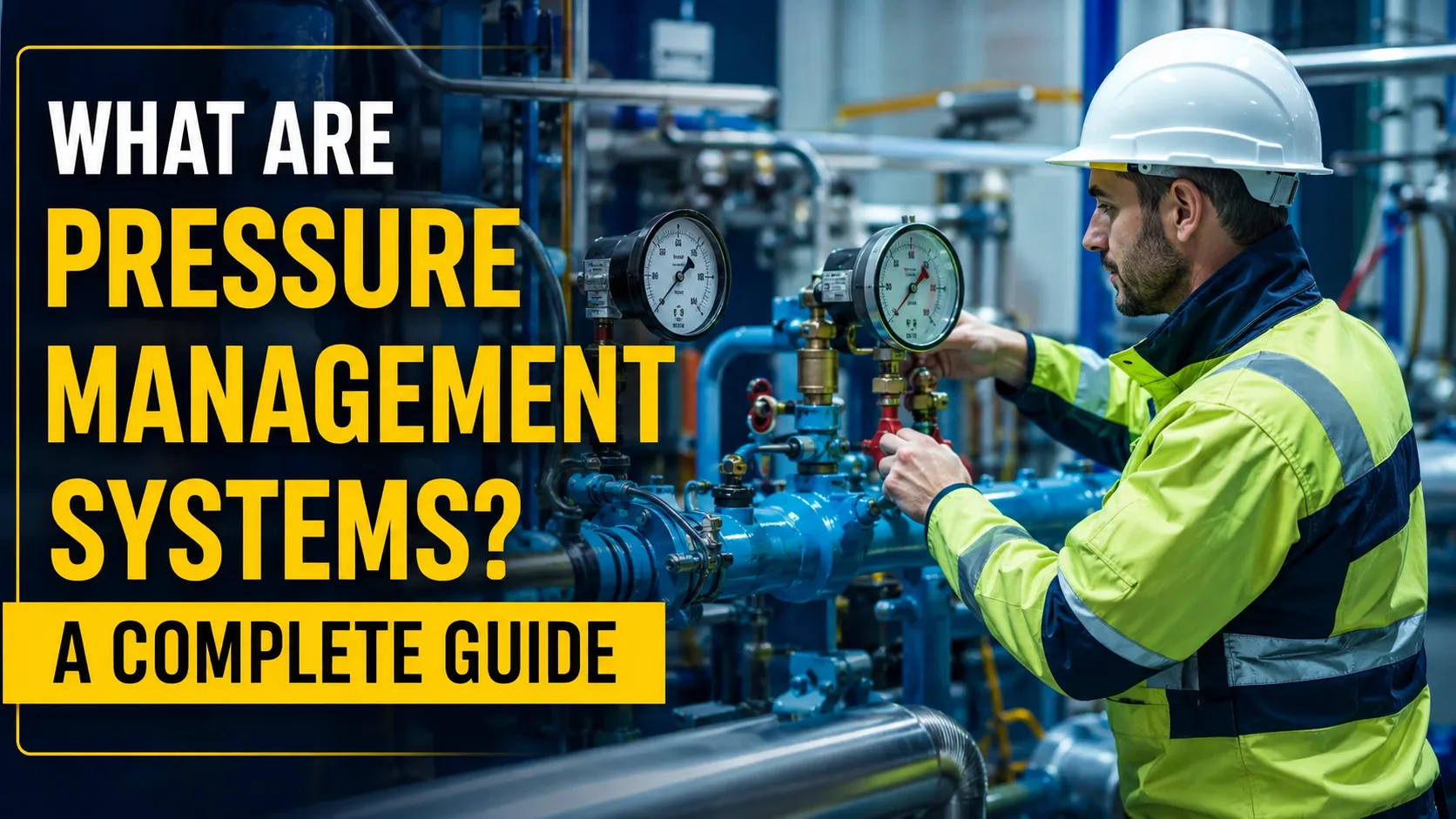
What Are Pressure Management Systems?
Pressure Management Systems are a combination of valves, regulators, pressure gauges, pumps, control devices, pipes, and monitoring equipment used to manage water pressure inside a pipeline network.
Water pressure naturally changes because of elevation, pipe length, friction, pump performance, water demand, and changes in flow. If pressure becomes too high, pipes, joints, fittings, and irrigation equipment can experience unnecessary stress. If it becomes too low, water may not reach the required location effectively.
A pressure management setup helps maintain a more stable operating range.
For example, consider a farm located on uneven land. Water may travel from a pump to fields at different elevations. The lower section can experience higher pressure while the upper section receives less pressure. A suitable control system can help balance these differences.
This is where choosing quality piping also becomes important. A reliable HDPE Pipe Manufacturer in Indore can help provide pipe solutions suitable for applications where durability, flexibility, and controlled water movement are important.
How Do Pressure Management Systems Work?
The basic idea is simple: measure the pressure, understand where it changes, and use suitable equipment to keep it within the required operating range.
A typical system may include a pump to move water, a pressure regulator to reduce excessive pressure, valves to control flow, gauges to monitor pressure, and pipes designed for the application.
Suppose a pipeline is receiving 8 bar pressure, but a particular irrigation section only requires around 4 bar for efficient operation. A pressure-reducing valve can help bring the pressure down to the required level.
The exact pressure requirement depends on the application, pipe specifications, elevation, fittings, equipment, and design. Therefore, pressure should not be adjusted simply by guesswork.
For projects requiring dependable water movement, working with an experienced HDPE Pipe Supplier in Indore can also help contractors select suitable pipe sizes and configurations.
Why Pressure Control Is Important for Irrigation
Irrigation is one of the clearest examples of why pressure management matters.
A sprinkler system needs sufficient pressure to distribute water across the intended area. Too little pressure may produce weak spray patterns. Excessive pressure can create unnecessary stress and may result in uneven application or equipment wear.
Drip irrigation has its own pressure requirements. If pressure varies significantly across a long field, emitters may not deliver water uniformly.
This is why farmers and irrigation contractors should consider pressure alongside pipe diameter, flow rate, pump capacity, and irrigation equipment.
A dependable Irrigation Pipe Manufacturer in Indore can support irrigation projects with pipe options designed for agricultural water distribution, while pressure control equipment helps keep the overall system operating efficiently.
The Role of Pipes in Pressure Management
Pressure management does not work independently of the pipeline.
The pipe material, diameter, wall thickness, length, fittings, bends, joints, and installation quality all influence how water behaves inside the network.
HDPE pipes are widely considered for applications where flexibility, impact resistance, and long service life are important. PVC pipes can also be suitable for many water distribution applications where their characteristics match the project requirements.
For agricultural and infrastructure projects, selecting a reliable PVC Pipe Manufacturer in Indore can be an important part of creating a dependable water distribution system.
The objective should not be to select the strongest-looking pipe alone. The pipe should match the working pressure, application, installation conditions, expected flow, and project requirements.
Main Components Used in Pressure Management Systems
A pressure management arrangement can be simple or highly advanced depending on the size and purpose of the project.
Pressure regulators reduce pressure when incoming pressure is higher than the required operating level.
Pressure-reducing valves help protect downstream sections from excessive pressure.
Pressure gauges provide a simple way to check whether the system is operating within the expected range.
Control valves regulate water movement between different sections of a pipeline.
Pumps create the pressure and flow required to move water through the system. However, selecting an oversized pump can create unnecessary pressure and energy consumption.
Air-release valves can help remove trapped air from certain pipeline systems. Air pockets can affect flow and system performance.
Flow meters and monitoring devices provide additional information about how much water is moving through the network.
The best combination depends on the project rather than on a one-size-fits-all formula.
A Simple Real-Life Example: Pressure on a Farm
Consider a farmer managing a 10-hectare field with a long irrigation pipeline.
The pump is installed near the water source. The first section of the field receives strong water flow, while the farthest section receives noticeably less water. The farmer initially assumes that the pump needs to be replaced with a larger model.
Before purchasing a new pump, the contractor checks the pipeline. The investigation shows that elevation differences, pipe friction, fittings, and pressure variation are affecting the far end.
Instead of simply increasing pump size, the system is redesigned with suitable pipe sizing, pressure control, and better distribution.
The result is more balanced irrigation without unnecessarily increasing pump pressure.
This example shows an important principle: more pressure does not always mean better performance.
An Illustrative Case Study: Reducing Pressure-Related Problems
Consider a commercial water distribution project where the incoming pressure is approximately 7 bar, while some downstream equipment is designed to operate closer to 4 bar.
Without pressure control, the downstream section experiences unnecessary pressure. Over time, joints and fittings may require more frequent attention.
The project team installs suitable pressure-reducing equipment and monitoring points. The pressure is adjusted according to the downstream requirement.
The important improvement is not simply the lower pressure. It is the fact that the system now operates closer to its intended design condition.
This is an illustrative engineering example, not a specific Vishal Pipe customer case study. Actual pressure settings should always be determined according to project design and equipment specifications.
Pressure Management Systems vs Traditional Pressure Control
| Factor | Basic Pressure Control | Modern Pressure Management |
|---|---|---|
| Monitoring | Mostly manual | Can include continuous monitoring |
| Pressure adjustment | Often fixed | Can respond to changing demand |
| Leak detection | Usually reactive | Can identify unusual patterns |
| Data | Limited | More information available |
| Large networks | More difficult to manage | Easier to monitor |
| Maintenance | Often after problems occur | Can support preventive maintenance |
For a small farm, a simple regulator and pressure gauge may be enough. A municipal or industrial network may require automated monitoring and advanced controls.
The right solution depends on system size, water demand, operating pressure, and budget.
How Pressure Management Can Help Save Water
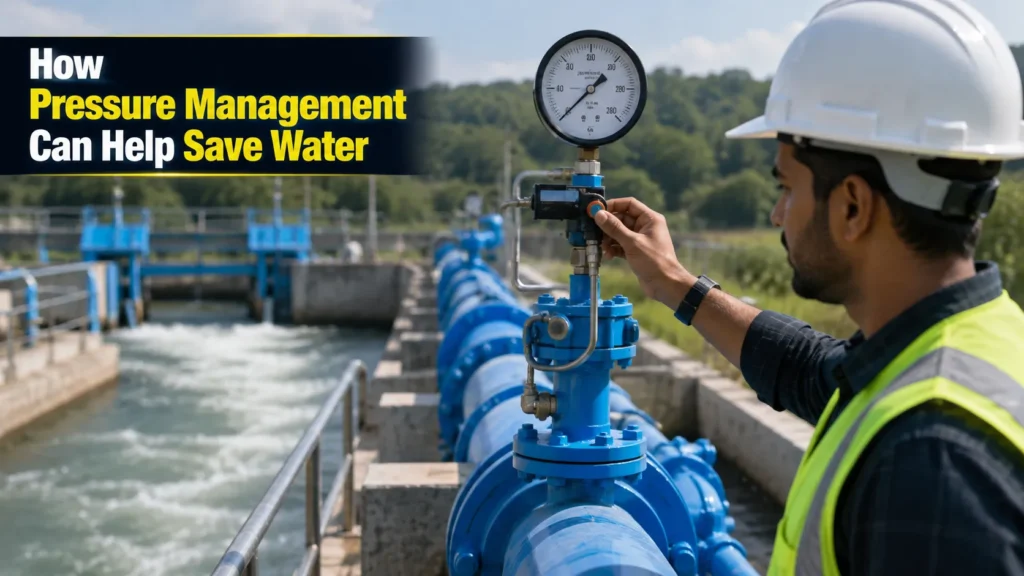
Water conservation is becoming increasingly important for agriculture, cities, industries, and infrastructure projects.
Uncontrolled pressure can contribute to leakage, particularly when pipelines have weak points, old joints, damaged fittings, or unsuitable components. Reducing excessive pressure can reduce stress on these areas.
However, pressure management should not be treated as a replacement for proper pipe installation or maintenance.
A complete water-saving strategy can include suitable pipe sizing, quality materials, efficient irrigation equipment, leak monitoring, pressure control, and regular inspections.
For projects requiring durable plastic piping, a trusted Plastic pipe manufacturer in indore can be considered when selecting suitable pipeline products.
Step-by-Step Guide to Planning Pressure Management
Step 1: Understand the Water Source
Start by identifying whether the water comes from a borewell, reservoir, tank, municipal connection, river intake, or another source.
Record the pump capacity and available pressure where possible.
Step 2: Measure Pressure at Different Points
Do not measure pressure at only one location.
Check the inlet, middle sections, high points, low points, and important outlets. Differences between these readings can reveal where pressure problems may exist.
Step 3: Calculate the Required Flow
Determine how much water the system actually needs.
For irrigation, consider the number of sprinklers, emitters, field size, crop requirements, and irrigation method.
Step 4: Check Pipe Size and Layout
Pipe diameter has a major effect on water movement and friction losses.
Long pipelines, multiple bends, narrow sections, and unnecessary fittings can affect pressure.
Step 5: Select Appropriate Control Equipment
Depending on the application, the system may require regulators, valves, gauges, flow meters, pumps, or automated controls.
Step 6: Test the System
After installation, check pressure at different points under operating conditions.
Step 7: Monitor Over Time
Pressure can change as demand changes or components wear.
Regular monitoring makes it easier to identify problems before they become expensive failures.
Choosing the Right Pipe for Pressure-Controlled Applications
A pressure management system is only as reliable as the components supporting it.
Farmers should consider pipe flexibility, durability, operating conditions, installation method, and irrigation requirements.
Contractors should look at pressure ratings, pipe diameter, fittings, joining methods, project length, and expected flow.
Builders may need different solutions for water supply, drainage, landscaping, or construction applications.
Government and infrastructure projects usually require greater attention to design standards, durability, inspection, and long-term maintenance.
For local sourcing, a Pipe Manufacturer in Indore can be useful when the project requires dependable pipe availability and regional support.
When searching online, buyers may also look for a Pipe Supplier Near Me to compare availability, specifications, delivery options, and project requirements.
Pressure Management and Sprinkler Irrigation
Sprinkler irrigation depends heavily on consistent water pressure.
When pressure is too low, sprinklers may not achieve the expected coverage. When it is too high, the system may operate outside the recommended range.
Farmers and contractors can therefore benefit from combining suitable pipes with correctly selected sprinkler equipment and pressure controls.
A buyer searching for Sprinkler pipe dealers near me should compare pipe quality, pressure suitability, application requirements, and after-sales support rather than selecting only on price.
For local projects, a Sprinkler irrigation pipe dealer in indore can help customers identify pipe options suitable for sprinkler-based agricultural applications.
Likewise, those searching for a Sprinkler system dealer in indore should explain the field size, water source, pump capacity, crop type, and irrigation layout before choosing equipment.
Where Suction Pipes Fit Into the System
Suction pipes are commonly used on the intake side of pumps to move water from a source toward the pumping system.
The suction side needs careful attention because poor pipe selection, excessive bends, air entry, or unsuitable installation can affect pump performance.
Farmers may search for a Suction pipe delear in indore when looking for local supply. Before buying, they should check the required diameter, application, flexibility, connection type, and compatibility with the pump.
A properly planned suction arrangement can help create a more stable pumping system before water enters the pressure-controlled pipeline.
Why Local Pipe Selection Matters
Buying a pipe is not simply about finding the lowest price.
A project needs the right combination of material, size, pressure rating, application suitability, availability, and technical support.
Someone searching for a High density pipe dealer in indore may be looking specifically for HDPE-based solutions for agricultural, construction, or water-related applications.
Similarly, a Plastic pipe dealer in indore can be useful when a project requires different plastic piping options.
For smaller applications such as landscaping, gardening, or residential water use, people may search for a Garden pipe dealer near me.
For borewell and water-lifting applications, buyers may also search for a Best column pipe dealer in indore and compare product specifications before making a purchase.
Common Pressure Management Mistakes
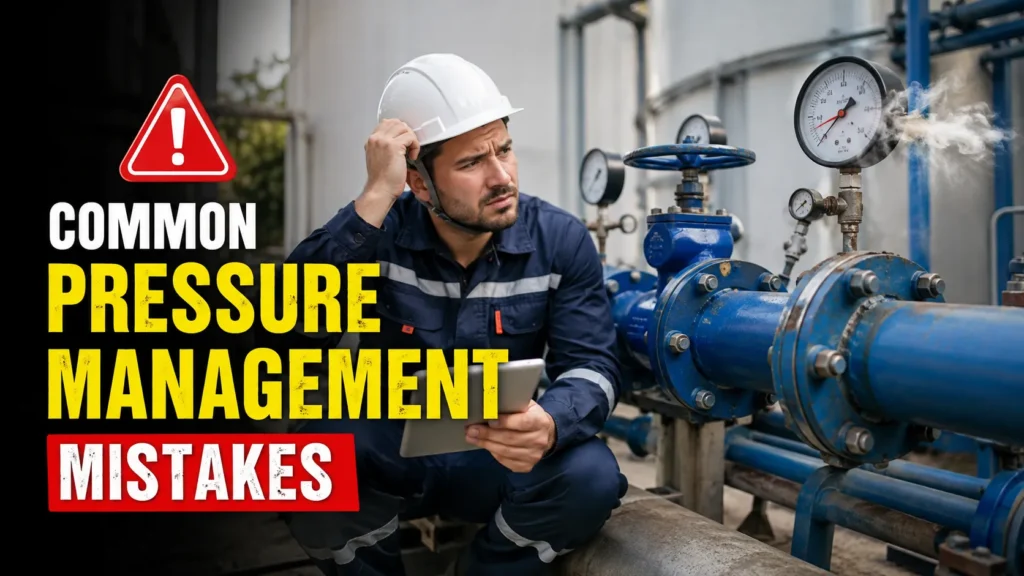
One common mistake is assuming that a bigger pump will solve every water-flow problem.
It may increase pressure without solving poor pipe sizing, elevation differences, blocked sections, or distribution issues.
Another mistake is ignoring pressure variation between different parts of the pipeline.
Some users also select valves or regulators without checking their flow capacity and operating range.
Poor installation is another concern. Incorrect joints, unnecessary bends, damaged pipes, and unsupported sections can create problems even when good-quality materials are used.
Finally, pressure should not be checked only when something goes wrong. Regular inspection can provide early warning signs.
Practical Checklist Before Installing a System
- Identify the water source and pump capacity.
- Measure pressure at important points.
- Determine required flow.
- Check elevation differences.
- Select suitable pipe diameter.
- Confirm pipe pressure requirements.
- Choose compatible valves and regulators.
- Provide suitable monitoring points.
- Inspect joints and fittings.
- Test the system after installation.
- Schedule regular pressure checks.
Industry Trend: Smarter Water Management
Water management is becoming more data-driven.
Modern systems can combine pressure sensors, flow monitoring, automated valves, remote controls, and digital dashboards. These technologies allow operators to understand how a network behaves instead of relying entirely on manual inspections.
For large agricultural projects, smart irrigation can help operators adjust water delivery according to field conditions and irrigation schedules.
In municipal and infrastructure networks, monitoring can help identify unusual pressure changes that may indicate leakage or other problems.
The technology will continue to develop, but the basic principle remains unchanged: use the right amount of pressure for the job.
Expert Insight: Start With the System, Not the Product
A common buying approach is to first ask, “Which pipe should I purchase?”
A better question is, “What does my complete water system require?”
Start with the water source, flow requirement, pressure, distance, elevation, application, and operating conditions. Then select pipes, valves, pumps, fittings, and control equipment accordingly.
This approach can prevent unnecessary spending and reduce the chances of selecting components that do not work well together.
If you are comparing suppliers, a Best Pipe Manufacturer in Indore should be evaluated on product suitability, quality consistency, technical understanding, availability, and ability to meet project requirements.
For customers specifically looking for an HDPE pipe manufacturer in indore, the same principle applies. The goal should be to match the pipe to the actual application instead of choosing based only on brand name or price.
Interactive Question: What Is Your Biggest Pressure Problem?
Think about your current pipeline.
Are some areas receiving too much water while others receive too little?
Are pipes or fittings experiencing repeated failures?
Is your pump running harder than expected?
Are you seeing unusual changes in water flow?
Or are you planning a new irrigation, construction, or infrastructure project?
The answers can help identify whether your system needs better pressure control, improved pipe sizing, different equipment, or a complete pipeline assessment.
Frequently Asked Questions
What is the main purpose of Pressure Management Systems?
The main purpose is to maintain suitable water pressure across a pipeline network. This can improve water distribution, protect components, support efficient irrigation, and reduce pressure-related problems.
Are Pressure Management Systems useful for farmers?
Yes. They can be particularly useful for farms using sprinkler or drip irrigation, especially where fields have long pipelines, varying elevations, or changing water requirements.
Can pressure management reduce pipe damage?
Properly controlled pressure can reduce unnecessary stress on pipes, joints, and fittings. However, pipe quality, installation, maintenance, and correct system design remain equally important.
Is HDPE suitable for pressure applications?
HDPE can be suitable for many pressure-water applications when the correct pipe specification, pressure rating, size, joining method, and installation practices are selected.
Does every irrigation system need advanced pressure controls?
No. A small irrigation system may only require basic pressure regulation and monitoring. Larger or more complex networks may benefit from automated controls and continuous monitoring.
How often should pipeline pressure be checked?
The frequency depends on the application and system conditions. Regular checks are useful, especially when water demand changes, new equipment is installed, or pressure-related problems appear.
Final Takeaway: Better Pressure Means Better Control
A water pipeline is more than a collection of pipes and fittings. It is a complete system in which pressure, flow, pipe size, elevation, pumps, valves, and equipment must work together.
Pressure Management Systems provide a practical way to control this relationship.
For farmers, better pressure control can support more consistent irrigation. For civil and irrigation contractors, it can improve system planning and reduce avoidable pressure-related issues. Builders can use pressure management when developing dependable water networks, while government and infrastructure departments can benefit from better monitoring across larger systems.
The foundation is simple: understand the water requirement, measure pressure, select suitable pipes and components, install them correctly, and monitor the network regularly.
If you are planning an agricultural irrigation system, construction pipeline, sprinkler project, or water distribution network in or around Indore, choose your pipe and pressure-control components based on the actual requirements of the project.
Contact Vishal Pipe today to discuss your pipe requirements and find a suitable solution for your agricultural, irrigation, construction, or infrastructure project.