
Planning the Right Piping System for Farm Rainwater Harvesting
As unpredictable weather patterns and groundwater depletion continue to challenge Indian agriculture, relying entirely on borewells is no longer a sustainable strategy. For progressive farmers, partnering with a trusted pipe manufacturer to implement a robust agricultural rainwater harvesting (RWH) system is the single most effective way to secure a year-round, independent water supply.
However, a rainwater harvesting framework is only as good as its plumbing. Poorly planned, low-grade conduits lead to leaks, pressure drops, and frequent structural failures that can ruin an entire season’s yield. To help you build a resilient infrastructure, this comprehensive guide covers the essential pipeline layout, material selections, and system optimization techniques required to transform raw rainfall into a high-efficiency farming asset.
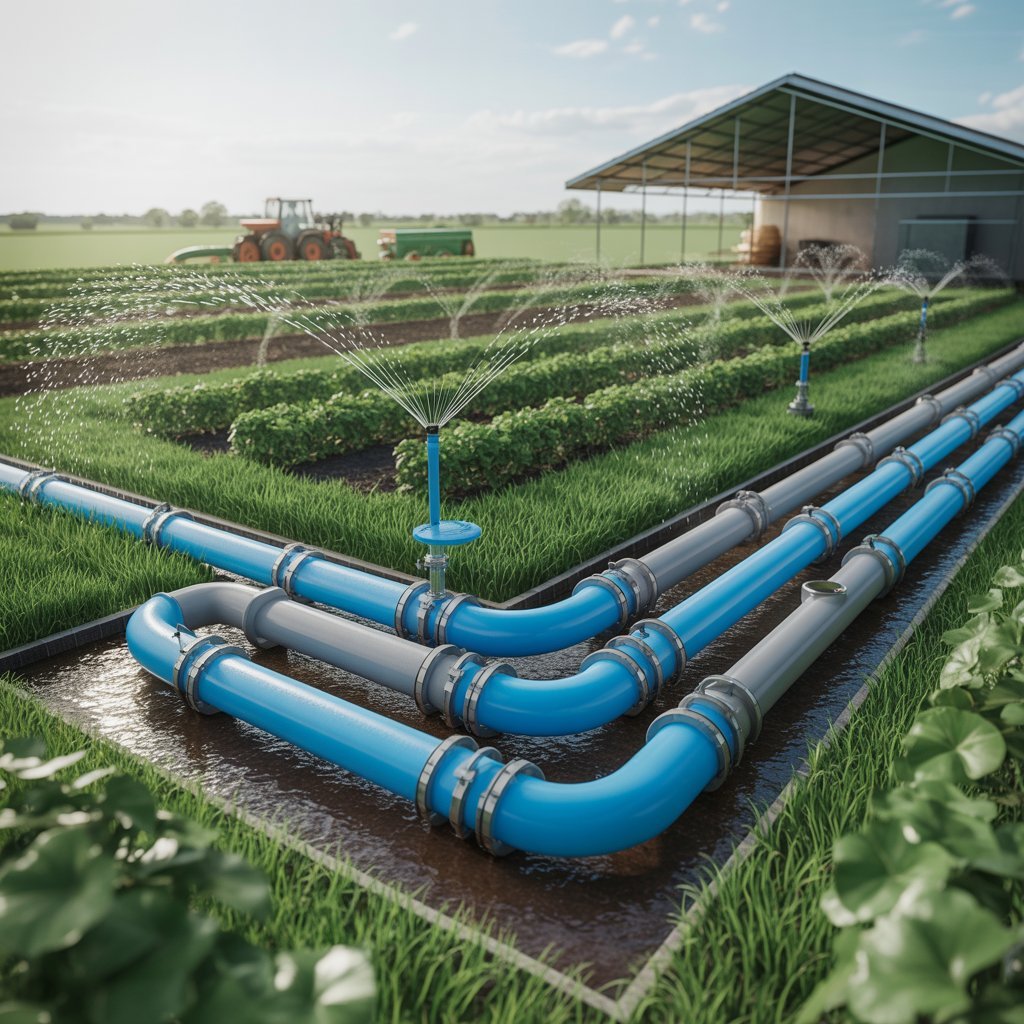
1. Why Choosing the Right Pipe Manufacturer Determines Farming Success
Every successful farm-level rainwater harvesting system relies on a continuous loop of collection, storage, and distribution. When dealing with large volumes of water moving across open acreage, selecting the right pipe manufacturer is the first and most critical decision a farmer can make.
[Rain Catchment Surface]
         │
         ▼
[PVC/HDPE Delivery Mains] ───► [First-Flush Diverter]
         │
         ▼
[Storage Pond / Cistern] ◄──── [Suction Hoses / Pumps]
         │
         ▼
[Drip & Sprinkler Systems]
A top-tier pipe manufacturer optimizes its products for the harsh realities of Indian agricultural fields. Farm piping must withstand heavy UV exposure, seasonal temperature spikes, soil shifting, and the corrosive action of fertilizers mixed into the water supply. Investing in certified, high-grade polymers ensures your underground and surface piping networks last for decades without requiring costly excavation or routine replacements.
2. The Core Components of an Agricultural RWH Piping Network
A functional farm rainwater harvesting system is divided into three distinct zones, each requiring specialized piping characteristics:
A. The Collection & Delivery Mains (Conveyance)
This network gathers run-off from catchments—such as polyhouse roofs, farm sheds, or graded ground catchments—and routes it down toward your storage structures. Because these pipes are frequently exposed to direct sunlight, they require excellent UV stabilization. Working with a leading PVC pipe manufacturer in Indore ensures you get rigid uPVC pressure pipes with a mirror-smooth inner bore. These are ideal for minimizing friction losses and preventing sediment or algae from clinging to the interior walls.
For smaller setups or local transport across farm buildings, you might also require flexible hoses. Sourcing them from a reliable plastic pipe dealer in Indore or finding a top-rated garden pipe dealer near me ensures that your flexible lines won’t crack or kink under intense summer heat.
B. The Pump & Intake Infrastructure
To utilize your stored water from an underground tank or open farm pond, you need heavy-duty intake lines connected to your centrifugal or submersible pumps. This is where high-integrity suction hoses are mandatory. They must feature a rigid helical reinforcement to resist collapsing under internal vacuum pressure while remaining flexible enough to navigate uneven embankments. To prevent pump cavitation and flow restrictions, always source these components from a specialized suction pipe dealer in Indore.
C. The Fields Distribution Network
Once the water is safely stored, it must be strategically routed back out to feed your crops. Integrating your harvesting setup directly with micro-irrigation lines—such as targeted drip lines or portable overhead networks—enures that every drop of harvested water is used with maximum efficiency. Consulting an experienced sprinkler system dealer in Indore can help you seamlessly hook up your RWH storage directly to pressure-regulated field sprinklers, saving hours of manual labor.
3. Selecting the Ideal Pipe Material for Every Farm Application
Using the wrong pipe for the wrong job is a major driver of agricultural system failures. The table below breaks down the primary options available to ensure you source the correct materials for your layout:
| Material Type | Primary Application | Key Operational Benefits | Pressure & Standard Ratings |
| Rigid uPVC Pipes | Main conveyance lines, borewell casing, downspouts | Lead-free, scale-resistant, high tensile strength for structural runs | IS 4985 compliant, handles 4 to 20 kg/cm² |
| High-Density Polyethylene (HDPE) | Undulating fields, sub-surface distribution, mainlines | Fusion-welded leak-proof joints, highly flexible, immune to soil shifts | IS 4984 certified, variable SDR pressure ratings |
| Flexible PVC Hoses | Heavy-duty pump suction, temporary water delivery | Helical reinforcement avoids collapse under high vacuum pressure | High-stress vacuum and suction rated |
| Reinforced LLDPE | Crop-row distribution, drip and sprinkler laterals | Precise water placement directly at roots, high tear resistance | Micro-irrigation specialized |
4. Step-by-Step Pipe Planning Layout for Farms
To prevent your system from clogging, bursting, or overflowing during an intense downpour, follow this structured installation sequence:
1.Calculate the Peak Hydraulic Flow:Step 1: Sizing.
Determine your total catchment square footage and cross-reference it with the maximum historical local rainfall intensity (measured in mm/hour). Size your primary conveyance mains accordingly—using 3-inch or 4-inch lines for small structures, and upgrading to 6-inch or larger lines for extensive ground-catchment networks to prevent pipe choking.
2.Integrate a First-Flush Diverter:Step 2: Filtration.
The initial 10 to 15 minutes of a rainfall event carry dust, debris, and bird droppings. Build a vertical first-flush bypass line using a wide-diameter vertical PVC standpipe. This pipe automatically traps the highly contaminated initial water runoff, allowing only clean water to flow over into your main storage zone.
3.Prepare the Trenches and Bedding:Step 3: Excavation.
For underground distribution networks, dig trenches below the frost and agricultural tillage line (typically 2 to 3 feet deep). Remove all sharp stones and lay a 4-inch bed of sieved sand or graded soil to support the pipe, preventing stress fractures from heavy farm machinery moving overhead.
4.Execute Leak-Proof Jointing:Step 4: Connection.
Join your pipes securely based on material specifications. For rigid uPVC, apply high-quality solvent cement evenly after cleaning the joints. For HDPE networks, utilize professional butt-fusion or socket-fusion welding to create a seamless, monolithic bond that eliminates the threat of root penetration or joint separation.
5. Pro-Tips for Maximizing System Efficiency
- Eliminate Sharp Bends: Avoid 90-degree elbows wherever possible in your main delivery lines. Instead, opt for two 45-degree bends placed sequentially. This adjustment dramatically reduces friction head loss, ensures a smoother flow rate, and prevents sediment from accumulating at sharp corners.
- Incorporate Air Release Valves: Air pockets easily become trapped inside long pipe runs or undulating lines, blocking water flow and causing dangerous pressure surges. Install automatic air-release valves at the highest points of your distribution network to maintain steady, continuous flow.
- Implement Regular Flushing Routines: Even with advanced first-flush mechanisms, fine silt can gradually settle at the bottom of your underground pipes. Install end-caps or ball valves at the lowest terminuses of your mainlines so you can flush out the system before and after every monsoon season.
By taking the time to map your layout, calculate flow demands correctly, and procure certified materials from a trusted pipe manufacturer, you can build a sustainable rainwater harvesting asset that safeguards your farm’s water security, optimizes crop health, and drives down operational costs for years to come.