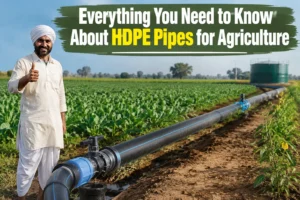
Layflat Pipe for Agriculture: What Should Farmers Check Before Buying?
A farmer may have a reliable water source and a working pump, but getting water to the right part of the field can still be challenging. The water source may be far from the crop area, different plots may need irrigation at different times, or a permanent pipeline may not be practical for the way the farm is managed.
This is where a Layflat Pipe for agriculture may be useful. Its flexible construction makes it possible to roll the pipe for storage and move it between suitable water delivery points. Farmers can consider it for water transfer, pump discharge and certain irrigation arrangements, provided the pipe is designed for the required pressure and flow.
For farmers in Indore and other parts of Madhya Pradesh, the right choice depends on more than price or appearance. Pump capacity, pipeline length, required water flow, working pressure, fittings and field conditions all matter.
At Vishal Pipes and Fittings, we believe that selecting agricultural piping should start with the actual application. A pipe that suits one farm may not be appropriate for another, even when both farmers grow similar crops.
This guide explains what a Layflat Pipe does, where it may fit into a farm irrigation setup, what to check before buying, and how to avoid common installation and maintenance problems.
Quick Answer: What Is a Layflat Pipe Used for in Agriculture?
A Layflat Pipe is a flexible pipe that generally lies flat when it is not pressurised and expands when water flows through it under suitable operating pressure. Depending on its construction and specifications, it can be used for water transportation, pump discharge and temporary irrigation arrangements.
Farmers may consider it when they need to:
- Transfer water from a pump or storage source to a field.
- Move water between separate plots.
- Connect compatible equipment in a temporary irrigation setup.
- Transport water to suitable sprinkler or gardening systems.
- Roll up and store the pipe when it is not needed.
The important check is pressure compatibility. Not every Layflat Pipe is suitable for every pump or sprinkler system. Always confirm the pipe’s rated working pressure, diameter, construction and connector compatibility before operating it.
Key Takeaways for Farmers
- Check the pump first: Its discharge and operating pressure help determine the pipe requirements.
- Choose the diameter according to flow: Farm size alone does not determine the correct pipe diameter.
- Measure the route: Longer pipelines can increase friction losses.
- Check the application: A pipe suitable for low-pressure water transfer may not suit a higher-pressure system.
- Use compatible fittings: Connections need to suit the pipe’s diameter and construction.
- Protect the pipe during handling: Sharp stones, rough edges and agricultural equipment can damage it.
- Store it properly: Follow the manufacturer’s instructions for cleaning, drainage, rolling and storage.
- Compare suppliers on specifications: A low price is not enough if the product does not match your irrigation requirements.

1. What Makes a Layflat Pipe Different from a Regular Irrigation Pipe?
A conventional rigid pipe generally maintains its shape whether water is flowing through it or not. Depending on the material and design, rigid pipes may be used in permanent water supply networks, fixed agricultural pipelines or other installations.
A Layflat Pipe has a flexible, collapsible design. When it is not carrying water, it can generally be rolled for storage. When water enters under suitable pressure, it expands to its working shape.
The exact construction varies by product. Some Layflat Pipes use reinforced flexible materials, but the material, reinforcement, pressure rating and intended application must be confirmed from the specific product’s technical information.
For a farmer who needs to move water across different parts of a field, this flexibility may be more convenient than repeatedly handling rigid pipe sections.
Imagine a farm where the pump is near a water storage point and irrigation is required in different plots during the season. A suitable Layflat Pipe may be laid along the required route, connected using compatible fittings and moved when the irrigation arrangement changes. Once work is complete, it can be disconnected and stored according to the manufacturer’s instructions.
However, flexibility does not automatically mean better pressure, higher water delivery or lower pumping costs. Actual performance depends on the pipe’s diameter, length, material, operating pressure and the complete irrigation system.
2. Common Uses of Layflat Pipe on Farms
Water transportation from a pump to the field
A Layflat Pipe may be used to carry water from a pump or other suitable source to a field that is some distance away. This can be useful when a permanent pipeline is not required along the entire route.
Before choosing the pipe, measure the distance and establish the expected water flow. A long line with an unsuitable diameter may cause significant friction losses, so the pump and pipe should be considered together.
Sprinkler irrigation connections
Some sprinkler irrigation layouts use flexible piping for suitable water delivery or connection sections. The selected pipe must meet the sprinkler system’s pressure and flow requirements.
Do not assume that every Layflat Pipe can replace a sprinkler mainline. Check the product specifications and irrigation design before making that decision.
If you are planning a sprinkler system, you can also explore the relevant options through the Vishal Pipes and Fittings product range.
Vegetable cultivation and changing field layouts
Farmers growing vegetables such as tomatoes, chillies and onions may need to manage water delivery across separate plots or changing cultivation areas. A movable pipe can be useful where temporary water transfer is appropriate.
The pipe does not determine how much water a crop needs. Irrigation frequency and duration still depend on the crop, soil, weather and farming method.
Nurseries, gardens and horticulture
Nurseries, gardens and orchards may have different water transportation requirements from large open fields. A suitable flexible pipe can help move water between a source and selected areas, depending on the flow and pressure requirements.
For a permanent distribution network, another pipe type may be more appropriate. The choice should be based on the installation and intended service conditions, not simply on whether the pipe is flexible.
3. Layflat Pipe vs HDPE Pipe: Which Is Right for Your Farm?
Farmers sometimes compare Layflat Pipe with HDPE Pipe because both may be used in agricultural water transportation. However, their construction and typical applications differ.
| Factor | Layflat Pipe | HDPE Pipe |
| Construction | Flexible and collapsible, depending on design | Generally maintains a defined pipe shape |
| Handling | Can be rolled when the product permits | Handling depends on diameter, length and pipe construction |
| Movement | Often practical for temporary or movable layouts | Commonly considered for fixed distribution networks |
| Storage | Can require less space when rolled correctly | Storage depends on pipe dimensions and quantity |
| Typical role | Suitable water transfer or flexible delivery applications | Suitable fixed water distribution applications when correctly specified |
| Important checks | Working pressure, reinforcement, diameter and fittings | Diameter, pressure class, material grade and applicable specifications |
Consider Layflat Pipe when a flexible, movable water delivery arrangement is required and the product is rated for the operating conditions.
Consider HDPE Pipe when planning a fixed water distribution line or another application for which the selected HDPE pipe is designed.
Some systems may use different pipe types in separate sections. For example, a fixed line may carry water across part of a property while a suitable flexible pipe handles a movable connection. The design must account for pressure, flow and fitting compatibility.
If you are comparing HDPE pipe dealers near me, remember that an HDPE supplier and a Layflat Pipe supplier may not offer the same products. Confirm the exact product type and specifications rather than assuming availability.
4. How to Choose the Right Layflat Pipe for Agriculture
Before buying, explain how the pipe will be used. These are the main details to check with your supplier.
A. Required water flow and pump capacity
Start with the pump and the amount of water your irrigation setup needs. Consider the pump’s discharge, operating pressure, outlet size and the number of outlets or irrigation units running at the same time.
A pipe that is too small for the required flow may cause higher friction losses. Choosing a larger pipe without checking the system, however, may add cost without a useful benefit.
Ask the supplier to help match the pipe specification to the actual application. If the system is large or complex, get the sizing checked by a qualified irrigation professional.
B. Working pressure
Working pressure is one of the most important specifications to verify.
The pipe must be rated for the pressure it will experience in service. Pump operation, elevation changes and pressure fluctuations can affect the system. Sudden changes caused by starting or stopping a pump or operating a valve may also need consideration.
Before purchasing, ask for the product’s rated working pressure and confirm that it is appropriate for the pump and the complete system. Do not estimate pressure suitability by looking at the pipe’s thickness or color.
C. Diameter and pipeline length
Measure the actual route from the water source to the delivery point. Include the distance needed for safe connections and any changes in the route.
The pipe diameter should be selected with the required flow and total length in mind. A longer line can create greater friction losses, and a diameter that works for one pump or route may not work for another.
A practical buying checklist includes:
- Pump discharge and operating pressure.
- Required water flow.
- Total pipeline length.
- Pipe outlet and connector sizes.
- Number of irrigation outlets operating together.
- Changes in elevation and the layout of the field.
D. Material and reinforcement
Layflat Pipes can differ in material, construction and reinforcement. These differences can affect flexibility, strength, resistance to environmental conditions and suitability for the intended use.
Ask the manufacturer or supplier to confirm the actual material, construction, operating limits and any relevant environmental-resistance information. Do not rely on appearance alone.
E. Fittings and connections
A suitable pipe can still leak if its fittings do not match. Confirm that connectors, clamps and any adapters are compatible with the selected pipe and the pump outlet.
Connections should be secure without cutting, crushing or unnecessarily stressing the pipe. If the system requires a special connector, confirm its availability before placing a large order.
F. Intended use and storage conditions
Tell the supplier whether the pipe will be used for pump discharge, temporary water transfer, a sprinkler connection or another application. A product designed for one operating condition should not automatically be used for another.
Also consider where the pipe will be laid, how often it will be moved and where it will be stored. These details affect practical handling and maintenance.
5. Layflat Pipe Size and Application Guide
There is no single Layflat Pipe size that is correct for every farm. The right diameter depends on required flow, pump capacity, pipe length, pressure and the system layout.
Use the following table as a planning checklist, not as a manufacturer-certified sizing chart.
| Farm requirement | What to assess before selecting a pipe |
| Small garden or nursery | Required flow, route length and outlet size |
| Vegetable field | Water demand, distance and irrigation method |
| Medium agricultural plot | Pump discharge, operating pressure and pipe length |
| Large agricultural field | Total flow, pressure losses, route and irrigation zones |
| Sprinkler connection | Sprinkler pressure and flow requirements |
| Long-distance water transfer | Pipe diameter, total length, pump performance and friction losses |
Ask the supplier for actual available diameters, pressure ratings and technical specifications. Do not select a diameter solely on acreage or because another farmer uses the same size.
6. How to Install a Layflat Pipe on Your Farm
Correct handling helps reduce avoidable damage. Always follow the instructions supplied with the specific product and pump.
Step 1: Check the water source and pump
Identify the pump or water source and check the outlet size, discharge and operating pressure. Confirm that the pipe is suitable for the intended connection and working conditions.
Step 2: Measure and prepare the route
Measure the route rather than estimating it. Remove sharp stones and other avoidable hazards where possible. Check for rough edges, agricultural equipment and places where the pipe could become trapped or damaged.
Step 3: Confirm the pipe specification
Check the diameter, length, working pressure and intended application. Make sure the pipe is appropriate for the planned flow and operating conditions.
Step 4: Lay the pipe carefully
Position the pipe along the prepared route. Avoid unnecessary twisting, sharp bends, dragging across abrasive surfaces or placing it where vehicles and equipment may run over it.
Step 5: Fit compatible connectors
Use fittings and clamps suitable for the pipe and pump outlet. Check that connections are secure and that the pipe is not under unnecessary tension.
Step 6: Start the system carefully
Follow the pump manufacturer’s operating procedure. Bring the system into operation carefully and check for leaks, unusual expansion or movement at the connections. Do not exceed the pipe’s specified operating limits.
Step 7: Inspect water delivery
Observe the delivery point and the pipeline. If water flow is lower than expected, check for leakage, blockage, pump issues, excessive friction losses or an unsuitable layout before assuming the pipe itself is defective.
Step 8: Shut down and store the pipe
Switch off the pump safely, release pressure and disconnect the pipe according to the product instructions. Drain or clean it where appropriate, inspect for damage and store it in a suitable place following the manufacturer’s recommendations.
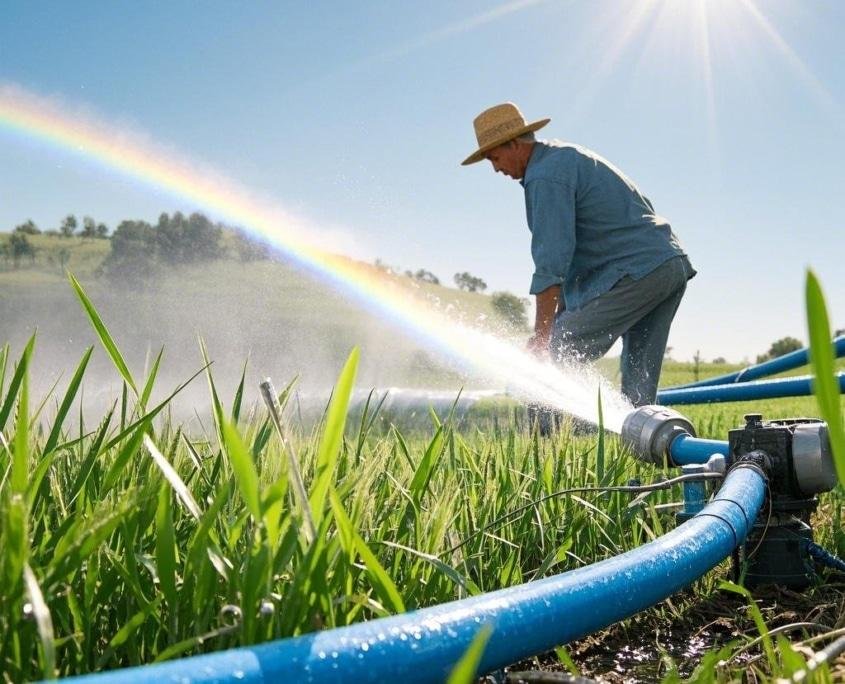
7. Common Mistakes Farmers Should Avoid
Choosing a pipe without checking pressure
A pipe that cannot safely handle the system’s pressure may leak, expand excessively or fail.
Better approach: Confirm the pipe’s rated working pressure against the pump and operating conditions before buying.
Selecting diameter by price alone
A lower-cost pipe may not provide the required flow if its diameter is unsuitable. An unnecessarily large pipe can also increase initial costs.
Better approach: Match the diameter to the expected flow, route length, pump and fittings.
Dragging the pipe over sharp ground
Stones, sharp metal edges and agricultural tools can damage the pipe during movement.
Better approach: Clear the route where practical and lift the pipe over sharp obstacles instead of dragging it across them.
Using incompatible connectors
A loose or unsuitable connection may leak even when the pipe itself is in good condition.
Better approach: Confirm connector compatibility and inspect joints before operating the system.
Ignoring small leaks
A leak can reduce water delivery and may worsen during continued use.
Better approach: Stop the system safely, identify the source and repair or replace the affected part using an appropriate method.
Storing the pipe without checking its condition
Poor storage, sharp objects or unsuitable environmental exposure can affect a pipe’s condition over time.
Better approach: Inspect, clean and store it according to the manufacturer’s instructions.
8. Troubleshooting: Why Is Your Layflat Pipe Not Delivering Enough Water?
If water is not reaching the required point or flow appears weaker than expected, check the system before purchasing a replacement pipe.
| Problem | Possible cause | What to check |
| Low water flow | Pump capacity or excessive friction losses | Pump performance, pipe diameter and length |
| Water not reaching the end | Leakage, blockage or unsuitable system design | Route, connections and outlets |
| Leakage near a joint | Lose or incompatible fitting | Connector size, clamp and joint condition |
| Excessive pipe expansion | Pressure may be above the permitted limit | Operating pressure and product rating |
| Sudden interruption | Pump issue or obstruction | Pump operation and pipeline blockage |
| Cuts or punctures | Rough handling or sharp surfaces | Inspect the damaged section and replace it as appropriate |
Do not continue operating a visibly damaged pipe or a system that appears to exceed its pressure rating. Shut it down safely and seek advice from the manufacturer or an irrigation professional if the cause is unclear.
9. Buying Layflat Pipe in Madhya Pradesh: What Local Farmers Should Check
Farmers in Indore, Dewas, Ujjain, Dhar, Ratlam and other parts of Madhya Pradesh may have different irrigation requirements depending on crop choice, water source, field layout and seasonal use.
For example, a farm using a pump to transfer water to a separate plot may need a different setup from a farm using a fixed distribution line. A vegetable grower may also have different handling needs from someone planning a permanent irrigation network.
Before purchasing a Layflat Pipe in Madhya Pradesh, check:
- Product availability: Confirm the actual sizes and specifications available from the supplier.
- Water source: Explain whether the pipe will connect to a pump, tank or another source.
- Distance: Share the measured pipeline length.
- Application: State whether the pipe is for water transfer, pump discharge or a suitable irrigation connection.
- Operating pressure: Provide the pump details and confirm the required rating.
- Fittings: Check which connectors are compatible and available.
- After-sales guidance: Choose a supplier who can explain the product limits and recommended handling.
When searching for an irrigation pipe manufacturer in Indore, look beyond the location and price. Compare the supplier’s actual product range, specifications, documentation and ability to answer application-related questions.
Similarly, when comparing pipe manufacturers in Madhya Pradesh, ask for product-specific information rather than relying on broad promotional claims.
10. How to Compare Layflat Pipe Manufacturers
Before choosing among Layflat pipe manufacturers, ask the same practical questions of each supplier:
- What material and construction are used?
- Which diameters and lengths are available?
- What is the rated working pressure?
- Is the pipe suitable for the intended application?
- Which fittings and connectors are compatible?
- What installation and storage instructions are recommended?
- Are technical specifications or quality documents available?
- What support is available if the product does not match the stated requirements?
Compare the answers rather than judging only by the quoted price. A pipe that is inexpensive but unsuitable for the operating conditions may not be economical in the long run.
If you are looking for agricultural piping in Indore, start by explaining the water source, pump details, route length and intended use. This gives the supplier more useful information than simply asking for the “best pipe.”
11. Agricultural Piping Solutions from Vishal Pipes and Fittings
Farm irrigation systems may need different products for different jobs. A fixed distribution line, a pump connection and a flexible water delivery line do not necessarily require the same type of pipe.
Vishal Pipes and Fittings serves customers looking for piping solutions for agricultural and water transportation requirements. The most suitable product should be chosen according to the application and the verified specifications of the available product range.
If you are comparing options from an irrigation pipe manufacturer in Indore, start by explaining your actual requirements instead of selecting a product based on its name alone.
You can explore the Vishal Pipes and Fittings website and its product range to review relevant offerings. Learn more about the business on the About Us page. You can also visit the blog for related piping and irrigation guidance.
Product availability note: Confirm that Layflat Pipe is part of Vishal’s current range before stating that Vishal manufactures or sells this specific product. If it is not currently offered, keep this article educational and direct readers to the relevant available agricultural piping products instead.

12. Frequently Asked Questions About Layflat Pipe
1. What is a Layflat Pipe used for in agriculture?
It can be used for suitable water transportation, pump discharge and temporary irrigation arrangements. The pipe’s pressure rating, diameter and construction must match the intended use.
2. Why do farmers use Layflat Pipe?
Its flexible, collapsible construction can make it easier to roll, move and store than many rigid pipeline arrangements. Its suitability still depends on the farm’s requirements and the product specifications.
3. Can Layflat Pipe be used for sprinkler irrigation?
A suitable Layflat Pipe may be used in some sprinkler irrigation arrangements. Check the system’s required pressure, flow, diameter and connection compatibility before installation.
4. Is Layflat Pipe better than HDPE Pipe?
Neither is automatically better. Layflat Pipe may suit temporary or movable water delivery, while HDPE Pipe is often considered for fixed water distribution. The correct choice depends on the application and verified specifications.
5. How do I select the correct Layflat Pipe diameter?
Consider the pump’s discharge, required flow, pipeline length, pressure losses and connector size. For a larger or complex irrigation system, have the sizing checked by an irrigation professional.
6. Can Layflat Pipe transport water over a long distance?
It may be suitable for some long-distance water transfer applications, but the pipe diameter, flow, pump performance and friction losses must be assessed together.
7. How should I maintain a Layflat Pipe?
Inspect it for cuts, leaks, damaged connections and unusual expansion. Clean, drain and store it according to the manufacturer’s instructions.
8. Can Layflat Pipe be used in gardens and nurseries?
Yes, if the selected product’s size, pressure rating and construction suit the intended water transfer arrangement.
9. Where can I find Layflat Pipe in Madhya Pradesh?
Contact agricultural piping suppliers serving your area and confirm the exact product availability, diameter, working pressure and compatible fittings before purchasing.
10. What is the difference between Layflat Pipe and a suction pipe?
A Layflat Pipe is generally used for suitable water delivery under positive pressure. A suction pipe is designed for the conditions created when a pump draws water, including resistance to the required suction conditions. They should not be treated as interchangeable unless the product is specifically designed and approved for that use.
11. Can Layflat Pipe connect directly to a water pump?
It may connect to a compatible pump discharge outlet when the pipe’s pressure rating, diameter and fittings are suitable. Verify the pump and pipe specifications before operating the system.
12. How long does a Layflat Pipe last?
There is no universal service life. Durability depends on product’s construction, pressure conditions, handling, frequency of use, environmental exposure and storage. Follow the manufacturer’s recommendations.
Need Help Choosing the Right Agricultural Pipe?
Before contacting a supplier, keep these details ready:
- Water source and pump details: [Add pump type, discharge and operating pressure]
- Required pipeline length: [Add measured length]
- Intended application: [Water transfer / pump discharge / suitable irrigation connection]
- Required flow: [Add known flow requirement]
- Connection size: [Add pump outlet or fitting size]
- Quantity required: [Add approximate length or quantity]
These details help the supplier understand the application and identify which available product specifications may be suitable.
If you are searching for agricultural piping solutions in Indore or elsewhere in Madhya Pradesh, contact Vishal Pipes and Fittings through the official website to enquiry about the products currently available for your requirements.
A practical rule for farmers: choose the pipe according to the water flow, pressure, route and application, not simply the lowest price or the largest diameter.
Author and Editorial Information
Author: Komal Parmar
Author Role: Agricultural & Piping Content Writer
Editorial Experience: This article has been prepared to help farmers, agricultural customers and irrigation buyers understand Layflat Pipe selection, applications, installation and maintenance. Product-related explanations should be checked against the actual specifications supplied by the manufacturer.Review date: November, 2026