Why Pipeline Safety Starts Before the Pipe Is Installed
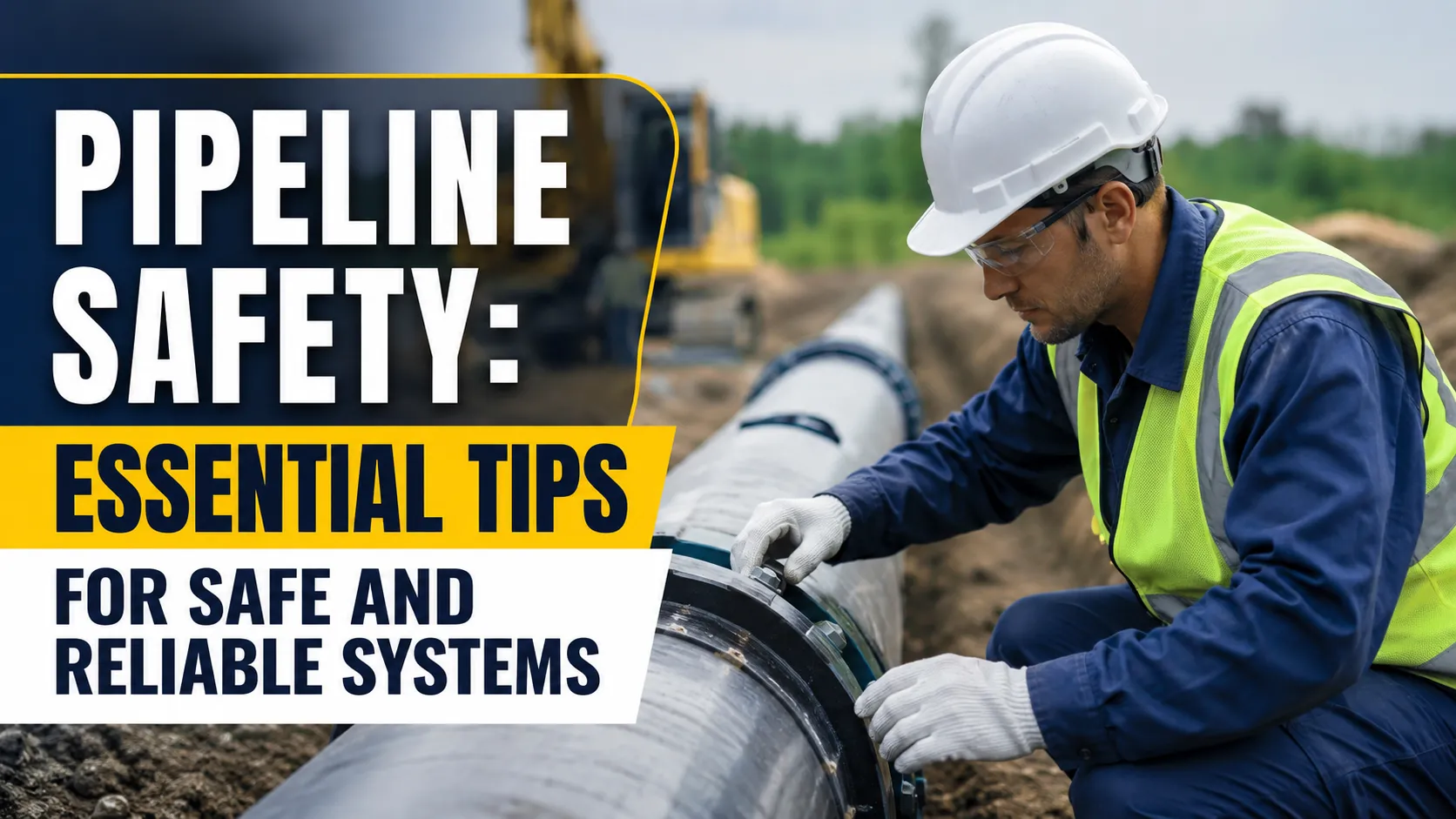
Pipeline Safety is not something you think about only after a pipe starts leaking. It begins much earlier—when you select the pipe, check its quality, plan the route, choose the right fittings, and prepare the installation site.
Imagine a farmer investing in a new irrigation system. The pipes look strong, the installation is completed, and water begins flowing. Everything seems perfect. A few months later, a joint starts leaking. Pressure drops. Water distribution becomes uneven. The farmer spends more money on repairs, loses valuable irrigation time, and may even need to replace damaged sections.
This is why safe pipeline systems require more than simply buying a pipe.
For farmers, contractors, builders, dealers, and infrastructure departments, the goal should be simple: choose the right pipe, install it correctly, test the system properly, and maintain it regularly.
India’s Bureau of Indian Standards identifies IS 4984:2016 for polyethylene pipes used for water supply and IS 4985:2021 for unplasticized PVC pipes for potable water supplies. These standards cover important characteristics and testing requirements that help establish pipe quality and performance.
The good news is that many pipeline failures can be prevented with a few practical precautions.
What Does Pipeline Safety Really Mean?
Pipeline Safety means protecting the entire pipeline system from leaks, bursts, pressure-related failures, poor connections, installation damage, and premature deterioration.
It is not only about the pipe itself.
A reliable system includes:
- Correct pipe material
- Suitable pressure rating
- Proper pipe diameter
- Quality fittings
- Correct jointing
- Proper trench preparation
- Safe transportation and handling
- Pressure testing
- Regular inspection
- Appropriate maintenance
A strong pipe can still fail if it is installed badly. Similarly, excellent installation cannot compensate for a pipe that is unsuitable for the application’s pressure, temperature, soil conditions, or intended use.
That is why pipeline safety should be treated as a complete system approach.
Pipeline Safety Begins With Choosing the Right Pipe
The first major decision is selecting a pipe according to the application.
A water supply pipeline may have different requirements from an agricultural irrigation line. A construction project may require different performance characteristics from a garden or drainage application.
HDPE pipes are widely used for water supply because of their flexibility, corrosion resistance, smooth internal surface, and ability to handle demanding service conditions. BIS information on IS 4984 also highlights characteristics such as tensile strength, elongation, and internal pressure resistance as important testing parameters.
PVC pipes, meanwhile, are commonly used in water distribution and other applications where their specific performance characteristics are suitable.
This is where working with a reliable HDPE Pipe Manufacturer in Indore or PVC Pipe Manufacturer in Indore can make a practical difference. A knowledgeable manufacturer can help buyers select pipe specifications based on the project’s actual requirements instead of simply choosing the cheapest available option.
Before purchasing, ask:
What pressure will the pipeline experience?
What type of water will flow through it?
Will the pipe be exposed to sunlight, soil movement, machinery, or chemicals?
Is the pipeline temporary or intended for long-term service?
The answers can change the correct pipe selection.
Check Pipe Quality Before Installation
One of the most common mistakes is inspecting the pipe only after a problem occurs.
A better approach is to inspect every important delivery before installation.
Look for:
- Cracks
- Cuts
- Deep scratches
- Deformation
- Damaged ends
- Uneven surfaces
- Incorrect markings
- Visible manufacturing defects
Pipe dimensions and material properties matter because they directly influence performance.
For example, BIS testing information for PVC pipes includes checks related to dimensions, wall thickness, hydraulic characteristics, hydrostatic pressure, impact resistance, and other physical or chemical properties.
For large agricultural or infrastructure projects, buyers should also maintain purchase records and product specifications.
If you are sourcing locally, searching for a High density pipe dealer in indore should not be based only on price. Compare product specifications, availability, technical support, and consistency of supply.
The cheapest pipe is not always the lowest-cost solution.
A pipe that fails early can create excavation costs, labour costs, water losses, crop losses, project delays, and replacement expenses.
Proper Pipeline Installation Is Half the Safety Equation
Even a high-quality pipe can be damaged during installation.
Consider a contractor installing an irrigation pipeline across uneven ground. If sharp stones remain under the pipe, excessive external stress can develop at certain points. If joints are poorly connected, leakage may appear when pressure increases.
That is why installation should follow a planned sequence.
Step 1: Survey the Pipeline Route
Before digging, identify:
- Pipeline length
- Elevation changes
- Soil conditions
- Existing underground utilities
- Road crossings
- Water source location
- Required outlets
- Valve locations
A simple route survey can prevent expensive mistakes later.
Step 2: Prepare the Trench Properly
The trench should provide suitable support for the pipe.
Remove sharp objects, large stones, construction debris, and other materials that could damage the pipe.
The pipe should not be forced into an unsuitable trench simply to save installation time.
Step 3: Handle Pipes Carefully
Dragging pipes across rough ground can cause scratches and surface damage.
Use appropriate lifting and handling methods, especially for large-diameter pipes.
Do not throw pipes from vehicles.
Do not use damaged sections without evaluating whether they remain suitable for service.
Step 4: Make Joints Correctly
A pipeline is only as reliable as its weakest connection.
Use compatible fittings and follow the manufacturer’s recommended joining procedure.
For projects involving HDPE, the jointing method should be selected according to the pipe, fitting, application, and installation requirements.
Step 5: Test Before Covering
Testing before final backfilling makes troubleshooting much easier.
A leak that is visible above ground is far easier and cheaper to repair than a leak buried under a completed road, field, or construction area.
Pressure Management Is Critical for Pipeline Safety
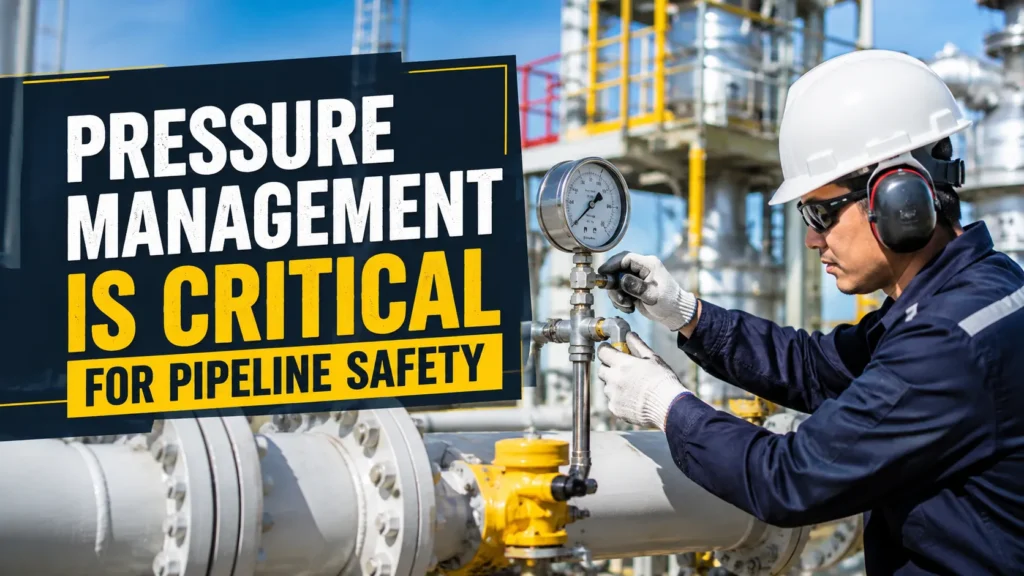
Water does not simply flow through a pipeline. It creates pressure, and pressure changes can affect the entire system.
A pipeline may experience:
- High operating pressure
- Sudden pressure changes
- Pump start-up pressure
- Pump shutdown effects
- Elevation-related pressure differences
- Water hammer
If the pipeline is not designed for its operating conditions, these forces can contribute to joint failures, leaks, or pipe damage.
This is particularly important in irrigation systems where pumps may be switched on and off frequently.
A good pipeline design should consider the operating pressure, pipe pressure class, fittings, valves, pump characteristics, and elevation profile.
Don’t assume that a larger pipe automatically means a safer system.
Correct specification matters more than simply choosing a bigger or thicker pipe.
HDPE vs PVC: Which Is Better for Pipeline Safety?
There is no universal winner. The correct choice depends on the project.
| Factor | HDPE Pipe | PVC Pipe |
|---|---|---|
| Flexibility | High | Lower than HDPE |
| Corrosion resistance | Excellent | Excellent |
| Typical water applications | Water supply, irrigation and infrastructure | Water supply, irrigation and other suitable systems |
| Handling | Lightweight compared with many traditional materials | Lightweight |
| Jointing | Often uses specialized fusion or compatible fittings | Commonly uses compatible socket/jointing systems |
| Site conditions | Useful where flexibility is valuable | Suitable where system design supports PVC |
| Selection priority | Pressure, application, design and installation | Pressure, application, design and installation |
The important point is not to choose a material because someone says it is “the best.”
Choose according to application, pressure, soil conditions, installation method, expected service life, and project requirements.
A professional HDPE Pipe Supplier in Indore or PVC Pipe Supplier in Indore should be able to explain these differences clearly.
A Real-World Example: How a Small Leak Becomes a Big Problem
Consider a hypothetical irrigation project serving a large agricultural field.
The pipeline was installed correctly in most areas, but one section used a poor-quality fitting. At first, the leak was small.
Nobody paid much attention.
Over time, water continued escaping from the joint. The pump had to work harder to maintain adequate pressure. Far-end sprinklers received less water. The farmer noticed uneven crop growth.
The original problem was not the pump.
It was one weak connection.
This example shows why pipeline safety is not about waiting for visible failure. Small problems should be identified before they affect the entire network.
For farmers, routine inspections around valves, joints, bends, outlets, and exposed sections can provide an early warning.
Pipeline Safety for Irrigation Systems
Agricultural pipelines face unique challenges.
Fields may experience:
- Tractor movement
- Soil settlement
- Temperature changes
- Uneven terrain
- Frequent pressure changes
- Seasonal installation and removal
- Exposure to sunlight
- Mechanical damage
An irrigation system therefore needs more than a pipe with the correct diameter.
Farmers should pay attention to the complete network.
This includes mainlines, sub-mainlines, laterals, valves, sprinklers, fittings, pump connections, and outlets.
When looking for Irrigation Pipe Manufacturer in Indore, buyers should check whether the supplier understands agricultural applications rather than treating every pipeline project the same way.
Similarly, those searching for Sprinkler pipe dealers near me should compare pipe quality and system compatibility before purchasing.
For sprinkler-based farming, the pipe must work properly with the pump, fittings, valves, and sprinkler equipment.
A pipeline is a network—not an isolated product.
Common Pipeline Safety Mistakes to Avoid
1. Choosing Only on Price
A lower purchase price may look attractive, but replacement and repair costs can quickly eliminate the initial saving.
2. Ignoring Pressure Requirements
Using a pipe without understanding system pressure can create unnecessary risk.
3. Poor Jointing
A quality pipe with a badly prepared joint can still leak.
4. Dragging Pipes on Rough Ground
Improper handling can create surface damage before the pipe even enters service.
5. Skipping Pressure Testing
Testing should not be treated as an optional step.
6. Covering the Pipeline Too Early
Backfilling before inspection can make repairs difficult.
7. Ignoring Valves and Fittings
A pipeline is only as reliable as the complete system.
8. Failing to Inspect Existing Pipelines
Older pipelines should be checked periodically rather than repaired only after failure.
How Dealers and Contractors Can Improve Pipeline Safety
Dealers and distributors are often the first point of contact for farmers and project managers.
That creates an important responsibility.
A reliable Pipe Manufacturer in Indore should focus on consistent quality and clear product specifications. Likewise, contractors should understand the application before recommending a product.
If a customer searches for Sprinkler irrigation pipe dealer in indore, Sprinkler system dealer in indore, or a Pipe hose shop near me, the decision should not stop at availability.
Ask about:
- Application
- Required diameter
- Pressure conditions
- Fittings
- Jointing method
- Installation environment
- Expected operating conditions
This approach builds long-term customer trust.
Pipeline Safety Checklist Before Starting a Project
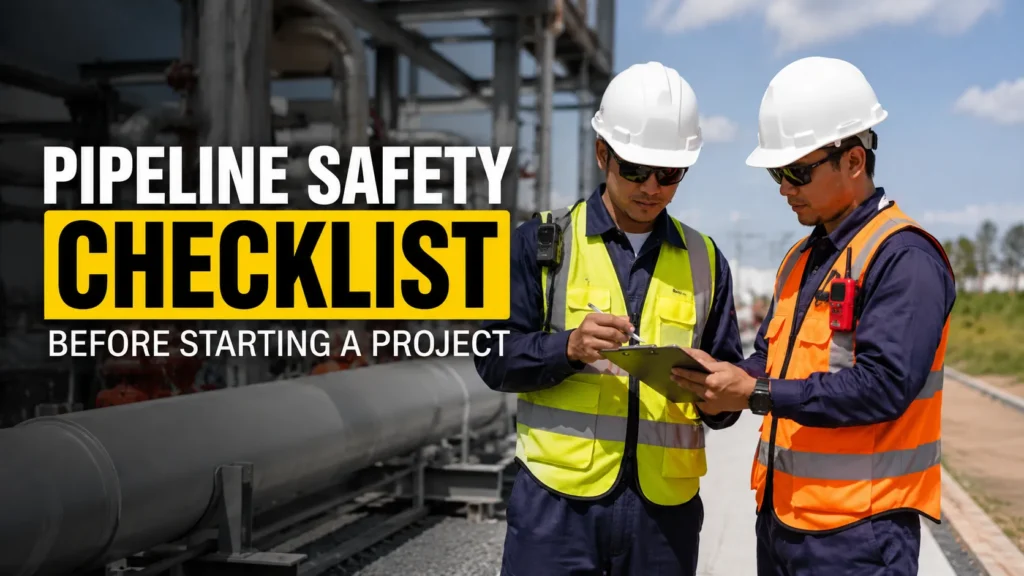
Use this simple checklist before installation:
Confirm the pipeline application.
Select the appropriate pipe material.
Check the required pressure rating.
Verify pipe dimensions and specifications.
Inspect pipes after delivery.
Check fittings and accessories.
Survey the pipeline route.
Remove sharp objects from the installation area.
Use proper handling methods.
Follow the recommended jointing procedure.
Install valves at appropriate locations.
Conduct pressure and leakage checks.
Inspect joints before backfilling.
Record the completed pipeline layout.
Schedule periodic inspections.
This checklist can help farmers, contractors, builders, and infrastructure teams reduce avoidable problems.
Choosing a Reliable Pipe Supplier Near You
Searching online for Pipe Supplier Near Me or HDPE Pipe Dealer Near Me is easy.
Choosing the right supplier requires more thought.
Look for a supplier that provides clear specifications, consistent products, appropriate fittings, technical guidance, and dependable delivery.
For agricultural projects, someone searching for a Suction pipe delear in indore may also need complementary irrigation products rather than a single pipe.
For residential or landscaping requirements, a Garden pipe dealer near me may be more appropriate.
borewell-related applications, buyers may specifically search for a Best column pipe dealer in indore.
The key lesson is simple: match the supplier to the application.
A supplier who understands your project can help reduce wrong-product purchases and installation problems.
Industry Trends: Where Pipeline Systems Are Heading
Modern pipeline projects are increasingly focused on durability, efficient water distribution, lower maintenance, and better resource management.
HDPE systems continue to attract attention because of their flexibility, corrosion resistance, and suitability for demanding water infrastructure. BIS’s current material information describes PE pipes as suitable for water supply and highlights properties such as pressure resistance, tensile performance, chemical resistance, and long service life.
At the same time, quality verification is becoming more important.
BIS maintains testing and certification information for standards such as IS 4984 and IS 4985, demonstrating the growing importance of measurable product performance rather than appearance alone.
For buyers, this means the future of pipeline procurement is likely to be less about “Which pipe is cheapest?” and more about:
Which pipe delivers dependable performance for this application?
That is the right question to ask.
How to Build a Safer Pipeline System: A Simple Action Plan
Start with the application.
Then calculate the expected operating conditions.
Select the suitable pipe material and specification.
Purchase from a dependable manufacturer or supplier.
Inspect the products before installation.
Prepare the route and trench correctly.
Install joints and fittings according to the recommended procedure.
Test the system before final backfilling.
Monitor pressure and visible leakage during operation.
Finally, create a basic maintenance schedule.
This approach turns pipeline safety from a one-time activity into an ongoing process.
Expert Insight: Quality Is an Investment, Not an Expense
A pipeline may remain underground or out of sight for years, but that does not mean its quality is unimportant.
In fact, hidden infrastructure deserves greater attention because failures can be expensive to locate and repair.
A good pipeline should deliver dependable service without constantly demanding attention.
That is why farmers should look beyond the initial purchase price. Contractors should look beyond installation speed. Dealers should look beyond short-term sales.
Everyone involved should focus on long-term system reliability.
Whether the project involves agricultural irrigation, water supply, construction, landscaping, or public infrastructure, the same principle applies:
Good planning + quality pipes + correct installation + regular inspection = safer pipeline performance.
Frequently Asked Questions About Pipeline Safety
Why is Pipeline Safety important?
It helps reduce leaks, pipe failures, water losses, operational interruptions, and unnecessary maintenance costs. It also improves the reliability of irrigation, water supply, and infrastructure systems.
Are HDPE pipes suitable for irrigation?
HDPE pipes can be suitable for irrigation applications because of their flexibility, corrosion resistance, and pressure-handling characteristics. The final selection should always match the application’s design requirements.
How can I prevent pipeline leaks?
Start with the correct pipe and fittings. Then focus on proper handling, correct jointing, pressure testing, and regular inspection of joints, valves, and connections.
How often should pipelines be inspected?
Inspection frequency depends on the application and operating conditions. Agricultural systems should be checked regularly, especially after installation, major pressure events, seasonal changes, or visible changes in water distribution.
How do I choose between HDPE and PVC?
Consider pressure, application, installation conditions, flexibility requirements, fittings, expected service conditions, and project specifications. A qualified manufacturer or supplier can help with selection.
Should a pipeline be pressure tested before backfilling?
Testing before final backfilling is generally a practical approach because leaks and joint problems are easier to identify and repair while the system remains accessible. Specific testing procedures should follow the applicable standard, project specification, and manufacturer’s instructions.
Where can I buy quality pipes in Indore?
Buyers can compare established manufacturers, distributors, and dealers based on product specifications, quality consistency, application suitability, technical support, and availability. A Plastic pipe manufacturer in indore or Plastic pipe dealer in indore may offer different product ranges, so always verify the pipe’s intended application before purchasing.
Final Thoughts: Make Safety Part of Every Pipeline Decision
A pipeline does not become reliable simply because the pipe looks strong.
Reliability comes from hundreds of small decisions—from selecting the right material to preparing the installation site, making secure joints, controlling pressure, testing the network, and maintaining it after commissioning.
So before your next project begins, ask yourself one question:
Is your pipeline designed only to work—or designed to work reliably for years?
At Vishal Pipe, choosing the right pipe solution starts with understanding the application. Whether you need HDPE, PVC, irrigation, sprinkler, suction, column, or other pipe solutions, selecting the right product and specification is an important first step toward a safer and more dependable pipeline system.
Planning a new irrigation, water supply, agricultural, or infrastructure project? Connect with Vishal Pipe to discuss your pipe requirements and choose a solution suited to your application.