The Right Suction Pipe Can Make Your Irrigation System Work Better
Suction Pipes may look like a simple part of a farm water system, but the right choice can make a noticeable difference in pumping performance, water flow, maintenance, and equipment life.
Imagine a farmer starting the irrigation pump early in the morning. The motor is running, but the water is not reaching the field properly. The problem may not be the pump at all. A poorly selected, damaged, undersized, or badly connected suction line can restrict water intake and affect the entire system.
This is why choosing the right pipe should never be based only on price or appearance.
India’s irrigation needs are also growing. According to the Economic Survey 2024–25, irrigation coverage increased from 49.3% of gross cropped area in FY2016 to 55% in FY2021. The same report notes that 95.58 lakh hectares had been covered under the Per Drop More Crop initiative by December 2024.
For farmers, contractors, dealers, and project buyers, this means one thing: efficient and dependable water movement matters more than ever.
What Are Suction Pipes and Why Do They Matter?
A suction pipe connects the water source to the pump inlet and helps move water into the pumping system. It can be used with water from sources such as ponds, tanks, open wells, canals, and other suitable sources.
Unlike a normal delivery pipeline, the suction side of a pump operates under different conditions. The pipe must handle suction without collapsing, while also maintaining a smooth path for water movement.
A good product should therefore offer the right combination of:
- Flexibility
- Strength
- Smooth internal surface
- Suitable diameter
- Weather resistance
- Easy handling
- Compatibility with the pump and fittings
Vishal Pipe’s published specifications for its suction hose include a 19 mm to 200 mm size range, flexible construction, smooth bore, weather resistance, and applications in domestic and agricultural water suction and supply.
How to Choose the Best Suction Pipes for Agriculture
Selecting the right product becomes easier when you check a few important factors before purchasing.
1. Start With Your Water Source
First identify where the pump will draw water from.
It could be:
- Farm pond
- Open well
- Water tank
- Canal
- Reservoir
- Storage tank
The distance between the water source and pump also matters. A longer suction line requires more careful planning because bends, fittings, elevation, and diameter can influence pump performance.
For example, a farmer drawing water from a nearby farm pond may have different requirements from a contractor installing a pumping system for a large irrigation project.
Before approaching a Suction pipe delear in indore, note your water source, approximate suction length, pump capacity, and required diameter.
That simple information can help the supplier recommend a more suitable option.
2. Select the Correct Diameter
Diameter is one of the most important considerations.
A pipe that is too small can restrict water flow and increase resistance. A larger pipe is not automatically better either because the complete system must match the pump inlet, fittings, and required flow.
Do not simply tell a dealer, “I need a large suction pipe.”
Instead, share the pump connection size and application.
A professional HDPE pipe manufacturer in indore or irrigation supplier can help you compare the pipe requirement with the rest of the water system.
3. Check the Pipe Material
Material directly affects flexibility, durability, handling, and service life.
PVC suction hoses are commonly used where flexibility and easy transportation are important. HDPE is widely used in agricultural and water-distribution applications where durability and long-term performance are priorities.
For example, Vishal Pipe lists HDPE pipes with features including lightweight construction, flexibility, corrosion and chemical resistance, while its suction hose is designed specifically for water suction and supply applications.
If you are comparing products from a PVC pipe manufacturer in indore, ask about the intended application instead of selecting only on the basis of material name.
Suction Pipes vs Other Agricultural Pipes
Not every agricultural pipe performs the same job.
| Pipe Type | Main Application | Important Advantage |
|---|---|---|
| Suction Hose | Pump water intake | Flexible and suitable for suction |
| HDPE Pipe | Main water distribution | Durable and flexible |
| PVC Pipe | Water supply and selected irrigation work | Lightweight and economical |
| Sprinkler Pipe | Field irrigation | Useful for sprinkler networks |
| Column Pipe | Borewell pump systems | Designed for pump support |
| Garden Tubing | Gardening and light water flow | Flexible and easy to handle |
The important point is simple: choose the pipe according to its job.
A suction hose should not be treated as a replacement for every delivery or distribution pipeline.
For a complete irrigation project, you may need multiple pipe types working together.
How Suction Pipes Work With a Complete Irrigation System
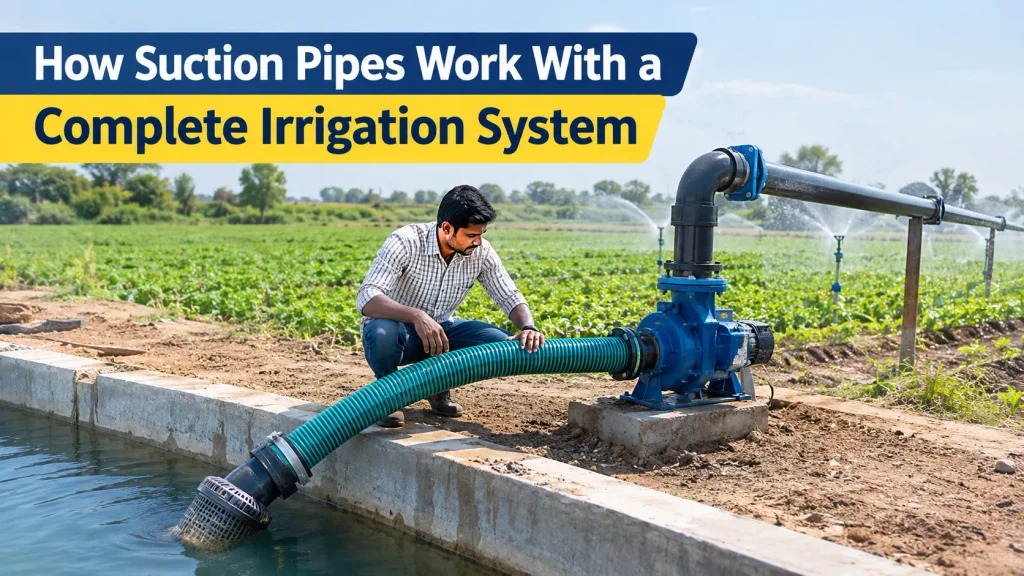
A typical farm irrigation arrangement may look like this:
Water Source → Suction Line → Pump → Main Pipeline → Distribution Line → Sprinkler/Field Application
Each section has a different responsibility.
The suction side brings water into the pump. The main pipeline carries water across the farm. The distribution system sends water toward the required field area.
For example, an irrigation project might combine a suction hose at the pump, HDPE for the mainline, and sprinkler pipes for field distribution.
This is where working with an experienced Sprinkler irrigation pipe dealer in indore can be useful because the supplier can look at the irrigation system as a whole rather than recommending one pipe in isolation.
A Practical Example From a Farm
Consider a farmer using a pump to draw water from a farm pond.
Earlier, the farmer used a low-quality flexible hose that frequently bent near the pump connection. Water flow became inconsistent, and the farmer had to stop irrigation to adjust the hose.
Instead of immediately replacing the pump, the farmer checked the suction line.
The replacement process involved three simple changes:
- Selecting a suitable diameter.
- Using a better-quality flexible suction hose.
- Securing the connections properly.
The result was a more stable water intake and fewer interruptions.
The lesson is important: when a pump system performs poorly, inspect the complete suction arrangement before assuming that the pump itself is the problem.
What Should Farmers Check Before Buying Suction Pipes?
Before visiting a supplier, keep these details ready:
Pump inlet size: Know the connection diameter.
Suction length: Measure the approximate distance between the water source and pump.
Water source: Tell the supplier whether you are using a pond, well, tank, or another source.
Operating conditions: Consider outdoor exposure, handling frequency, and seasonal use.
Fittings: Check whether connectors, clamps, couplings, or other accessories are compatible.
Quality: Look for a product designed for the intended suction application.
If you are searching for a Pipe hose shop near me, do not choose the first product simply because it fits physically. Confirm that it is suitable for your pump and application.
Common Mistakes When Buying Suction Pipes
Choosing Only by Price
The cheapest pipe may look attractive initially. Frequent replacement, leakage, poor connections, or interrupted irrigation can make the overall cost much higher.
Ignoring the Pump Connection
A pipe must work with the pump inlet and fittings. A mismatch can create unnecessary installation problems.
Using the Wrong Pipe for Suction
A normal water-delivery pipe is not automatically suitable for pump suction.
Ignoring Bends
Sharp bends can affect water movement and may create unnecessary stress on the hose.
Buying Without Measuring
Guessing the length or diameter can lead to avoidable purchasing mistakes.
Selecting Without Considering the Application
A small farm irrigation system and a large infrastructure project do not necessarily need the same solution.
A reliable Plastic pipe manufacturer in indore or supplier should ask questions about the application before recommending a product.
Expert Tips for Better Pump and Suction Performance
A few practical habits can help extend the working life of your system.
Keep the suction line as direct as practical. Unnecessary bends should be avoided.
Check connections regularly. Loose joints can create operational problems.
Inspect the hose before every major irrigation season. Look for cracks, cuts, deformation, or worn connections.
Keep the intake arrangement clean. Debris around the water intake can affect flow.
Avoid unnecessary dragging. Rough handling can shorten the life of flexible hoses.
Store properly when not in use. Protect flexible products from unnecessary damage and extreme exposure.
If your farm uses sprinkler irrigation, you can also consult a Sprinkler system dealer in indore about matching the suction, mainline, and field distribution components.
Where Dealers and Contractors Should Focus
For dealers and distributors, product knowledge is just as important as product availability.
Customers increasingly want a complete solution rather than a pipe sold without guidance.
Someone searching for Sprinkler pipe dealers near me may also need fittings, connectors, HDPE mainline, suction hose, or field irrigation components.
Similarly, a customer looking for a High density pipe dealer in indore may need help deciding whether HDPE is appropriate for the mainline, distribution system, or another application.
A good dealer should therefore ask:
- What is the application?
- What is the water source?
- What pump is being used?
- What diameter is required?
- How long is the pipeline?
- What operating conditions will it face?
- Are matching fittings required?
- Is this a retail or bulk requirement?
This approach builds trust and reduces incorrect purchases.
Why Material and Manufacturing Quality Matter
Agricultural pipes often operate outdoors and may be exposed to sunlight, dust, moisture, changing temperatures, chemicals, and frequent handling.
That is why buyers should look beyond a product’s appearance.
If you are comparing a Plastic pipe dealer in indore, ask about material quality, available sizes, application suitability, specifications, and after-sales support.
For larger projects, a dependable Pipe Manufacturer in Indore can also provide consistency across bulk requirements.
Vishal Pipe’s published product range includes HDPE, sprinkler, suction, column, and other piping solutions, allowing different parts of an irrigation or water-management system to be considered together.
Current Irrigation Trends: Why Better Pipe Selection Matters
Water efficiency is becoming an increasingly important part of Indian agriculture.
The Economic Survey 2024–25 highlights micro-irrigation as an important way to reduce agriculture’s water footprint. It also reports that micro-irrigation coverage under relevant government initiatives has expanded substantially.
Government policy is also moving toward modernized, pressurized irrigation networks. In 2025, the Union Cabinet approved a ₹1,600 crore initial outlay for modernization of Command Area Development and Water Management under PMKSY, including underground pressurized piped irrigation and technology-supported water management.
For farmers and infrastructure contractors, these developments point toward more organized and efficient water-distribution systems.
That makes correct pipe selection an important part of modern irrigation planning.
Quick Buying Checklist for Suction Pipes
Before placing your order, ask yourself:
Have I identified the water source?
Have I measured the suction distance?
Do I know the pump inlet size?
Is the selected diameter suitable?
Is the material appropriate for suction?
Are the fittings compatible?
Have I checked flexibility and strength?
Is the product suitable for outdoor agricultural use?
Does the supplier provide the required quantity?
Can the supplier support future replacement or additional requirements?
If you answer “yes” to these questions, you are much more likely to make a practical purchase.
How to Find the Right Pipe Supplier in Indore
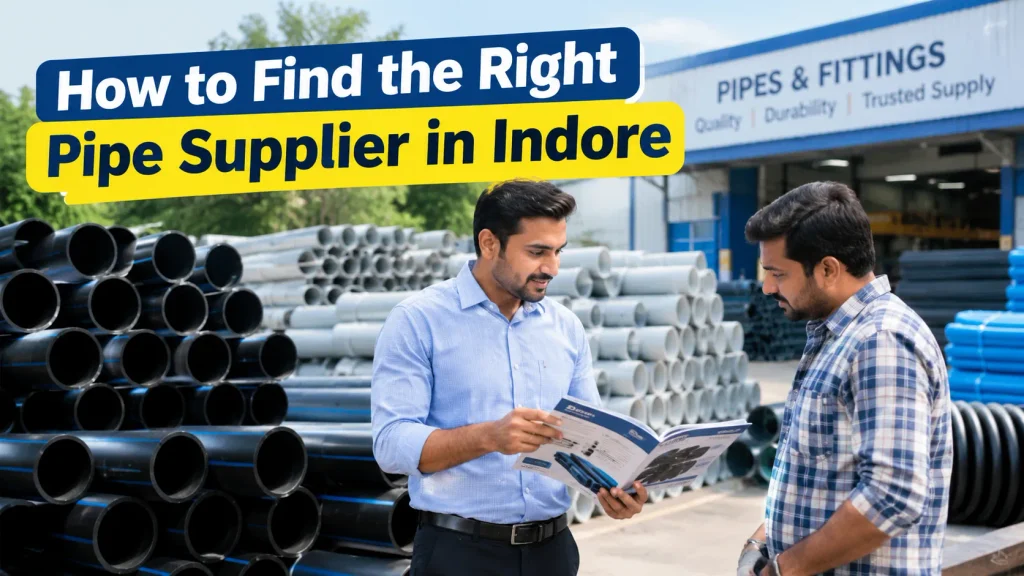
When searching online for a Pipe Supplier Near Me, don’t compare suppliers only by price.
Look for a company that offers a suitable product range, understands agricultural applications, provides specification-based guidance, and can support both individual and bulk requirements.
Farmers may need one or two coils. Contractors and government projects may need much larger quantities with consistent specifications.
For customers specifically comparing a Garden pipe dealer near me, remember that garden tubing and suction hoses serve different purposes. The correct product depends on the application.
Customers looking for a Best column pipe dealer in indore should also distinguish borewell column pipe requirements from pump suction requirements. Column pipes support submersible pump installations, while suction hoses serve pump intake applications.
Why Consider Vishal Pipe for Your Requirement?
Vishal Pipe has been operating in the pipe industry since 1969 and offers a broad range of agricultural, industrial, and water-management products. Its published product range includes suction hose, HDPE pipe, sprinkler pipe and fittings, column pipe, and other piping solutions.
Its suction hose range is listed for domestic and agricultural water suction and supply, with flexible construction, smooth bore, weather resistance, and multiple size options.
For farmers, irrigation contractors, dealers, builders, and infrastructure buyers, having access to multiple pipe categories can make project planning simpler.
If you’re comparing a HDPE pipe supplier in indore, a PVC Pipe Supplier in Indore, or an irrigation-focused supplier, the most important question remains the same: Does the product match the actual job?
Frequently Asked Questions About Suction Pipes
What are Suction Pipes used for?
They are primarily used to move water from a source into a pump during suction operations. Agricultural applications can include drawing water from ponds, tanks, wells, and other suitable sources.
How do I choose the correct size?
Start with the pump inlet size, required water flow, suction distance, and system design. Avoid selecting the diameter only by visual appearance.
Are flexible suction hoses suitable for agriculture?
Yes. Flexible suction hoses are commonly used for agricultural water intake where easy handling, transportation, and connection are important. Vishal Pipe lists its suction hose for domestic and agricultural water suction and supply.
Can the same pipe be used for suction and delivery?
Not necessarily. Suction and delivery conditions are different. Always select the product according to its intended application and pressure requirements.
How often should I replace a suction hose?
There is no single replacement period. Inspect it regularly and replace it when you notice cracks, damage, deformation, severe wear, or unreliable connections.
Where can I buy suction products in Indore?
Farmers and contractors can compare local suppliers based on product specifications, availability, application guidance, and service support rather than price alone. Vishal Pipe lists its Indore address and contact details on its official website.
Final Word: Choose for Performance, Not Just Price
A successful irrigation system starts with making the right decisions before installation.
The best Suction Pipes are not simply the cheapest or the thickest. They are the ones that match the pump, water source, diameter, operating conditions, fittings, and overall irrigation design.
For a farmer, that can mean fewer interruptions during irrigation. ]a dealer, it means fewer customer complaints. For a contractor, it can mean smoother installation and better project performance.
So, before your next purchase, measure first, understand your application, compare specifications, and speak with a supplier who understands agricultural water systems.