
Water is one of the biggest investments in farming. Every drop matters, especially when crops depend on timely irrigation. Many farmers still struggle with uneven water distribution, high labor costs, and unnecessary water wastage. A well-installed Rain Pipe irrigation system solves these problems by delivering water evenly across the field while saving both time and resources.
Whether you’re growing vegetables, wheat, maize, cotton, or horticultural crops, installing a Rain Pipe Irrigation System correctly is the key to getting the best performance. This complete guide will walk you through every step in a simple and practical way, making it easy even for first-time users.
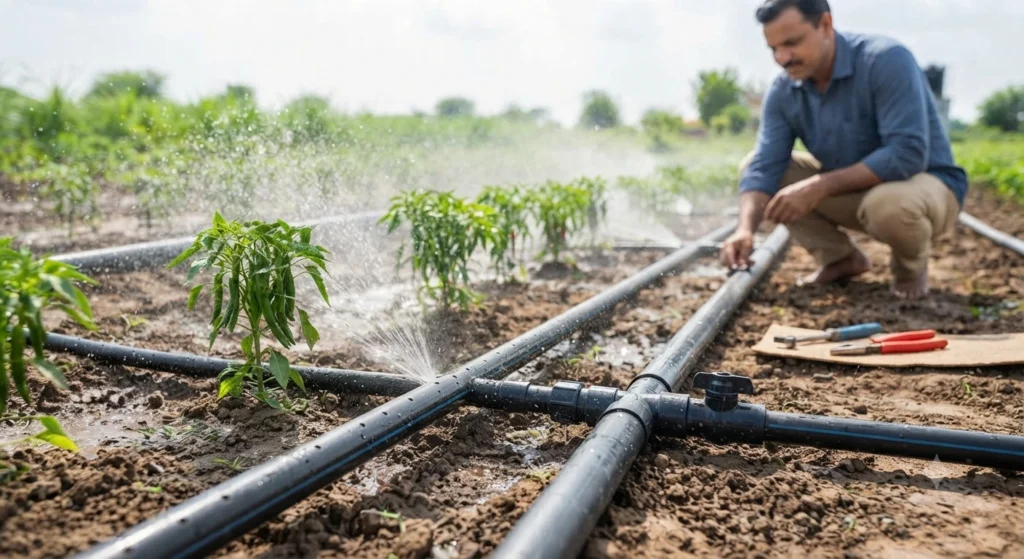
Why Farmers Are Switching to Rain Pipe Irrigation
Imagine two neighboring farms. One farmer spends hours moving traditional irrigation pipes from one field to another. Water reaches some crops while others remain dry. The second farmer installs a Rain Pipe system that distributes water uniformly within minutes.
At the end of the season, the second farmer notices:
- Better crop growth
- Lower water consumption
- Reduced labor costs
- Healthier soil moisture
- Improved crop yield
This is why Rain Pipe irrigation has become one of the fastest-growing irrigation methods among Indian farmers.
What is a Rain Pipe Irrigation System?
A Rain Pipe Irrigation System is a flexible irrigation pipe specially designed with laser-punched holes that spray water like gentle rainfall. Instead of flooding the entire field, it distributes water evenly over the crop area.
This irrigation method works especially well for:
- Vegetable farming
- Wheat cultivation
- Cotton farming
- Groundnut fields
- Onion cultivation
- Chilli farming
- Floriculture
- Nurseries
- Fruit orchards
- Kitchen gardens
Because of its affordability and easy installation, Rain Pipe systems are becoming a preferred choice for small and large farms alike.
Benefits of Installing a Rain Pipe System
Installing the system correctly provides long-term advantages.
• Saves Water
The system delivers water only where crops need it, reducing water wastage significantly.
• Uniform Water Distribution
Every section of the field receives almost equal water pressure, helping crops grow evenly.
• Easy Installation
Unlike complicated irrigation systems, Rain Pipe installation requires minimal tools and can often be completed within a few hours.
• Low Maintenance
Once installed properly, the system requires very little maintenance besides routine cleaning.
• Cost Effective
Rain Pipe systems are much more affordable than many advanced irrigation methods while still delivering excellent results.
• Portable
The pipes can easily be moved from one field to another whenever require
Things You’ll Need Before Installation
Before starting, keep all the required materials ready.
- Rain Pipe
- PVC main pipeline
- Connectors
- End caps
- Control valves
- Tee connectors
- Elbows
- Filters
- Clamps
- Punch tool
- Water pump
- Measuring tape
Using high-quality materials from a trusted PVC pipe manufacturer in Indore ensures durability and better water flow throughout the irrigation system.
Step 1: Measure Your Field
Every successful installation begins with proper planning.
Before laying the Rain Pipe:
- Measure field length
- Measure field width
- Identify the water source
- Check field slope
- Mark irrigation rows
Proper measurements help determine the required pipe length and avoid unnecessary expenses.
Step 2: Choose the Right Water Source
Rain Pipe systems can operate using different water sources.
Common options include:
- Borewell
- Open well
- Farm pond
- Water tank
- Canal connection
The water source should provide adequate pressure for uniform water distribution.
Step 3: Install the Main PVC Pipeline
The main PVC pipeline acts as the backbone of the irrigation system.
Installation tips:
- Lay the pipeline along one side of the field.
- Ensure proper alignment.
- Use quality connectors.
- Secure all joints tightly.
- Avoid unnecessary bends.
Choosing premium-quality PVC pipes helps reduce leakage and improves system life.
Step 4: Install a Filter
This is one step many farmers ignore.
A filter prevents:
- Mud particles
- Sand
- Small stones
- Leaves
- Debris
from entering the Rain Pipe holes.
Without a filter, clogging becomes common and irrigation efficiency decreases over time.
Step 5: Connect the Rain Pipe
Now connect the Rain Pipe to the main PVC pipeline.
Remember to:
- Keep rows parallel.
- Maintain equal spacing.
- Avoid twisting the pipe.
- Fix connectors tightly.
- Install end caps properly.
Straight pipe installation provides better water pressure across the entire field.
Step 6: Check Water Pressure
Before finalizing the installation, start the water supply.
Observe:
- Water reaches every row.
- Uniform rainfall pattern.
- No leakage.
- No blocked holes.
- Proper pressure throughout the field.
If any leakage appears, tighten connectors immediately.
Step 7: Test the Entire System
Allow the irrigation system to run for 15–20 minutes.
Inspect:
- Every Rain Pipe row
- Main pipeline
- Joints
- Valves
- End caps
- Spray coverage
Testing helps identify small issues before regular irrigation begins.
Common Installation Mistakes to Avoid
Many irrigation problems occur because of simple installation mistakes.
Avoid these common errors:
- Installing without measuring the field
- Using poor-quality connectors
- Ignoring water pressure
- Skipping the filter
- Twisting the Rain Pipe
- Uneven pipe spacing
- Loose pipe joints
- Excessive pipe bending
- Not testing after installation
Correct installation improves efficiency and extends the life of the system.
Maintenance Tips for Longer Life
Proper maintenance keeps your Rain Pipe system working efficiently for years.
Follow these practices:
- Clean the filter regularly.
- Flush the pipes periodically.
- Check for leaks every week.
- Remove dirt from connectors.
- Store pipes safely after seasonal use.
- Protect pipes from unnecessary mechanical damage.
- Replace damaged fittings immediately.
Simple maintenance reduces repair costs and improves irrigation performance.
Which Crops Benefit the Most?
Rain Pipe irrigation performs exceptionally well for:
- Tomato
- Potato
- Onion
- Chilli
- Brinjal
- Cabbage
- Cauliflower
- Groundnut
- Wheat
- Maize
- Cotton
- Sugarcane (early stages)
- Watermelon
- Muskmelon
- Flowers
Farmers growing these crops often experience better water management and healthier plant growth.
How to Choose the Right Rain Pipe
Not every Rain Pipe offers the same quality.
Consider these factors before buying:
- Pipe thickness
- Water pressure capacity
- UV resistance
- Hole spacing
- Material quality
- Flexibility
- Durability
- Warranty
- Availability of accessories
- After-sales support
Buying from a trusted manufacturer ensures better performance and long-term reliability.
Why Quality PVC Pipes Matter
A Rain Pipe system performs only as well as the pipeline connected to it.
High-quality PVC pipes offer:
- Better pressure handling
- Leak-proof joints
- Long service life
- Corrosion resistance
- Smooth water flow
- Easy installation
- Lower maintenance costs
For farmers looking for reliable irrigation solutions, choosing a reputed PVC pipe manufacturer in Indore can make a significant difference in system performance and durability.
Where to Buy Rain Pipe Irrigation Systems?
When purchasing irrigation products, always choose suppliers who provide:
- Certified products
- Complete installation accessories
- Technical guidance
- Product warranty
- Genuine fittings
- Reliable customer support
If you’re searching online for a Garden pipe dealer near me or a trusted sprinkler system dealer in Indore, look for suppliers with a proven reputation, quality products, and strong after-sales service.
Why Farmers Trust Vishal Pipe
For years, Vishal Pipe has been helping farmers improve irrigation efficiency with high-quality piping solutions designed for Indian farming conditions. From durable Rain Pipe systems to premium PVC and irrigation pipes, the company focuses on delivering products that are reliable, long-lasting, and easy to install. Whether you’re setting up a new irrigation system or upgrading an existing one, Vishal Pipe offers dependable solutions backed by quality and customer support.
Final Thoughts
Installing a Rain Pipe Irrigation System is not just about connecting pipes—it’s about creating a smarter, more efficient way to irrigate your fields. A properly installed system saves water, reduces labor, and helps crops receive consistent moisture for healthier growth and improved yields. By following the right installation steps, avoiding common mistakes, and choosing quality materials, farmers can enjoy reliable irrigation season after season.
If you’re planning to invest in a Rain Pipe system or looking for durable irrigation products, Vishal Pipe is a trusted name offering high-quality solutions for modern agriculture. Their expertise in irrigation and PVC piping helps farmers build efficient systems that deliver long-term value and dependable performance.
Frequently Asked Questions (FAQs)
1. What is a Rain Pipe irrigation system?
A Rain Pipe irrigation system is a flexible irrigation pipe with specially designed holes that spray water like natural rainfall. It provides uniform water distribution, reduces water wastage, and is ideal for crops such as vegetables, wheat, cotton, maize, and horticultural plants.
2. How do I install a Rain Pipe irrigation system?
Installing a Rain Pipe system involves measuring your field, laying the main PVC pipeline, connecting the Rain Pipe, installing a filter, checking water pressure, and testing the system for leaks. Proper installation ensures even water distribution and longer system life.
3. Which crops are best suited for Rain Pipe irrigation?
Rain Pipe irrigation works well for a wide range of crops, including:
- Vegetables
- Onion
- Tomato
- Chilli
- Wheat
- Maize
- Cotton
- Groundnut
- Watermelon
- Flower crops
- Nursery plants
4. How long does a Rain Pipe irrigation system last?
The lifespan of a Rain Pipe depends on its material quality, water quality, and maintenance. A high-quality Rain Pipe that is cleaned regularly and stored properly can last for several farming seasons while maintaining efficient performance.
5. Why should I use a filter with a Rain Pipe system?
A filter prevents sand, mud, leaves, and other debris from entering the Rain Pipe. This reduces clogging, maintains consistent water flow, and extends the life of the irrigation system.
6. Where can I buy a quality Rain Pipe irrigation system in Indore?
For durable and reliable irrigation solutions, choose a trusted supplier with quality products and technical support. Vishal Pipe, a leading PVC pipe manufacturer in Indore, offers premium Rain Pipe irrigation systems and other agricultural piping solutions designed to improve water efficiency and crop productivity.
Author Bio – Purvi Rajawat
Purvi Rajawat is an experienced SEO content writer with expertise in creating informative, engaging, and search-optimized content for the agriculture and infrastructure industries. She specializes in writing user-focused blogs that simplify technical topics while improving online visibility and organic rankings. Her content combines in-depth research, practical insights, and storytelling to help readers make informed decisions. Passionate about digital marketing and SEO, Purvi creates content that delivers value to both businesses and audiences. Through her work with Vishal Pipe, she aims to educate farmers and professionals about reliable irrigation solutions and modern piping technologies.
