
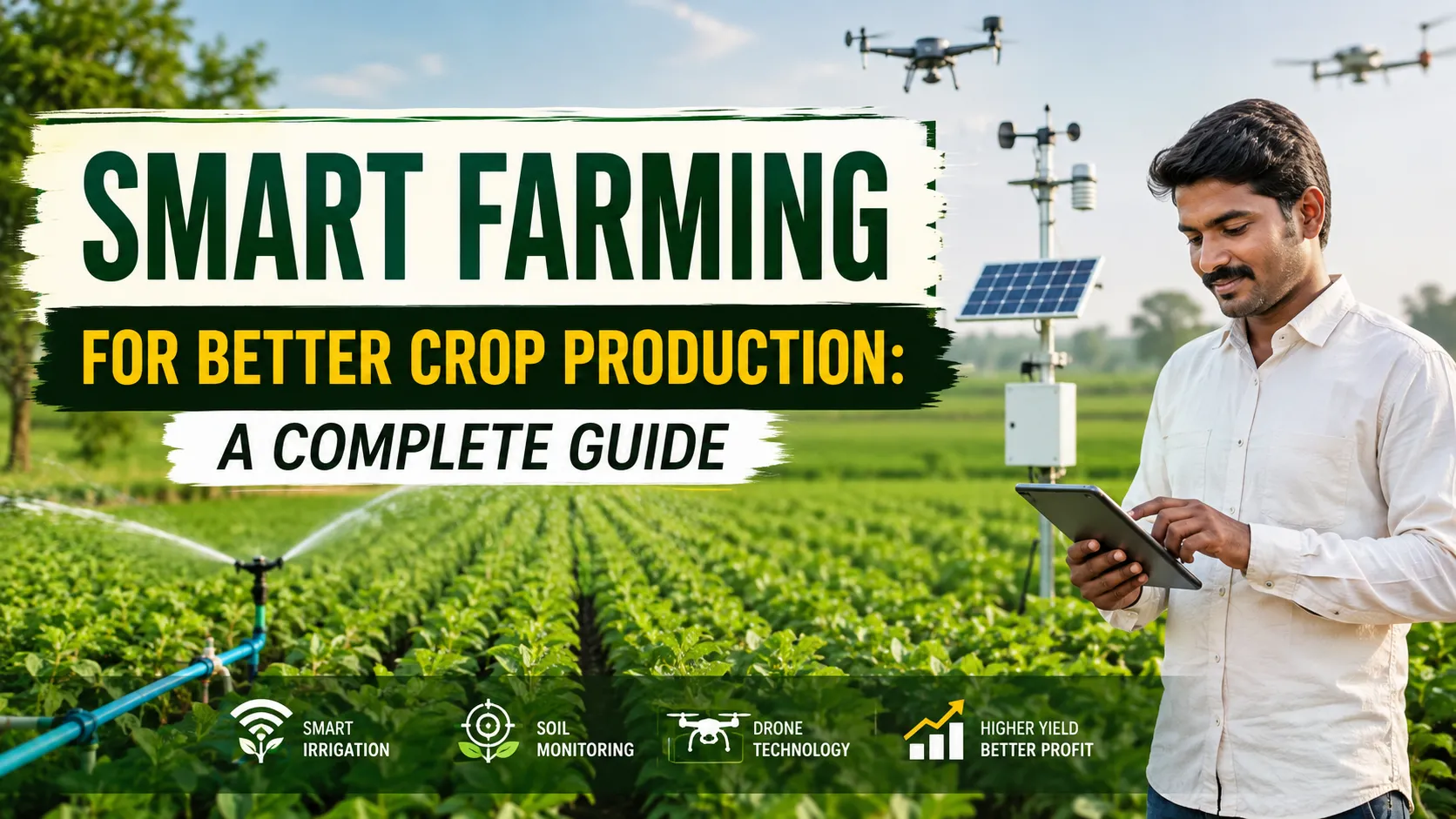
Why Smart Farming Is Changing Agriculture
Smart Farming is helping farmers move from traditional guesswork toward better planning, efficient irrigation, and data-based crop management. Instead of applying the same amount of water, fertilizer, or other resources everywhere, farmers can now make decisions according to crop needs, soil conditions, weather, and field requirements.
Think about a farmer checking his field early in the morning. One part of the farm may have enough moisture, while another area may already be dry. If the entire field receives the same amount of water, some crops may get too much while others may not receive enough.
This affects crop growth, water consumption, electricity costs, labour, and eventually farm income.
This is where Smart Farming becomes useful.
It does not always mean buying expensive machines or installing complicated technology. A farmer can begin with simple improvements such as better irrigation planning, efficient pipes, sprinkler systems, soil moisture monitoring, automated pumps, and regular maintenance.
For farmers, contractors, builders, dealers, and infrastructure departments, the goal is straightforward: use available resources more efficiently while creating better conditions for crop production.
What Is Smart Farming?
Smart Farming means using technology, information, modern equipment, and improved agricultural practices to make farming more efficient.
The approach can include:
- Smart irrigation systems
- Drip irrigation
- Sprinkler irrigation
- Soil moisture sensors
- Weather monitoring
- Automated pumps
- Crop monitoring
- Agricultural drones
- GPS-based equipment
- Mobile farming applications
- Data-based irrigation planning
The important thing is not to use technology simply because it is available.
A smart system should solve a genuine farming problem.
For example, if water is being wasted because of leakage, replacing damaged pipes may provide more value than purchasing an expensive digital system. If irrigation is inconsistent, improving pipe sizing and sprinkler placement may be the first priority.
That practical approach makes Smart Farming useful for both small farms and large agricultural projects.
Why Smart Farming Matters for Better Crop Production
Water is one of the most important resources in agriculture. However, more water does not automatically mean better crops.
Overwatering can create root problems, nutrient loss, fungal diseases, and unnecessary electricity consumption. Underwatering can create plant stress and reduce crop growth.
A properly planned irrigation system helps deliver water where it is required.
This is why the physical infrastructure behind irrigation is extremely important. Farmers looking for an HDPE Pipe Manufacturer in Indore should consider more than the price of the product. Pipe quality, pressure rating, size, flexibility, installation requirements, and application should all be evaluated.
The same applies when choosing a PVC Pipe Manufacturer in Indore for agricultural water distribution.
A reliable irrigation network allows water to move efficiently from the source to the crop area. When that infrastructure works together with modern monitoring and irrigation techniques, farmers can make better use of their available water.
Smart Farming and Efficient Irrigation
Irrigation is one of the strongest foundations of Smart Farming.
A modern irrigation system can be designed around the actual requirements of the crop rather than following a fixed routine.
Sprinkler irrigation distributes water over the field, while drip irrigation delivers water closer to the root zone. Other irrigation products can also be selected according to crop type, field layout, soil condition, and water availability.
A basic irrigation network may look like this:
Water Source → Pump → Main Pipe → Sub-Main → Field Lines → Sprinklers/Drippers → Crop
Every component has a role.
If the pipeline is too small, pressure may fall. joints are poorly installed, leakage can occur. If sprinkler placement is incorrect, some areas may receive more water than others.
Working with an Irrigation Pipe Manufacturer in Indore can help farmers and contractors choose products according to the requirements of their irrigation system.
How Smart Farming Uses Better Water Management
Good water management begins before the pump is switched on.
Farmers should understand their water source, available flow, pump capacity, field size, crop requirements, and soil conditions.
A field with sandy soil may require a different irrigation approach from one with heavier soil. A fruit orchard may require a different system from a wheat field.
Weather also matters.
If rainfall is expected, unnecessary irrigation can waste water. During hotter periods, crop water requirements may increase.
This is where Smart Farming combines simple farming knowledge with modern information.
The farmer remains in control, but better information makes the decision easier.
Smart Farming: HDPE vs PVC Pipes for Agriculture
Both HDPE and PVC pipes can be useful for agricultural applications. The right choice depends on the project.
| Feature | HDPE Pipe | PVC Pipe |
|---|---|---|
| Flexibility | High | Comparatively lower |
| Impact resistance | Excellent | Good |
| Corrosion resistance | Excellent | Excellent |
| Suitable for irrigation | Yes | Yes |
| Handling uneven terrain | Highly suitable | Requires proper planning |
| Common applications | Irrigation and water transportation | Water distribution and irrigation |
| Selection factor | Pressure, flexibility and field conditions | Application, pressure and installation |
Farmers should not choose a pipe simply because it is popular.
An HDPE Pipe Supplier in Indore should be able to explain the suitable pipe size, pressure rating, and application. Similarly, a PVC Pipe Supplier in Indore should help customers understand whether PVC is suitable for their specific installation.
For contractors, comparing products before installation can prevent future maintenance problems.
Smart Farming: Step-by-Step Irrigation Guide
Step 1: Check the Water Source
Start by identifying where the water is coming from.
It could be a borewell, open well, canal, pond, tank, or another source.
Check the available water quantity, pump capacity, pressure, and operating time.
For borewell systems, the pump and column pipe also need to be selected carefully.
Step 2: Study the Field
Walk through the complete farm.
Look for:
- Slopes
- Low-lying areas
- Soil differences
- Existing pipelines
- Waterlogging
- Crop spacing
- Field boundaries
Creating a simple field layout can help determine where the main line, valves, sub-lines, and sprinklers should be installed.
Step 3: Select the Irrigation Method
The irrigation method should match the crop.
Sprinklers can be useful when wider field coverage is required. Drip irrigation can be suitable when water needs to reach the root zone more precisely.
The decision should depend on crop type, soil, water availability, field size, budget, and expected performance.
Step 4: Select the Correct Pipe
Pipe selection is one of the most important parts of the system.
Farmers searching for a Sprinkler Pipe Manufacturer in Indore should compare pressure ratings, sizes, material quality, fittings, durability, and suitability for the intended application.
Contractors comparing a Pipe Manufacturer in Indore should also consider manufacturing quality, technical support, availability, and delivery capabilities.
Step 5: Install the System Properly
Even a high-quality product can perform poorly when installation is incorrect.
Check:
- Pipe joints
- Valves
- Fittings
- Bends
- Sprinkler placement
- Pressure
- Leakage
Test the system before starting regular irrigation.
Step 6: Monitor the Field
Observe the crop after irrigation.
Are all areas receiving water?
some areas too wet?
Are some plants showing signs of stress?
This simple observation remains valuable even when advanced technology is being used.
Smart Farming and Soil Moisture Monitoring
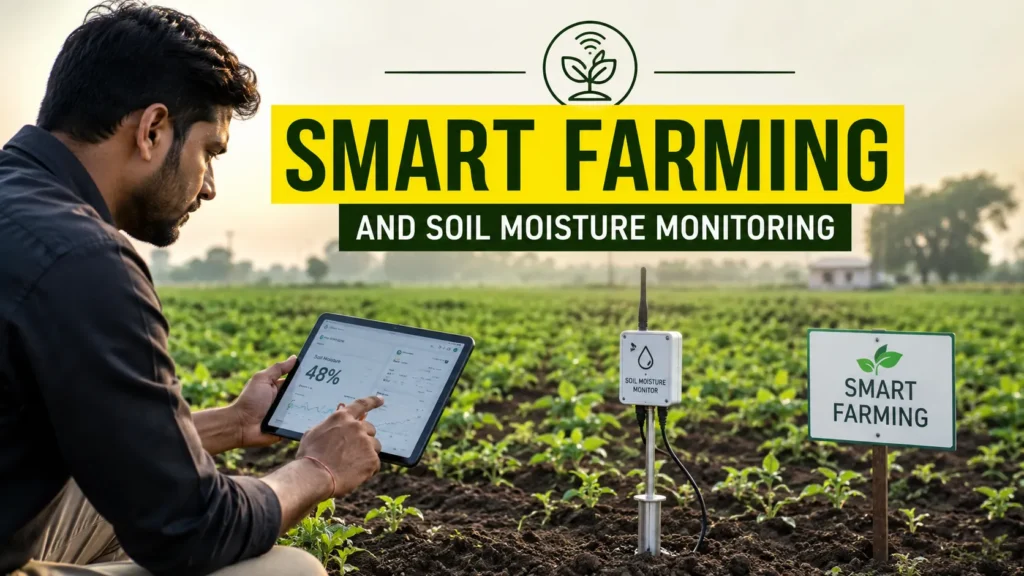
One of the most useful technologies in Smart Farming is soil moisture monitoring.
A soil moisture sensor can provide information about the amount of water present in the soil. Instead of irrigating simply because it is a particular day of the week, farmers can use field conditions to support their decision.
For example, imagine a farmer normally irrigates every three days. Heavy rainfall occurs on the second day. Following the usual schedule could result in unnecessary watering.
A moisture sensor combined with weather information can help the farmer make a more informed decision.
This technology can be particularly useful for farms where water availability is limited or irrigation costs are significant.
However, technology should support agricultural knowledge rather than completely replace it.
A Real-World Smart Farming Example
Research and agricultural projects show that improved irrigation management can produce meaningful results.
ICAR has reported technology-based irrigation approaches involving soil moisture monitoring and sensor-based irrigation scheduling. Such systems can help farmers determine when irrigation is actually required rather than relying entirely on fixed schedules.
The results of individual projects vary because soil, crop variety, weather, irrigation design, and management practices are different.
The important lesson is that Smart Farming can help connect field conditions with irrigation decisions.
For farmers, this means the question changes from:
“When should I water the field?”
to:
“Does my crop need water right now, and how much?”
That is a major shift in agricultural decision-making.
Smart Farming in Indore and Madhya Pradesh
For farmers in Madhya Pradesh, irrigation planning is especially important because agricultural conditions can differ significantly between locations and crops.
Farmers around Indore may search for Sprinkler pipe dealers near me when setting up or upgrading an irrigation system.
However, proximity should not be the only consideration.
Before purchasing, ask:
- What is the pipe pressure rating?
- Is the size suitable for my system?
- Are compatible fittings available?
- Is the product suitable for outdoor use?
- Can replacement parts be obtained easily?
- Is technical guidance available?
Farmers looking for a Sprinkler irrigation pipe dealer in Indore should compare products according to these practical requirements.
The same principle applies to contractors and agricultural project managers.
Smart Farming Requires More Than One Type of Pipe
A complete farm water system may require several types of pipes and accessories.
For suction applications, farmers may search for a Suction pipe delear in indore. The selection should be based on diameter, flexibility, material quality, application, and operating conditions.
For general farm and gardening applications, people may search for a Pipe hose shop near me or a Garden pipe dealer near me.
Borewell projects may require column pipes designed according to pump requirements and installation depth. Customers searching for the Best column pipe dealer in indore should compare product specifications and suitability before purchasing.
The important lesson is simple: different jobs require different products.
Smart Farming and the Role of HDPE Pipes
HDPE pipes are widely considered for agricultural water transportation because they offer flexibility, durability, and resistance to corrosion.
They can be useful where irrigation networks cover larger distances or where the terrain makes rigid piping less convenient.
A farmer searching for an HDPE pipe manufacturer in indore should check the manufacturer’s product specifications, available sizes, pressure ratings, quality practices, and application guidance.
Similarly, a High density pipe dealer in indore can help customers compare HDPE options according to their irrigation requirements.
The right pipe is not necessarily the thickest or most expensive pipe.
It is the pipe that matches the actual operating conditions of the system.
Smart Farming Checklist for Farmers
Before investing in an irrigation upgrade, use this checklist:
Identify the water source.
Check pump capacity.
Understand crop water requirements.
Study the field layout.
Check soil conditions.
Select a suitable irrigation method.
Calculate required pipe size.
Check pressure requirements.
Choose compatible fittings.
Test the system before regular use.
Inspect pipelines for leakage.
Monitor soil moisture.
Adjust irrigation according to weather.
Maintain pumps and valves.
Check sprinklers and drippers regularly.
This checklist can help farmers avoid many common installation and maintenance problems.
Common Smart Farming Mistakes to Avoid
Choosing Only on Price
The cheapest product may not always provide the lowest long-term cost.
Frequent leakage, replacement, poor pressure, and maintenance can increase expenses.
Practical solution: Compare quality, application, pressure rating, expected service life, and support.
Using the Same Irrigation Schedule
Crop water requirements change with weather and growth stages.
Practical solution: Combine field observation with weather information and moisture monitoring where appropriate.
Ignoring Pressure
Sprinkler systems require appropriate pressure to provide proper coverage.
Practical solution: Check pump capacity, pipe diameter, elevation changes, and sprinkler specifications.
Overwatering the Crop
More water does not automatically produce a better harvest.
Practical solution: Irrigate according to crop and soil requirements.
Forgetting Maintenance
Small leaks can become significant water losses over time.
Practical solution: Inspect joints, valves, pipes, filters, sprinklers, and pumps regularly.
Smart Farming Trends Farmers Should Watch
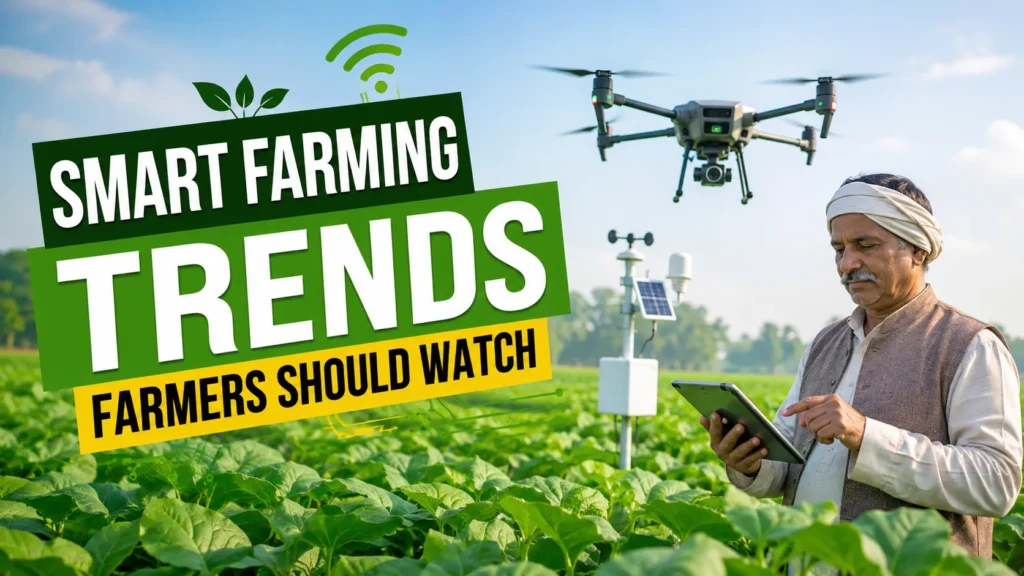
The future of Smart Farming will increasingly connect physical agricultural infrastructure with digital technologies.
Farmers can expect greater use of:
- IoT sensors
- AI-based farm analysis
- Automated irrigation
- Weather monitoring
- Agricultural drones
- Remote crop monitoring
- GPS-based machinery
- Smart pumps
- Digital farm records
AI and sensor technologies can help farmers analyse larger amounts of information and make faster decisions.
However, the basic requirements will remain the same.
Water still needs to move through pipes.
Pumps still need to work correctly.
Sprinklers still need appropriate pressure.
Fields still need regular inspection.
That is why modern technology and reliable irrigation infrastructure should be developed together.
Smart Farming for Dealers, Contractors and Infrastructure Projects
The growth of modern agriculture creates opportunities for more than farmers.
Pipe dealers and distributors can help customers understand the difference between products and applications.
A Plastic pipe manufacturer in indore can support agricultural projects with suitable piping solutions for water distribution.
A Plastic pipe dealer in indore can help customers compare sizes, fittings, and applications according to their requirements.
Civil and irrigation contractors also play an important role. Correct pipe selection, installation, pressure management, and system testing can determine whether an irrigation network performs efficiently.
Builders and construction companies may also require reliable piping for landscaping, gardens, water supply, and other projects.
Government and infrastructure departments need durable water-distribution systems that can support large-scale projects over extended periods.
How to Choose the Best Pipe Supplier
When searching for a Pipe Supplier Near Me, convenience is useful, but it should not be the only factor.
Consider the supplier’s:
- Product range
- Manufacturing experience
- Material quality
- Available sizes
- Pressure ratings
- Fittings
- Delivery capability
- Technical support
- Customer service
- Product suitability
Farmers searching for the Best Pipe Manufacturer in Indore should compare these factors before making a final decision.
A supplier that understands the application can be more valuable than one that simply offers the lowest quotation.
Smart Farming: How to Calculate Long-Term Value
Before investing in an irrigation system, do not look only at the initial purchase price.
Consider the complete cost.
Ask yourself:
Will this system reduce water wastage?
Will it reduce unnecessary labour?
it improve irrigation uniformity?
Will maintenance be manageable?
Will the components remain useful for several seasons?
A quality irrigation system may cost more initially but can provide better value if it reduces leakage, repairs, water wastage, and operational problems.
The objective of Smart Farming is not to spend more money on technology.
It is to use money, water, energy, and labour more intelligently.
FAQs About Smart Farming
What is Smart Farming in agriculture?
Smart Farming is an approach that combines technology, data, efficient equipment, and better agricultural practices to improve farm productivity and resource management.
How can Smart Farming save water?
It can help farmers make irrigation decisions based on crop requirements, soil moisture, weather conditions, and system performance instead of relying only on fixed schedules.
Are HDPE pipes suitable for agricultural irrigation?
HDPE pipes can be suitable for many agricultural water-distribution applications. The correct product should be selected according to pressure, diameter, installation conditions, and system requirements.
Can small farmers use Smart Farming?
Yes. A farmer does not need expensive technology to begin. Better irrigation planning, leak prevention, efficient pipes, appropriate sprinklers, and regular field monitoring are simple starting points.
Is sprinkler irrigation useful for crop production?
Sprinkler irrigation can provide relatively uniform water distribution when properly designed and operated. Its suitability depends on crop, soil, field size, water source, pressure, and local conditions.
How can I find a sprinkler system dealer in Indore?
Farmers can compare a Sprinkler system dealer in indore by checking product quality, pressure ratings, sizes, fittings, technical support, availability, and pricing.
Final Thoughts: Build a Smarter Farm Step by Step
Smart Farming is not about replacing traditional farming with complicated technology.
It is about making better decisions.
A farmer who understands the crop, studies the soil, manages water carefully, selects the right pipe, monitors field conditions, and maintains the irrigation system is already moving toward smarter agriculture.
Technology can take this further.
Sensors can provide soil information. Weather data can support irrigation planning. Automated systems can control pumps. Drones can help monitor crops. AI can assist with analysing agricultural information.
But none of these technologies can work effectively without reliable physical infrastructure.
Water still needs to reach the field.
For farmers, irrigation contractors, pipe dealers, builders, and infrastructure departments, choosing dependable piping products is therefore an important part of building an efficient agricultural water system.
If you are planning an irrigation project or upgrading an existing system, first understand your crop, water source, field conditions, pressure requirements, and budget. Then select the appropriate irrigation method and piping products.
Vishal Pipe provides HDPE pipes, sprinkler pipes, drip solutions, column pipes, PVC products, and other piping solutions for agriculture, irrigation, gardening, horticulture, and water-management applications.
Whether you are a farmer searching for a Sprinkler pipe dealers near me, a contractor looking for an HDPE Pipe Manufacturer in Indore, or a project manager comparing a PVC pipe manufacturer in indore, always choose products based on actual application requirements.
Better information + better irrigation + better infrastructure = a smarter and more productive farm.
Ready to Improve Your Irrigation System?
If you are planning a new agricultural irrigation project or want to upgrade your existing water-distribution system, explore suitable pipe and irrigation solutions from Vishal Pipe.
Choose the right system today and take the first step toward smarter, more efficient crop production.
