
A Complete Guide for Farmers to Choose the Right Irrigation System
Water is one of the most valuable resources in agriculture, and using a rain pipe irrigation system is becoming one of the smartest ways to conserve it. Every farmer knows that a successful harvest depends not only on quality seeds and fertile soil but also on efficient water management. With rising temperatures, unpredictable rainfall, and increasing water scarcity, choosing the right irrigation system has become more important than ever. A well-designed rain pipe or sprinkler irrigation system can help farmers reduce water wastage, improve crop health, and increase overall productivity.
If you are planning to upgrade your farm irrigation, you have probably come across rain pipe systems and sprinkler irrigation. Both are widely used by farmers across India, but many people wonder—which one actually saves more water and gives better crop results?
The answer isn’t as simple as choosing one over the other. It depends on your crop type, land size, water availability, and budget. In this detailed guide, we’ll compare rain pipe and sprinkler irrigation systems so you can make the best decision for your farm.
The Story of Two Farmers
Imagine two neighboring farmers, Rajesh and Mohan.
Rajesh owns a vegetable farm where he grows onions, spinach, coriander, and tomatoes. Water availability is limited, so he decides to install a rain pipe irrigation system.
On the other hand, Mohan grows wheat, soybean, and groundnut on a larger piece of land. He installs a sprinkler irrigation system.
After one farming season, both farmers notice healthier crops and reduced water consumption compared to traditional flood irrigation. However, their experiences are different because each irrigation method is designed for different farming needs.
This simple example explains why understanding your irrigation requirements is more important than simply buying the most popular system.
What is a Rain Pipe?
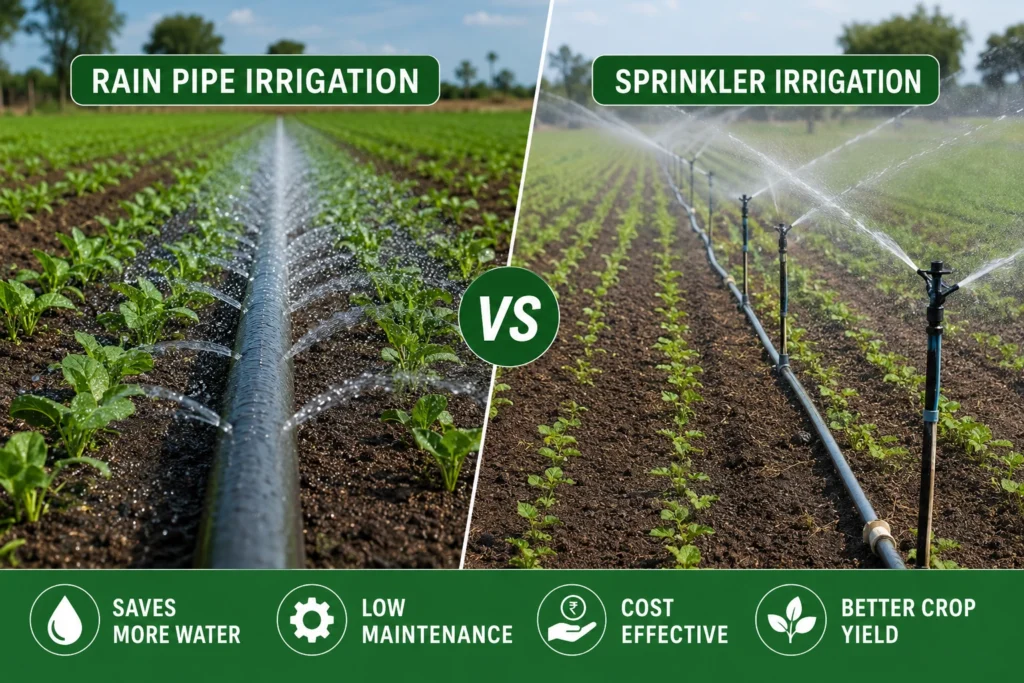
A rain pipe is a flexible plastic irrigation pipe with tiny laser-punched holes that spray water like gentle rainfall. Instead of flooding the entire field, it distributes water evenly over crop rows.
The system is lightweight, easy to install, portable, and highly suitable for farmers looking for affordable irrigation solutions.
Rain pipes are becoming increasingly popular because they provide:
- Uniform water distribution
- Reduced water wastage
- Lower installation cost
- Easy maintenance
- Better crop growth
They are especially useful for vegetable cultivation, nurseries, kitchen gardens, and seasonal crops.
What is Sprinkler Irrigation?
A sprinkler irrigation system uses pipes, nozzles, and sprinklers to spray water over crops, creating an artificial rainfall effect.
The water is pumped through plastic pipelines and released through sprinkler heads that rotate or spray in different directions.
Farmers commonly use sprinkler systems for:
- Wheat
- Soybean
- Groundnut
- Fodder crops
- Cotton
- Pulses
- Large agricultural fields
Many farmers searching online for a Sprinkler irrigation pipe dealer in Indore choose sprinkler systems because they provide excellent field coverage for larger farms.
Rain Pipe vs Sprinkler Irrigation: Understanding the Difference
Although both systems aim to reduce water wastage, they work differently.
Water Distribution
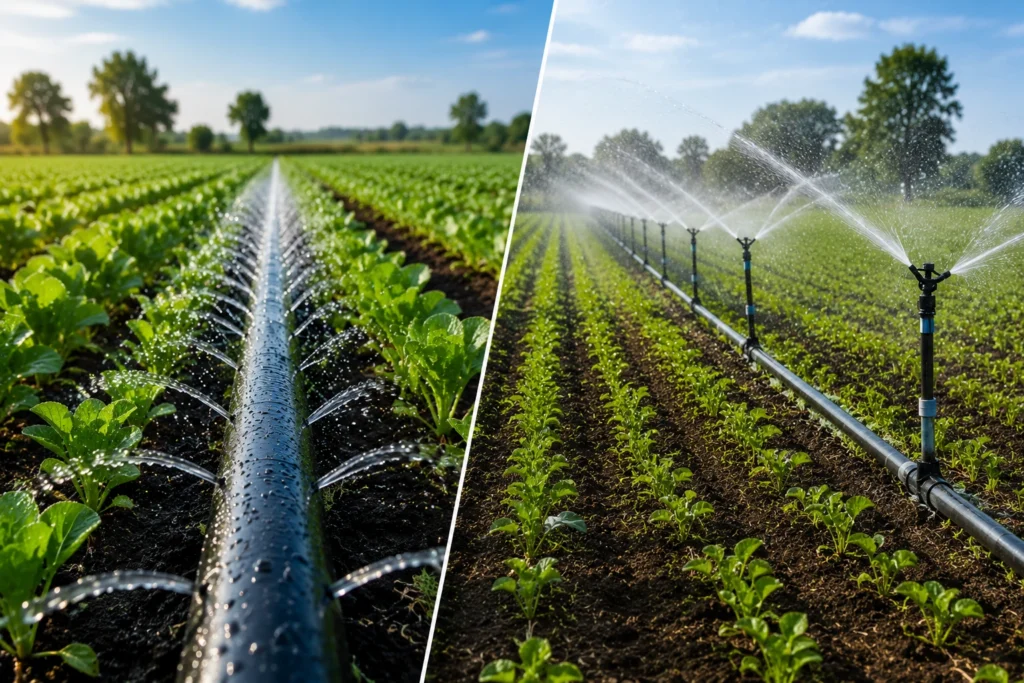
Rain pipes release water through hundreds of tiny holes, creating soft rainfall close to the crops.
Sprinklers spray water over a wider area using specially designed nozzles.
Result:
Rain pipes generally provide more controlled watering for closely planted crops.
Water Saving Efficiency
One of the biggest reasons farmers switch from flood irrigation is water conservation.
Rain Pipe
- Uses less water
- Minimal runoff
- Reduced evaporation
- Uniform moisture near roots
Sprinkler Irrigation
- Saves significant water compared to flood irrigation
- Slightly higher evaporation in windy conditions
- Suitable for large open fields
Winner: Rain pipe generally saves more water for closely spaced crops.
Installation Cost Comparison
Budget plays a major role in selecting an irrigation system.
Rain Pipe
- Lower investment
- Simple installation
- Minimal accessories
- Suitable for small and medium farms
Sprinkler System
- Higher initial investment
- Requires sprinklers, connectors, risers, and fittings
- Better for permanent irrigation setups
Farmers looking for affordable irrigation often begin with rain pipe systems before upgrading to larger sprinkler networks.
Maintenance Requirements
Every irrigation system needs occasional maintenance.
Rain Pipe
- Easy to clean
- Lightweight
- Easy to replace damaged sections
- Simple storage after harvesting
Sprinkler System
- Regular nozzle cleaning
- Checking sprinkler rotation
- Pipe pressure monitoring
- Seasonal servicing
Rain pipes usually require less maintenance, making them ideal for farmers seeking hassle-free irrigation.
Which System Performs Better in Different Crops?
Rain Pipe Works Best For
- Vegetables
- Onion
- Coriander
- Spinach
- Garlic
- Chilli
- Nursery plants
- Flower farming
Its gentle water flow prevents soil erosion and keeps young plants healthy.
Sprinkler Irrigation Works Best For
- Wheat
- Groundnut
- Soybean
- Cotton
- Fodder
- Pulses
- Sugarcane (selected stages)
The wider spraying area makes it suitable for extensive cultivation.
Water Pressure Requirements
This is another important difference.
Rain Pipe
Requires comparatively lower water pressure.
Even farms with smaller pumps can often operate rain pipe systems efficiently.
Sprinkler Irrigation
Requires higher water pressure for proper water distribution.
Insufficient pressure may reduce sprinkler performance.
Which System Saves More Electricity?
Since rain pipes generally operate at lower pressure, they often consume less pumping energy.
Lower pressure means:
- Reduced electricity usage
- Lower diesel costs
- Improved overall irrigation efficiency
This can make a noticeable difference over multiple cropping seasons.
Durability Comparison
Modern rain pipes and sprinkler pipes are manufactured using durable HDPE or high-quality plastic materials.
When purchased from a trusted Plastic pipe dealer in Indore, both systems can provide years of reliable performance with proper maintenance.
The overall lifespan depends on:
- Material quality
- Water quality
- Storage practices
- UV resistance
- Regular cleaning
Advantages of Rain Pipe Irrigation
- Excellent water conservation
- Affordable installation
- Uniform rainfall effect
- Easy to transport
- Suitable for seasonal farming
- Lower operating cost
- Better moisture control
- Ideal for vegetable cultivation
Advantages of Sprinkler Irrigation
- Covers large farming areas
- Suitable for multiple crops
- Reduces labour requirements
- Improves irrigation efficiency
- Adaptable to uneven land
- Long-term irrigation solution
Many farmers searching for Sprinkler pipe dealers near me prefer sprinkler systems because of their versatility across different crop types.
Factors to Consider Before Choosing
Ask yourself these questions:
What crop are you growing?
Vegetables generally benefit from rain pipe irrigation.
Field crops often perform well with sprinkler irrigation.
How much water is available?
Limited water supply often makes rain pipes a practical choice.
What is your budget?
Rain pipes are usually more economical for initial investment.
What is your land size?
Small farms often benefit from rain pipe systems, while larger farms can take advantage of sprinkler irrigation.
Why Quality Pipes Matter
No irrigation system performs well without durable pipes.
Low-quality materials may lead to:
- Leakage
- Uneven water distribution
- Frequent repairs
- Reduced crop productivity
Choosing high-quality irrigation products from an experienced manufacturer ensures better efficiency and long-term savings.
Final Verdict: Which Saves More Water?
If your primary goal is maximum water conservation, especially for vegetables, nurseries, and closely planted crops, rain pipe irrigation generally offers better water-saving performance due to its controlled and targeted distribution.
However, if you cultivate large fields with crops like wheat, soybean, groundnut, or fodder, a sprinkler irrigation system remains an excellent investment because of its ability to cover extensive areas efficiently.
Rather than asking which system is universally better, the smarter question is: Which irrigation method is best suited to your crops, farm size, and water availability? By selecting the right system and investing in high-quality pipes, farmers can improve crop yields, reduce water wastage, and lower long-term farming costs.
Choose Reliable Irrigation Solutions with Vishal Pipe
Whether you’re planning to install a rain pipe system or a sprinkler irrigation setup, using premium-quality irrigation pipes is the key to long-lasting performance and efficient water management. Vishal Pipe offers durable, high-performance irrigation solutions designed to meet the needs of modern Indian farmers, helping them conserve water while achieving healthier crops and higher productivity.
Frequently Asked Questions (FAQs)
1. Which saves more water: a rain pipe or a sprinkler irrigation system?
A rain pipe generally saves more water for closely spaced crops like vegetables because it delivers water evenly with minimal evaporation and runoff. Sprinkler irrigation is also water-efficient but is better suited for larger fields and broad-acre crops.
2. Is a rain pipe suitable for all types of crops?
Rain pipes are ideal for vegetables, nurseries, onions, garlic, coriander, spinach, and flower cultivation. For large field crops such as wheat, soybean, and groundnut, sprinkler irrigation is often a more practical choice.
3. What is the difference between a rain pipe and a sprinkler irrigation system?
A rain pipe distributes water through tiny holes along the pipe, creating a gentle rainfall effect close to the crops. A sprinkler irrigation system uses sprinkler heads to spray water over a larger area, making it suitable for extensive farming.
4. How long does a rain pipe irrigation system last?
A high-quality rain pipe made from durable plastic materials can last several farming seasons with proper handling, regular cleaning, and correct storage away from direct sunlight when not in use.
5. Is rain pipe irrigation more affordable than sprinkler irrigation?
Yes. Rain pipe irrigation generally has a lower installation cost because it requires fewer components and is easier to set up. This makes it an economical option for small and medium-sized farms.
6. Where can I buy high-quality rain pipes and sprinkler irrigation pipes in Indore?
If you’re looking for durable irrigation solutions, choose a trusted manufacturer and Plastic Pipe Dealer in Indore like Vishal Pipe. High-quality rain pipes and sprinkler irrigation pipes ensure better water distribution, long-lasting performance, and improved crop productivity.
Author Bio – Vivek Bansal
Vivek Bansal is the Owner of Vishal Pipe and has years of experience in the plastic pipe and agricultural irrigation industry. He is passionate about helping farmers and businesses choose reliable, water-efficient piping solutions that improve productivity and sustainability. Through his practical insights and industry expertise, Vivek shares valuable knowledge on irrigation systems, HDPE pipes, rain pipes, and modern farming solutions to support smarter agricultural practices.