When a Small Leak Becomes a Big Problem
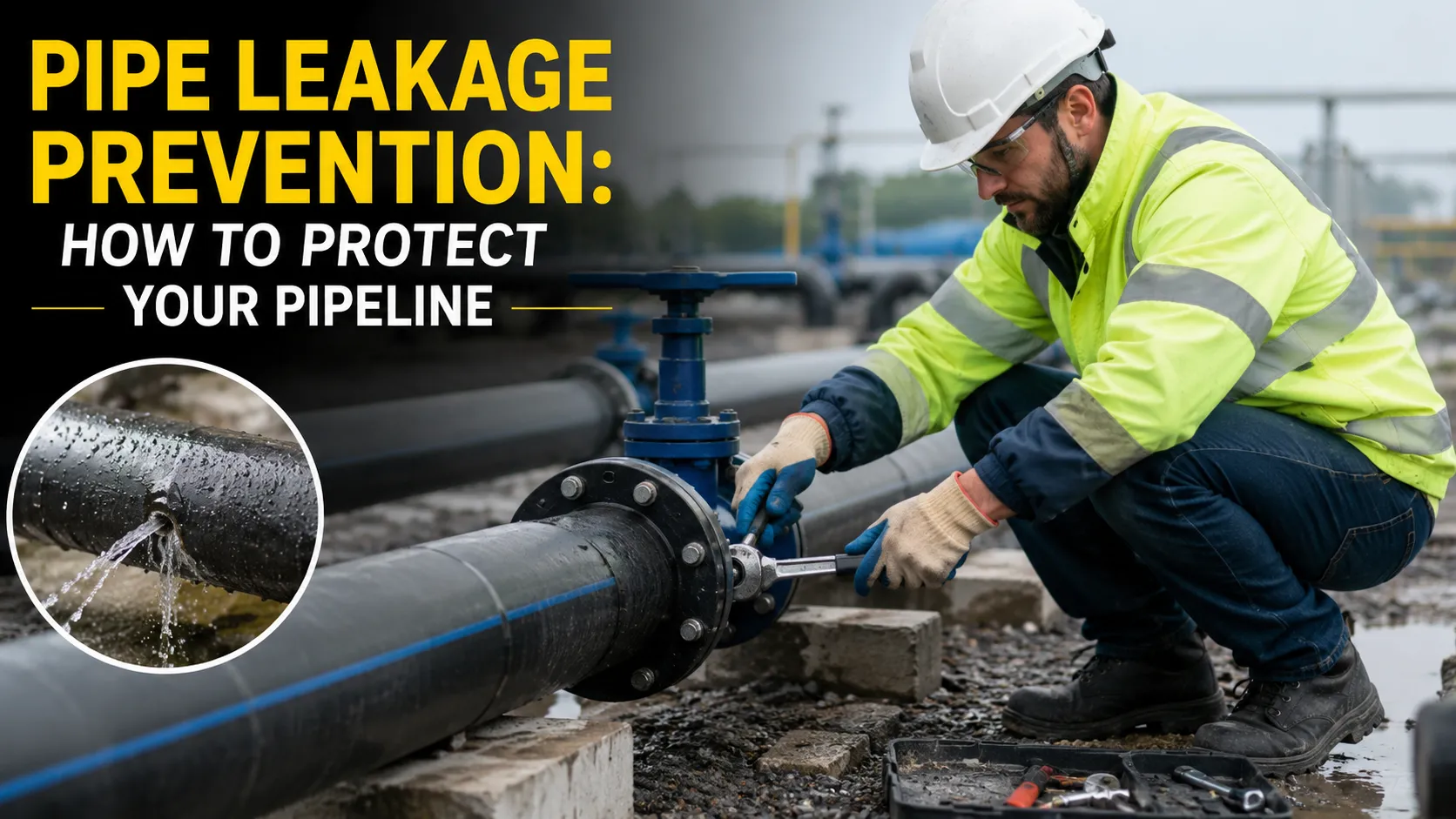
Pipe Leakage Prevention is not something to think about only after water starts dripping from a joint. A small crack, loose connection, damaged fitting, or poor installation can slowly turn into water loss, crop damage, pressure problems, higher maintenance costs, and expensive repairs.
Think about a farmer who starts an irrigation pump in the morning. The motor is running, water is flowing, but one section of the pipeline is losing pressure underground. The farmer may assume the pump has a problem. In reality, the pipeline could be wasting water at a damaged joint.
The same problem can affect a construction project, irrigation network, residential development, or government water-supply project.
That is why choosing the right pipe, installing it correctly, and checking the system regularly are three important parts of protecting any pipeline.
According to the U.S. EPA WaterSense program, household leaks can waste nearly 1 trillion gallons of water annually in the United States, while the average household can lose thousands of gallons through leaks every year.
For agricultural and infrastructure projects, the lesson is simple: preventing a leak is usually better than repairing one after the damage has already started.
Why Pipe Leakage Prevention Matters for Farmers and Contractors
A pipeline does more than carry water from one place to another. It is part of a complete system that includes pumps, valves, fittings, joints, pressure controls, sprinklers, tanks, and irrigation equipment.
If one part fails, the performance of the entire system can suffer.
For farmers, leakage can mean uneven irrigation and wasted water. For contractors, it can result in callbacks and additional labour. Builders may face complaints when water reaches unwanted areas, while infrastructure departments have to deal with maintenance and service interruptions.
This is why working with a reliable Pipe Manufacturer in Indore or HDPE Pipe Supplier in Indore can make a difference from the beginning of a project.
A good pipeline starts with suitable material, correct specifications, proper fittings, and professional installation.
What Usually Causes Pipeline Leakage?
Most leaks do not happen without a reason. They are often connected to installation, pressure, material selection, joint quality, or physical damage.
Here are some common causes.
Poorly Made Joints
A pipeline can have high-quality pipes but still develop leaks if the joints are poorly made.
Loose connections, incorrect fitting, inadequate sealing, or improper fusion can create weak points. These problems may not become visible immediately. Pressure and repeated use can gradually make them worse.
For HDPE systems, proper heat-fusion techniques can create strong, leak-resistant joints. The Plastics Pipe Institute notes that correctly made HDPE fused joints can form a leak-free, self-restrained pipe structure.
Excessive Water Pressure
Every pipe system has a suitable pressure range. If pressure becomes too high, fittings and joints can experience unnecessary stress.
Pressure surges can also create problems, particularly when pumps or valves are switched on and off suddenly.
A good design should therefore consider operating pressure, surge conditions, pipe specifications, fittings, and the expected application.
Incorrect Pipe Selection
Not every pipe is suitable for every application.
A pipeline used for agricultural irrigation has different requirements from a residential plumbing system or a large infrastructure project.
Before purchasing, consider pipe material, diameter, pressure rating, application, soil conditions, temperature, installation method, and expected flow.
This is where an experienced HDPE Pipe Manufacturer in Indore or PVC Pipe Manufacturer in Indore can help buyers choose products according to project requirements rather than simply selecting the cheapest option.
Physical Damage During Installation
Pipes can be damaged before the system is even put into operation.
Sharp stones, poor trench preparation, heavy equipment, careless handling, or incorrect backfilling can put unnecessary stress on the pipe.
A pipe may look fine from the outside but still have damage that becomes a problem later.
Age and Lack of Maintenance
Even a properly installed pipeline needs attention.
Over time, fittings may wear, connections can loosen, valves can develop problems, and external conditions can affect the pipeline.
Regular inspection helps identify small issues before they become major failures.
Pipe Leakage Prevention Starts Before Installation
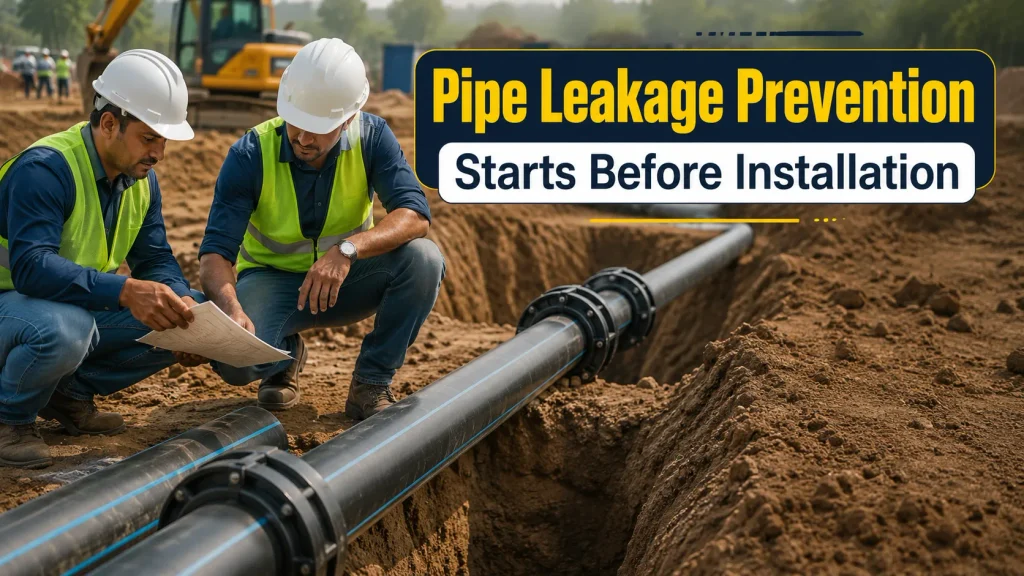
One of the biggest mistakes is thinking about leakage only after installation.
Prevention actually starts during planning.
Before placing an order with a Plastic Pipe Manufacturer in Indore, clearly define the purpose of the pipeline. Is it for irrigation? Water distribution? Sprinkler systems? Construction? Drainage? Agricultural use?
Then determine the required pipe diameter, pressure class, fittings, jointing method, and installation conditions.
For agricultural projects, choosing an experienced Irrigation Pipe Manufacturer in Indore can also help when the pipeline needs to work with pumps, sprinklers, valves, and other irrigation equipment.
Step-by-Step Pipeline Protection Guide
Step 1: Understand the application
Identify what the pipeline will carry and where it will be installed.
Step 2: Select the correct pipe
Choose the material and specifications according to operating conditions.
Step 3: Check the pipes before installation
Look for visible cracks, cuts, deformation, damaged ends, or other defects.
Step 4: Prepare the installation area
Remove sharp objects and prepare a suitable trench or support system.
Step 5: Install joints correctly
Use the recommended joining method and make sure fittings are properly aligned.
Step 6: Control pressure
Avoid unnecessary pressure spikes and use suitable valves and controls.
Step 7: Test the pipeline
Test the system before covering underground sections or putting the complete network into regular operation.
Step 8: Inspect regularly
Create a maintenance schedule and record problems as soon as they appear.
HDPE vs PVC: Which Can Help Reduce Leakage?
Both HDPE and PVC pipes have important applications. The better option depends on the project.
| Factor | HDPE Pipe | PVC Pipe |
|---|---|---|
| Flexibility | High | Lower |
| Corrosion resistance | Excellent | Excellent |
| Jointing | Heat fusion/electrofusion and fittings | Solvent cement/mechanical fittings depending on system |
| Suitable applications | Irrigation, water distribution and many demanding installations | Water supply, irrigation and various plumbing applications |
| Handling | Lightweight and flexible | Lightweight and rigid |
| Installation requirements | Correct fusion and preparation are important | Correct fitting and joining are important |
For projects requiring flexible pipelines and fused joints, HDPE can be particularly useful. Properly fused HDPE joints can eliminate common leak points associated with mechanical connections.
On the other hand, PVC remains a practical choice for many water and irrigation applications when the correct product and joining method are selected.
If you are unsure, speak with a reliable PVC Pipe Supplier in Indore or HDPE Pipe Supplier in Indore and explain your actual application before making a purchase.
Pipe Leakage Prevention for Irrigation Systems
Irrigation pipelines face a different set of challenges.
Farmers need water to reach the field at the right pressure and in the right quantity. A leak can reduce pressure before water reaches sprinklers or other irrigation equipment.
Imagine a sprinkler system designed to distribute water evenly across a field. If a joint near the pump or mainline starts leaking, pressure can drop further down the network. Some areas may receive less water while the pump continues consuming energy.
That is why farmers should inspect pipelines, fittings, valves, sprinkler connections, and visible wet areas regularly.
When looking for Sprinkler pipe dealers near me, don’t select a supplier only because of price. Ask about pipe specifications, application suitability, fittings, availability, and technical guidance.
For larger projects, an experienced Sprinkler irrigation pipe dealer in Indore can help match the pipe and accessories with the irrigation layout.
Similarly, a reliable Sprinkler system dealer in Indore can be useful when the project involves sprinklers, valves, connectors, and related irrigation components.
A Simple Leak Detection Routine for Farmers
You do not always need complicated equipment to identify an early problem.
Start with these checks:
- Check whether pump pressure is changing unexpectedly.
- Look for unusually wet areas around underground pipelines.
- Inspect visible joints and fittings.
- Compare water flow at different sections.
- Check sprinkler performance across the field.
- Listen for unusual sounds around valves and connections.
- Monitor water consumption and pump running time.
- Inspect the system after accidental damage from farm machinery.
If one section repeatedly causes problems, do not simply keep replacing the same fitting. Investigate why that section is failing.
A Real-World Example: The Cost of Ignoring a Small Leak
Consider a hypothetical irrigation project covering a large agricultural field.
A small underground joint begins leaking. Because the water is disappearing below the soil, nobody notices it immediately.
The pump continues operating.
Over several weeks, the farmer notices that some plants are not receiving enough water. Electricity consumption also appears higher because the pump is working longer to maintain irrigation.
The first reaction may be to increase pump pressure.
That can make the situation worse.
A better approach is to inspect the complete system, identify the weak joint, repair it correctly, and check the pressure throughout the network.
The important lesson is not the size of the original leak. It is how quickly a small pipeline problem can affect the performance of the complete irrigation system.
Pipe Leakage Prevention Checklist
Before starting a pipeline project, use this simple checklist:
Select the correct pipe material.
Confirm the required diameter and pressure rating.
Purchase pipes from a reliable manufacturer or supplier.
Inspect pipes before installation.
Prepare the trench or installation surface properly.
Keep sharp stones and damaging objects away from the pipe.
Use compatible fittings.
Follow the recommended jointing method.
Make sure joints are properly aligned.
Control excessive pressure.
Test the pipeline before final commissioning.
Inspect valves and fittings regularly.
Record repeated leakage points.
Repair damaged sections promptly.
This simple checklist can prevent many avoidable problems.
Common Mistakes That Lead to Leakage
Choosing Only on Price
The lowest initial price does not always mean the lowest overall cost.
A poor-quality product can result in additional labour, replacement material, downtime, and maintenance.
Mixing Incompatible Components
Using unsuitable fittings or joining systems can create weak connections.
Always confirm compatibility before installation.
Ignoring Installation Instructions
Even good pipes can perform poorly if installed incorrectly.
Handling, jointing, trench preparation, backfilling, and pressure testing all matter.
Increasing Pump Pressure to Solve Every Problem
Low pressure does not automatically mean the pump needs more pressure.
The real issue could be a leak, blockage, incorrect pipe sizing, or a damaged valve.
Forgetting Underground Sections
A buried pipeline is easy to forget until something goes wrong.
Keep installation drawings or records so future maintenance teams know where the pipeline runs.
How Dealers and Contractors Can Reduce Customer Complaints
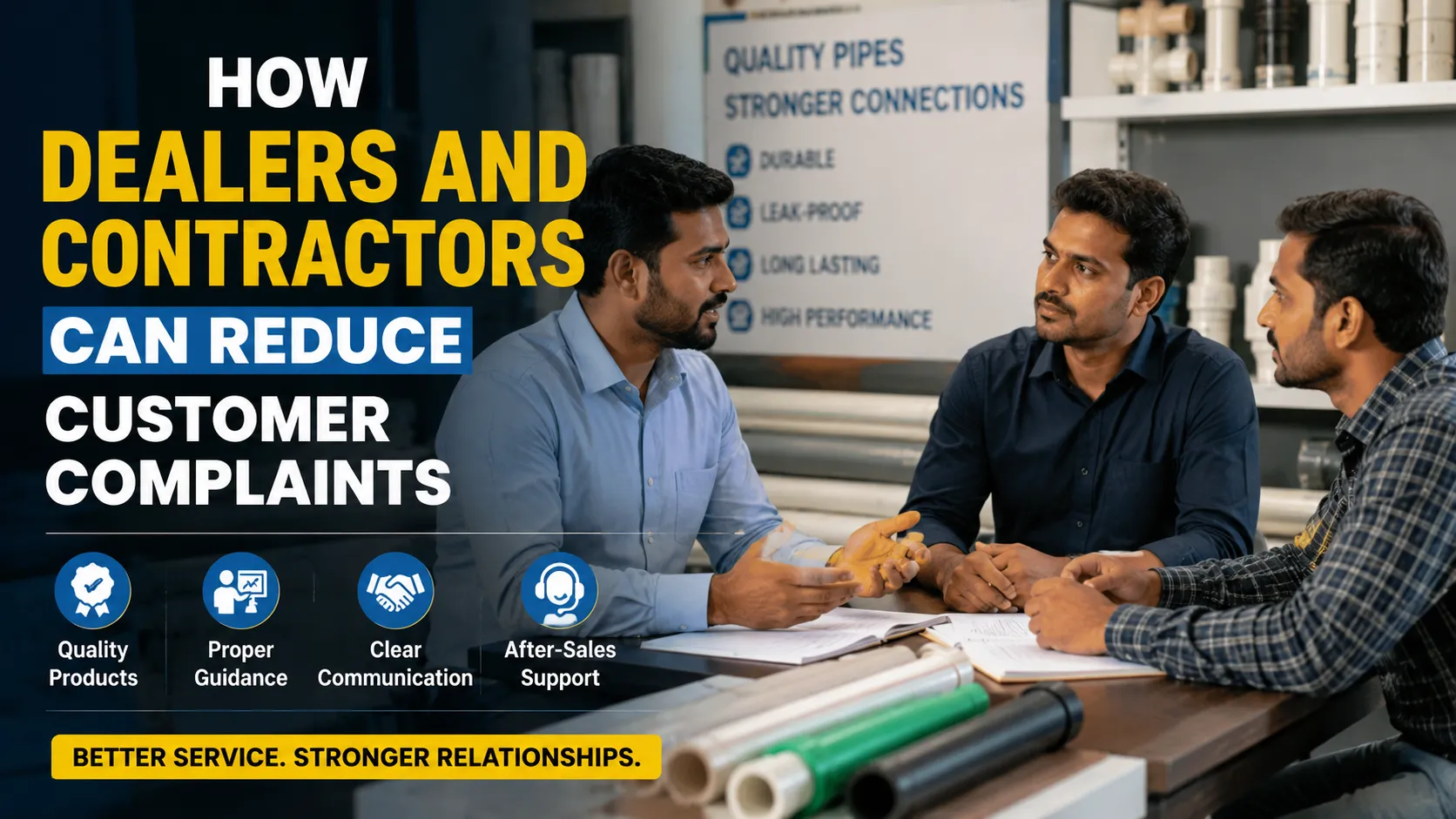
For Pipe Dealers & Distributors, the goal should not be limited to selling a pipe.
Understanding the customer’s application can lead to better product selection and fewer installation problems.
If a customer is searching for a Pipe Supplier Near Me, ask a few basic questions:
Where will the pipe be used?
What pressure will the system operate at?
What size is required?
Is it for irrigation, water supply, construction, or another application?
Will the pipeline be underground or exposed?
What type of fittings will be used?
These questions can prevent an unsuitable product from being selected.
For contractors, proper installation training and quality checks are equally important.
For builders and government infrastructure teams, documenting pipe specifications, installation procedures, pressure testing, and maintenance schedules can make future repairs much easier.
Choosing the Right Pipe Supplier in Indore
A dependable supplier should offer more than a product catalogue.
Farmers, contractors, builders, and infrastructure departments should consider product quality, range, availability, technical understanding, application suitability, and after-sales support.
If you are comparing an HDPE Pipe Dealer Near Me, look beyond the nearest location. Check whether the dealer can supply the correct pipe specifications and accessories for your project.
The same applies when searching for a Plastic Pipe Dealer in Indore.
For agricultural requirements, customers may also search for a High density pipe dealer in Indore, particularly when HDPE solutions are being considered for irrigation or water distribution.
If your requirement is related to agricultural water lifting or column applications, you may also come across searches such as Best column pipe dealer in Indore. The important point is to match the pipe with the pump, application, depth, pressure, and installation conditions.
For smaller irrigation or gardening requirements, people may search for a Pipe hose shop near me or Garden pipe dealer near me. Even for these applications, checking hose quality, diameter, pressure requirements, and intended use can prevent unnecessary replacement.
Expert Insight: Think About the Whole Pipeline
A pipeline should never be judged by the pipe alone.
The complete system includes:
Pipe → Joint → Fitting → Valve → Pump → Pressure → Installation → Maintenance
If any one of these elements is poorly selected or installed, leakage can occur.
This is particularly important for contractors and infrastructure departments managing large projects.
For long-term performance, focus on the complete system rather than selecting individual components in isolation.
Industry Trend: Better Water Management, Better Pipeline Design
Water efficiency is becoming increasingly important as agriculture, cities, industries, and infrastructure projects look for ways to reduce unnecessary water loss.
Modern pipeline projects are increasingly focused on durability, efficient irrigation, pressure management, better joining techniques, and planned maintenance.
HDPE systems are one example where modern joining methods can provide strong, leak-resistant connections. Industry guidance highlights heat fusion as a key advantage of HDPE systems because correctly made fused joints can create continuous, restrained connections.
The trend is moving from simply repairing failures toward designing systems that reduce the chance of failure in the first place.
Ask Yourself: Is Your Pipeline Ready?
Before the next irrigation season or construction phase, ask:
When was the last time your pipeline was properly inspected?
Do you know where all underground joints are located?
Are your fittings compatible with your pipes?
Is your operating pressure within the recommended range?
Are repeated leaks happening in the same location?
If you cannot confidently answer these questions, it may be time for a complete pipeline inspection.
Final Thoughts: Protect the Pipeline Before the Leak
Pipe Leakage Prevention is ultimately about making better decisions before problems become expensive.
Choose the right pipe. Use suitable fittings. Follow correct installation practices. Test the system. Monitor pressure. Inspect regularly.
For farmers, this can help protect irrigation efficiency. dealers, it can improve customer satisfaction. contractors and builders, it can reduce avoidable repair work. For government and infrastructure departments, it can support more reliable water distribution systems.
If you are planning an irrigation, water-supply, agricultural, or construction pipeline project, start with the right product and the right technical guidance.
Vishal Pipe can be considered when sourcing plastic piping solutions for agricultural and irrigation requirements in Indore. Speak with the team about your application, required pipe size, project conditions, and quantity before finalizing your pipeline requirements.
Frequently Asked Questions
What is the most common cause of pipe leakage?
Loose or poorly made joints, damaged pipes, excessive pressure, incorrect installation, unsuitable fittings, and physical damage are common causes. Regular inspection can help identify these issues early.
How can farmers prevent irrigation pipe leakage?
Farmers should inspect joints, fittings, valves, sprinklers, and visible pipeline sections regularly. Correct pipe selection, proper installation, pressure control, and timely repairs are also important.
Is HDPE good for preventing pipeline leaks?
HDPE can be an effective option for many water and irrigation applications. One major advantage is that properly heat-fused HDPE joints can create strong, leak-resistant connections.
Is PVC suitable for irrigation?
PVC can be suitable for many irrigation applications when the correct specification, fittings, pressure rating, and installation method are selected.
How often should an irrigation pipeline be checked?
There is no single schedule suitable for every project. However, inspection before and during the irrigation season, after accidental damage, and whenever pressure or flow changes can help identify problems early.
What should I check before buying a plastic pipe?
Check the application, diameter, pressure requirement, pipe specifications, fittings, installation method, and supplier reliability. Always explain your actual project requirement before purchasing.
Where can I find a reliable pipe supplier in Indore?
Farmers, contractors, builders, and dealers can compare local suppliers based on product range, specifications, quality, availability, and application support. If you are searching for an HDPE Pipe Manufacturer in Indore, PVC Pipe Manufacturer in Indore, Best Pipe Manufacturer in Indore, or related irrigation pipe solutions, discuss your project requirements before selecting a product.
Why is regular pipeline maintenance important?
Regular maintenance helps identify small leaks, damaged fittings, pressure issues, and other problems before they become major failures. Early action can reduce water loss, downtime, repair work, and operating costs.
Protect Your Pipeline Before the Problem Starts
A pipeline should work quietly in the background. When you start noticing falling pressure, wet patches, uneven irrigation, or unexplained water loss, the system is already telling you something.
Don’t wait for a small leak to become a major repair.
Choose suitable pipes, install them correctly, inspect them regularly, and take action early.
For farmers, irrigation contractors, builders, dealers, and infrastructure teams in and around Indore, making the right pipe selection today can help create a more dependable water system tomorrow.