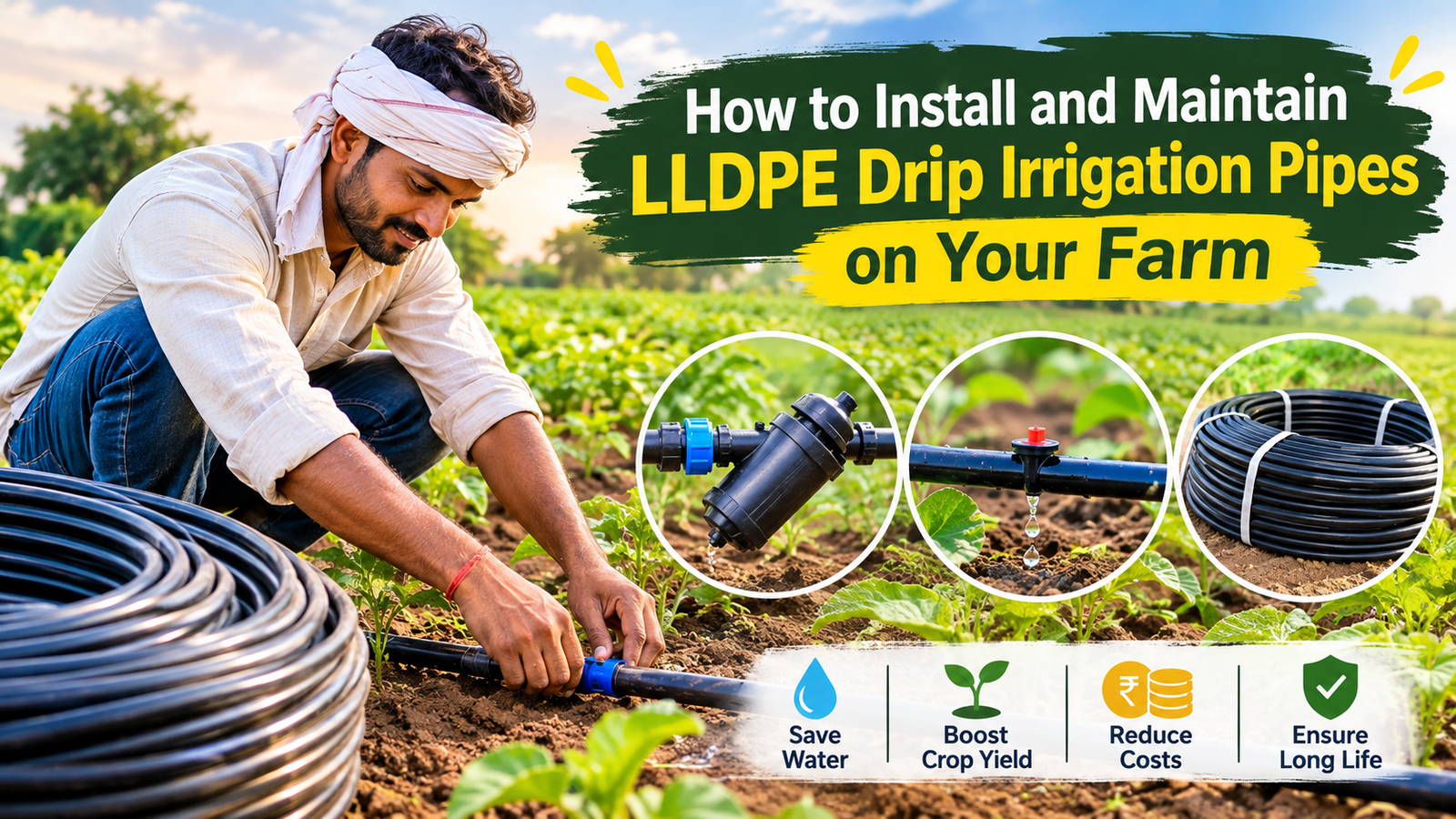
Introduction: A Small LLDPE PIPE Irrigation Problem Can Affect an Entire Crop
A farmer may have good-quality seeds, suitable soil and a reliable water source, but irrigation problems can still make crop management difficult. Sometimes the issue is not the availability of water. It is how efficiently that water reaches the plants.
Consider a vegetable field where some plants receive enough water while others remain dry. The farmer may initially suspect a pump problem or insufficient water supply. However, a partially blocked filter, a leaking connection, a damaged lateral or uneven water pressure can also be responsible.
This is where proper drip irrigation installation and maintenance become important.
LLDPE, or linear low-density polyethylene, is a flexible plastic material commonly used in agricultural irrigation applications. Depending on its design and specifications, LLDPE pipe can serve as a lateral or distribution line in a drip irrigation system. The correct pipe selection depends on the layout, operating pressure, flow requirements, fittings and the manufacturer’s specifications.
Buying a pipe is only one part of setting up an irrigation system. Installing it correctly, checking water flow and maintaining the complete system are equally important.
This guide explains how farmers, gardeners and agricultural professionals can prepare their fields, install LLDPE drip irrigation pipes, identify common problems and maintain their systems throughout the growing season.
Whether you manage a vegetable farm, fruit orchard, nursery or kitchen garden, these practical steps can help you make better irrigation decisions and avoid preventable maintenance problems.
What Are LLDPE PIPE irrigation Pipes?
LLDPE stands for linear low-density polyethylene. It is a polyethylene material known for its flexibility and is used in different applications, including certain agricultural irrigation systems.
In drip irrigation, water travels from a source through the main and sub-main pipes before reaching smaller lateral lines. Emitters or drippers deliver water near the plants’ root zones.
LLDPE pipes may be used for suitable lateral or distribution applications, depending on the product design. However, not every LLDPE pipe is suitable for every irrigation purpose. Pipe diameter, wall thickness, pressure rating, material quality and compatibility with fittings must be checked before installation.
Where can LLDPE pipes be used?
Depending on the pipe’s specifications and the irrigation design, suitable LLDPE pipes may be used in:
- Vegetable cultivation: For crops such as tomatoes, chilies, onions and other vegetables where drip irrigation is appropriate.
- Fruit orchards: For distributing water through a properly designed network around trees.
- Nurseries and gardening: For supplying water to individual plants or growing beds.
- Protected cultivation: For suitable greenhouse and polyhouse irrigation layouts.
- Small agricultural plots: Where a properly sized drip network can deliver water to different planting rows.
The pipe should always be selected according to the required operating conditions. A pipe designed for a low-pressure lateral line should not automatically be used as a pressurised mainline.
Why Proper Installation Matters
Two farmers may purchase similar irrigation pipes but experience different results. The difference can come from the field layout, pressure management, installation quality, filtration and maintenance routine.
A poorly planned system may experience repeated leakage, uneven water distribution, blocked emitters or unnecessary repair costs.
Proper installation helps farmers:
- Deliver water more consistently across the field.
- Reduce avoidable leakage and water wastage.
- Identify pressure and blockage problems earlier.
- Protect pipes from damage caused by sharp objects, machinery or careless handling.
- Make routine inspection and repairs easier.
- Maintain a more predictable irrigation schedule.
Remember: Drip irrigation does not guarantee equal water delivery simply because the pipes are installed. The complete system must be designed for the field, water source, crop spacing, elevation changes and required flow rate.
Step 1: Understand Your Field Before Buying Pipes
Before purchasing LLDPE drip irrigation pipes, spend some time examining the field. This initial planning can prevent costly changes after installation.
Measure the field
Record the approximate length and width of the area to be irrigated. Mark the planting rows, crop beds, orchard lines, greenhouse sections and any obstacles that may affect pipe routing.
Next, identify the location of the water source, pump, filter and main distribution line.
A simple field sketch is often enough to begin planning. It should show the water source, proposed mainline route, sub-mains and the direction of the lateral pipes.
Check the crop spacing
Different crops require different planting arrangements. Closely spaced vegetable crops may need a different lateral layout from widely spaced fruit trees.
Record the distance between rows and the spacing between plants. Then determine whether the proposed drippers, emitters or other irrigation outlets can deliver water to the intended root zones.
Do not assume that one lateral arrangement will work equally well for every crop.
Check the field slope
Water pressure can vary across a field with changes in elevation. A line running downhill may experience different pressure conditions from one installed uphill.
On sloping land, the system may require pressure regulation, suitable emitter selection or separate irrigation zones.
If the field has significant elevation changes, consult an irrigation professional before finalizing the layout.
Assess the water source
Check the available water supply and its quality. Water containing suspended particles, algae or mineral deposits may create maintenance problems.
The filtration arrangement should match the water source and the emitter manufacturer’s requirements. Well water, canal water, pond water and stored water may need different treatment or filtration approaches.
Step 2: Choose the Right LLDPE Pipe
Selecting the right pipe is not simply a matter of buying the lowest-priced option. The pipe must suit the operating conditions of the irrigation system.
Check the diameter
The LLDPE pipe diameter influences flow capacity and friction losses. A line that is too small for the required flow may contribute to pressure loss, particularly over long distances or when many outlets operate simultaneously.
The required diameter depends on the line length, total flow, operating pressure and system design.
Do not select pipe diameter based only on the size used by a neighboring farmer. Their field layout and water requirements may be different.
Check the pressure rating
The pipe must be suitable for the system’s working pressure and expected operating conditions.
Confirm the pressure rating from the product marking, technical data sheet or manufacturer. Also consider the pump pressure, pressure variations and the requirements of connected fittings.
Never assume that every black polyethylene pipe can safely handle the same pressure.
Check wall thickness and material specifications
Wall thickness and material properties should match the intended application. Ask the supplier for the relevant specifications and information about the product’s intended use.
Avoid judging quality solely by appearance, color or flexibility. These characteristics do not establish whether a pipe meets the required performance specifications.
Check fitting compatibility
Before ordering, confirm that the pipe works with the connectors, joiners, valves and other fittings planned for the installation.
A poor fit may cause leakage, loosen during operation or require repeated repairs. Using compatible components helps simplify installation and maintenance.
Where should you buy LLDPE pipes?
Farmers searching online for “LLDPE pipe dealers near me” should compare more than price and distance. Ask about the available sizes, pressure ratings, product specifications, delivery arrangements and replacement support.
For bulk purchases, agricultural projects and dealer enquiries, it is useful to speak directly with a supplier or manufacturer who can explain the intended application and product options.
Farmers looking for an LLDPE pipe manufacturer in Indore or comparing pipe manufacturers in Madhya Pradesh should request technical information before making a purchase.
The same checks apply when researching suppliers of other irrigation products, including rain pipe manufacturers. Rain pipes and drip irrigation laterals serve different irrigation purposes, so the product should match the watering method required for the crop.
Step 3: Gather the Tools and Materials
Prepare the required components before starting the installation. This reduces interruptions and makes it easier to check whether anything is missing.
Depending on the system design, you may need:
- LLDPE pipes of the specified diameter and pressure rating.
- Mainline and sub-main pipes, where required.
- Compatible connectors, tees, joiners and end fittings.
- Suitable valves for controlling irrigation sections.
- A filter appropriate for the water source and emitters.
- A pressure regulator or pressure-control equipment, where required.
- Drippers or emitters compatible with the selected system.
- Pipe-cutting tools suitable for producing clean, square cuts.
- Measuring tape, marking tools and basic installation equipment.
- Suitable clamps, supports or pipe-holding accessories, if specified.
The exact list depends on the field layout. A simple garden system will not need the same components as a large commercial farm.
Before beginning, check that the pipe, fittings and pressure-control components are compatible with one another.
Step 4: Prepare the Field and Lay Out the LLDPE Pipes
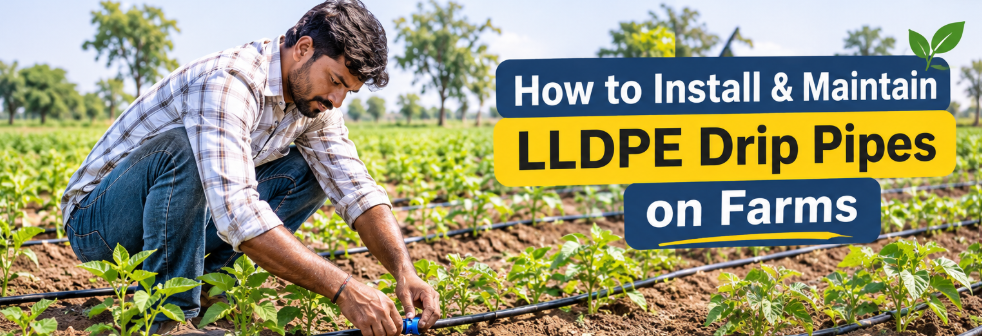
Clear the proposed pipe routes of sharp stones, scrap metal, broken branches and other objects that could damage the pipe.
Where pipes will be placed on the surface, choose a route that reduces exposure to machinery, foot traffic and routine farm operations. If any section is to be buried, follow the manufacturer’s guidance for installation depth, soil conditions and protection.
Uncoil the pipe carefully. Avoid dragging it over rough ground or pulling it around sharp corners.
Allow the pipe to settle naturally
Flexible polyethylene pipe may have some curvature after being stored in a coil. Unroll it carefully and allow it to settle before making connections.
Do not use excessive force to straighten the pipe, and do not kink it to negotiate a turn.
Keep the pipe route practical
Where possible, arrange the lines so that they are easy to inspect and repair. Avoid unnecessary bends and complicated connections.
In fields where tractors, tillers or other equipment operate regularly, mark pipe routes clearly and protect them from accidental damage.
Position the lateral lines
Lay the lateral pipes along the planned crop rows. Keep the lines aligned with the planting arrangement so that the water outlets can serve the intended plants.
For orchards, the lateral layout should reflect tree spacing and the number and placement of emitters required for each tree.
Do not make final connections until the pipe layout has been checked against the field plan.
Step 5: Connect the Pipes and Fittings Correctly
Connection quality has a direct effect on leakage and maintenance requirements.
First, cut the pipe cleanly using a suitable tool. An uneven or crushed end can make it difficult to form a secure connection.
Remove dirt, loose particles and debris from the pipe end and fitting. Then connect the components according to the fitting manufacturer’s instructions.
Some systems use push-fit connectors, while others require different connection methods. Do not assume that every fitting should be installed using the same technique.
Check every joint
Look at the connections between the mainline, sub-main, lateral lines, valves and end fittings.
Confirm that each component is seated correctly and that any required clamp or locking mechanism has been installed as specified.
Avoid excessive tightening, which may damage components, and do not use improvised sealing methods unless they are approved for the system.
Keep the layout serviceable
Position valves and removable fittings where they can be accessed without disturbing the crop unnecessarily.
Where a system has several irrigation zones, label or mark the controls clearly. This makes it easier to identify which section needs attention during operation.
A well-organized layout saves time when repairs are needed during a busy irrigation period.
Step 6: Install Filtration and Pressure-Control Components
LLDPE lateral pipes are only one part of a drip irrigation system. Filtration and pressure management are essential for reliable operation.
Install the correct filter
Small emitters can become blocked by suspended particles, organic matter or mineral deposits. The appropriate filter depends on the water source and the emitter specifications.
Install the filter in the intended position and ensure that it can be accessed for cleaning. Follow the manufacturer’s instructions for filter selection, cleaning and replacement.
If water comes from a pond or canal, additional treatment may be necessary. If the water contains dissolved minerals, filtration alone may not remove every substance that can contribute to deposits.
Manage operating pressure
Use suitable pressure-control equipment where required. Check the pressure at the points recommended by the irrigation system designer or manufacturer.
Too much pressure may damage unsuitable components or cause leakage. Too little pressure may prevent the system from delivering the intended flow, particularly in long or poorly designed lines.
Pressure requirements differ between products. Use the specifications supplied for your actual pipes and emitters rather than a general pressure value found online.
Divide the field into zones if necessary
A large field may require multiple irrigation zones. Dividing the system into manageable sections can help match the water supply to the required flow and pressure.
The number of zones should be based on the available water supply, system capacity and irrigation design.
Step 7: Flush the Pipes Before Starting Normal Irrigation
Small particles can enter pipes during storage, transport and installation. If these particles reach the emitters, they may cause blockages.
Before normal operation, flush the system according to the equipment manufacturer’s instructions.
Where the system design allows, flush the mainline and sub-main first, followed by the lateral lines. Open the designated flushing points or end fittings as instructed, allowing trapped debris to leave the system.
Do not assume that water running through the mainline means every lateral is clean.
After flushing, close the outlets properly and check the connections. Start the system and inspect whether water reaches the expected sections.
Never leave an open flushing point or disconnected fitting unnoticed during normal operation. It can reduce pressure and affect water delivery elsewhere in the field.
Step 8: Test the System Before Full Operation
The first test is an opportunity to identify installation problems before they affect the crop.
Start the system under the recommended operating conditions and inspect it section by section.
Look for:
- Leaks around connectors and valves.
- LLDPE Pipes that have kinked or become flattened.
- Water escaping from an unintended opening.
- Emitters that do not discharge as expected.
- Noticeable differences in water delivery between rows.
- Unexpected pressure changes or unstable pump operation.
Check the beginning and end of the lateral lines. If the system has several zones, test each one individually.
If some emitters deliver water while others remain dry, check for blockages, incorrect connections, pressure problems or an unsuitable layout.
Do not immediately increase pump pressure to solve every flow problem. First identify the cause. Increasing pressure without understanding the issue may create additional leakage or damage.
Once the installation passes the initial checks, record the normal operating conditions. These observations can help you recognize changes later.
Step 9: Adjust Irrigation to the Crop’s Needs
A properly installed system still requires sensible irrigation management.
The duration and frequency of irrigation depend on the crop, growth stage, soil type, weather, root depth and water availability. Sandy soils, for example, generally drain differently from heavier clay soils.
Check the moisture in the root zone rather than relying only on the surface appearance of the field. A wet patch near one emitter does not necessarily mean that the entire root zone has received enough water.
For a new system, observe how water moves through the soil after irrigation. Adjust the schedule based on actual field conditions and appropriate agricultural guidance.
Avoid assuming that every crop needs the same number of irrigation minutes or the same daily schedule.
For gardening and nursery applications, the same principle applies: plant size, growing medium, container drainage and local weather all influence watering requirements.
Step 10: Build a Regular Maintenance Routine
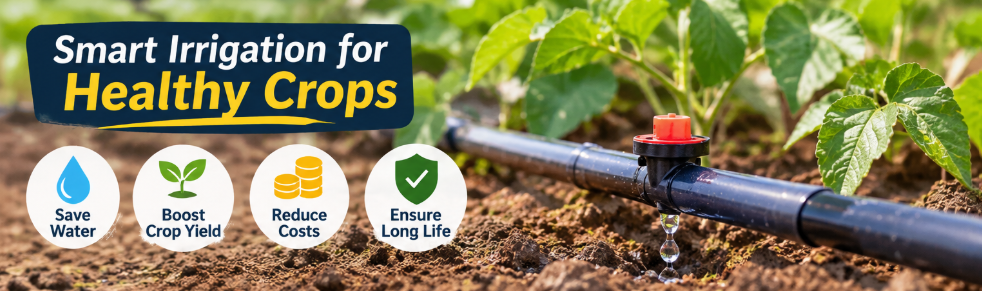
Routine maintenance is easier when it becomes part of normal farm work rather than something done only after a problem appears.
Daily or before each irrigation cycle
- Check that the water source and pump are operating normally.
- Look for obvious leaks or disconnected fittings.
- Confirm that the required irrigation zones are receiving water.
- Watch for unusually dry or excessively wet patches.
- Check whether any pipe has been crushed or displaced by farm equipment.
The amount of inspection needed will depend on the system size and the operating environment.
Weekly or at the recommended service interval
- Inspect and clean the filter as instructed.
- Check accessible joints, valves and connectors.
- Look for damaged or blocked emitters.
- Inspect LLDPE pipe routes for exposure to machinery or sharp objects.
- Compare water delivery across representative rows.
- Review the system pressure if gauges are installed.
A fixed weekly schedule is a useful starting point, but filters may require more frequent cleaning when the water contains substantial debris. Follow the actual equipment instructions and respond to changing conditions.
At the end of a crop cycle
Inspect the pipe network before storing or preparing it for the next season.
Remove soil and debris where appropriate, flush the system according to the manufacturer’s recommendations and repair damaged components.
If pipes are intended to be reused, handle them carefully during removal. Avoid sharp bends, dragging and crushing under equipment.
Store removable pipes in a clean, suitable location away from sharp objects, excessive heat and other conditions that may damage the material. Follow the manufacturer’s guidance on UV exposure and storage requirements.
Common LLDPE PIPE Drip Irrigation Problems and Their Solutions
Farmers can often narrow down the cause of a problem by observing when and where it occurs.
Problem 1: Water is not reaching some plants
Possible causes: Blocked emitters, insufficient pressure, a closed valve, a kinked lateral or a connection problem.
What to check: Inspect the affected row first. Check the filter, valve position, pipe route and emitter condition. Compare the flow with a nearby row that is working normally.
Do not replace the whole line before checking for a local blockage or connection fault.
Problem 2: Water is leaking from a joint
Possible causes: An incompatible fitting, a poorly prepared pipe end, a damaged connector or pressure beyond the component’s rating.
What to check: Turn off the supply and release pressure safely before inspecting the connection. Check whether the pipe end is cut cleanly and whether the fitting is installed as instructed.
Replace damaged parts with compatible components rather than relying on temporary fixes that may fail under pressure.
Problem 3: The beginning of a line receives more water than the end
Possible causes: Friction losses, a long lateral, an unsuitable pipe diameter, elevation changes or a system operating outside its intended pressure range.
What to check: Review the pipe layout and compare operating pressure and flow at suitable points. Confirm that the lateral length and diameter match the system design.
This problem may require professional assessment. Increasing pump pressure without checking the design is not always the correct solution.
Problem 4: Emitters keep getting blocked
Possible causes: Inadequate filtration, sediment, organic matter or mineral deposits.
What to check: Inspect the filter and follow the manufacturer’s flushing and cleaning procedure. If blockages continue, have the water quality and filtration arrangement assessed.
Do not pour acids, strong chemicals or cleaning agents into the irrigation system without confirming their suitability and following the relevant safety and equipment instructions.
Problem 5: Pipes become damaged during farm work
Possible causes: Tractor movement, digging, sharp tools, animal activity or poor routing.
What to check: Identify the cause of the damage, replace the affected section where necessary and improve pipe protection or routing.
Mark lines that cross working paths and make their locations clear to anyone operating farm machinery.
Problem 6: Water distribution changes during the season
Possible causes: Filter blockage, changing water availability, wear, damaged connections or changes in the operating conditions.
What to check: Compare the current system with the observations recorded during the initial test. Review the filter, pressure, valves and affected irrigation zones.
Keeping a simple maintenance record helps distinguish a recurring issue from a new fault.
Field Experience: What to Check Before Installing LLDPE Pipes in a Vegetable Farm
A common mistake in drip irrigation planning is to focus only on the pipe price and start installation without properly checking the field layout. For farmers growing vegetables, this can create difficulties later when the crop rows change, additional plants are added or farm machinery needs to move between rows.
Consider an illustrative example of Mahesh Verma, a vegetable farmer near Indore, Madhya Pradesh, who is planning a drip irrigation system for his tomato crop.
Before purchasing the pipes, Mahesh maps the planting rows, measures their length and identifies the location of the water source. He also considers where the mainline should run and how the lateral pipes can be positioned without interfering with routine farm activities.
While comparing LLDPE pipes, he checks the available diameters, pressure ratings and compatibility with the proposed connectors. Instead of selecting a pipe simply because it is cheaper, he makes sure the specifications suit the irrigation system being planned.
During installation, the pipe routes are cleared of sharp stones and other objects that could cause damage. The connections are checked, the filter is installed according to the system requirements, and the lines are flushed before normal irrigation begins.
The final step is to inspect the complete layout and confirm that water reaches the intended crop rows under the recommended operating conditions.
What Farmers Can Learn from This Example
Planning the pipe layout before purchasing materials can help farmers avoid unnecessary joints, awkward pipe routes and preventable installation changes. Checking specifications and fitting compatibility beforehand can also make maintenance easier.
The important lesson is to plan the irrigation system around the field and crop requirements, rather than choosing pipes on price alone.
First-Hand Experience: Checking Uneven Water Flow in an LLDPE Drip Irrigation System
Imagine a farmer growing tomatoes on a small agricultural plot. After running the drip irrigation system for some time, the farmer notices that plants near the beginning of a row appear adequately watered, while some plants farther down the same row receive less water.
Before replacing the LLDPE pipe or increasing the pump pressure, it is worth checking the entire irrigation line.
What Should Be Checked First?
The first step is to inspect the filter for accumulated dirt or sediment. A partially blocked filter can restrict water flow throughout the system. Next, check the pipe for kinks, damaged sections, loose connectors and blocked emitters.
The farmer should also compare water delivery at the beginning and end of the affected lateral. If the difference continues, the pipe diameter, lateral length, operating pressure and field elevation may need further assessment.
What Is the Practical Solution?
Suppose the inspection reveals a blocked emitter and a kinked section of LLDPE pipe. The appropriate response would be to clean or replace the affected component, straighten the pipe without damaging it, and flush the line according to the manufacturer’s instructions.
After restarting the system, the farmer should check whether water delivery has improved across the row. If the problem remains, the irrigation layout and pressure conditions should be assessed rather than assuming that the pipe itself is defective.
What Can Other Farmers Learn from This Example?
This example highlights an important lesson: uneven irrigation does not always mean that the LLDPE pipe needs replacing. A blockage, damaged connection, pressure problem or unsuitable system layout may be responsible.
Regular inspection, proper filtration and timely maintenance can help farmers identify problems before they affect more plants.
How to Choose an LLDPE Pipe Supplier in Madhya Pradesh
Farmers looking for agricultural piping often compare local dealers, manufacturers and distributors. The right supplier should help buyers understand which product suits their intended application.
When comparing suppliers, ask the following questions:
- Is the pipe specifically intended for the irrigation application being planned?
- Are the diameter, wall thickness and pressure rating documented?
- Are compatible fittings and connectors available?
- Can the supplier explain the recommended installation and maintenance procedure?
- Is product identification available for future replacement orders?
- Are delivery, warranty and after-sales terms clearly explained?
For buyers searching for LLDPE in Madhya Pradesh, local availability can be useful, particularly when replacement pipe or fittings are needed during the crop season. However, proximity alone does not establish product suitability.
The same applies to searches for an LLDPE pipe manufacturer in Indore or pipe manufacturers in Madhya Pradesh. Compare specifications and support, not just the quotation.
If you are comparing drip irrigation products with those supplied by rain pipe manufacturers, first identify the irrigation method required. A rain pipe system distributes water differently from a drip system, and the products should not be treated as interchangeable without checking the intended application.
For Vishal Pipe, this section can link readers to the relevant product page, company contact page and verified technical information about available agricultural piping products.
A Practical Pre-Irrigation Checklist for Farmers
Before starting the pump, take a moment to check the complete system.
- The water source and pump are ready for operation.
- The filter is clean and installed correctly.
- Valves are set for the intended irrigation zone.
- Pipe connections and end fittings are secure.
- No lateral is kinked, crushed or visibly damaged.
- Water reaches the expected rows and emitters.
- There are no obvious leaks or unusual pressure changes.
- The irrigation duration matches the crop’s current needs.
- Any maintenance issue has been recorded for follow-up.
This short routine cannot prevent every fault, but it can help identify common problems before they disrupt irrigation.
Conclusion: Good Irrigation Depends on More Than the Pipe
LLDPE drip irrigation pipes can be useful components of a well-planned agricultural irrigation system, provided they are suitable for the intended application. Their performance depends on the complete setup, including pipe sizing, fittings, filtration, pressure management, field layout and maintenance.
Start by understanding your crop and field conditions. Select pipes using verified specifications, install connections carefully, flush the system before normal operation and inspect water delivery during the first test. After installation, keep filters clean, watch for leaks and blockages, and investigate uneven flow before changing pump settings.
For farmers and gardeners, regular inspection and timely repairs are generally easier than waiting until an irrigation problem affects a large part of the field.
If you are comparing LLDPE pipe suppliers in Indore or elsewhere in Madhya Pradesh, ask for the specifications and application guidance needed to make an informed decision.
Vishal Pipe can use this guide to help agricultural buyers understand pipe selection and care, while directing interested readers to the relevant product information and enquiry channels.
Frequently Asked Questions About LLDPE Drip Irrigation Pipes
1. How do you install LLDPE drip irrigation pipes on a farm?
Start by measuring the field, mapping crop rows and selecting pipes compatible with the required flow and pressure. Lay the pipes along the planned routes, connect compatible fittings, install appropriate filtration and pressure-control equipment, flush the lines, and test the system for leaks and uneven water delivery before regular use.
2. How often should LLDPE irrigation pipes be cleaned?
Cleaning frequency depends on water quality, filter performance, emitter design and operating conditions. Inspect filters regularly and clean them according to the manufacturer’s instructions. Flush pipes whenever the system’s maintenance requirements indicate it is necessary or when sediment accumulation becomes a concern.
3. What causes leakage in LLDPE drip irrigation pipes?
Leakage can result from incompatible fittings, damaged pipe sections, poorly prepared pipe ends, loose connections or pressure beyond a component’s rating. Inspect the affected section, release system pressure safely and replace damaged parts with compatible components.
4. How do farmers choose the correct LLDPE pipe size?
Consider the total water flow, lateral length, operating pressure, crop layout, elevation changes and emitter requirements. The pipe must be suitable for the expected operating conditions. Consult the irrigation designer or supplier if you are unsure about the required diameter or pressure rating.
5. Can LLDPE drip irrigation pipes be used for gardening?
Yes, suitable LLDPE pipes can be used in garden and nursery irrigation systems. The layout should match plant spacing, water requirements, growing conditions and the specifications of the connected emitters.
6. How can I find reliable LLDPE pipe dealers near me?
Compare suppliers based on documented pipe specifications, application suitability, compatible fittings, availability, delivery arrangements and after-sales support. Ask for product details before purchasing rather than relying solely on price or proximity.
7. What should farmers check before buying from an LLDPE pipe manufacturer in Indore?
Farmers should confirm the intended application, pipe diameter, wall thickness, pressure rating, material specifications, fitting compatibility and available technical guidance. Buyers should also understand the supplier’s delivery, replacement and warranty terms.
8. Are LLDPE drip irrigation pipes and rain pipes the same?
No. Drip irrigation systems generally deliver water through emitters near plants, while rain pipes distribute water through multiple openings in a different pattern. The suitable product depends on the crop, irrigation method, water supply and field conditions.
9. Can damaged LLDPE irrigation pipes be repaired?
Some localized damage can be addressed by replacing the affected section or using a compatible repair fitting approved for the system. The correct method depends on the damage, pipe specifications and operating pressure. Replace severely damaged sections rather than relying on temporary repairs that may fail during operation.
10. How can farmers improve the life of their irrigation pipes?
Use pipes within their specified operating limits, avoid dragging or crushing them, protect them from farm machinery, maintain filtration, flush the system as recommended and store removable pipes appropriately. Regular inspection can help identify damage before it affects a larger section of the irrigation network.
Author profile
Komal Parmar is an Agricultural & Piping Content Writer specializing in practical insights on HDPE pipes, agricultural piping, irrigation systems, pipe fittings, and water-supply solutions. She focuses on simplifying technical piping information into clear, useful guidance for farmers, contractors, dealers, and businesses.
Through her writing, Komal aims to help readers better understand pipe selection, irrigation applications, product specifications, and practical considerations for modern agricultural and water-management projects.
Last Review: October 2026

