Cable Pipe vs PVC Electrical Conduit: What Should Farmers Choose?
When a farmer plans a new borewell, installs a water pump or improves an irrigation system, most attention goes towards the motor, water delivery and pipeline arrangement. But there is another part of the installation that deserves equal attention: the electrical cable and the route through which it runs.

A cable may pass through an open farm area, a pump room, a garden or an underground section. Depending on its location, it may face accidental contact, friction, pressure, sunlight and moisture. If the cable route is not planned properly, maintenance can become difficult and the cable may be exposed to avoidable physical damage.
This is where choosing the right cable protection pipe becomes important.
Buyers sometimes compare a cable pipe with a regular PVC pipe because both are available in tubular form. However, the material name alone does not tell you whether a product is suitable for electrical cable protection. A PVC water pipe and a PVC electrical conduit have different intended applications.
So, should you choose a cable protection pipe or PVC electrical conduit? And what should farmers check before purchasing one?
This guide explains the difference in practical terms, with particular attention to borewell installations, agricultural fields, pump connections and farm infrastructure.
If you are planning a piping requirement for your farm, you can also explore the Vishal Pipes and Fittings website to understand the company and its agricultural piping focus.
1. What Is a Cable Protection Pipe?
A cable protection pipe is a hollow protective passage used to route electrical cables or wires in an installation where a suitable conduit or protective arrangement is required.
Its purpose is to keep the cable route organized and provide a physical barrier against certain external conditions. The level of protection depends on the product’s material, construction, dimensions and approved application.
On farms, electrical wiring may be needed for:
- Borewell and water pump systems
- Motor control panels
- Irrigation controllers and automation equipment
- Farm sheds and storage areas
- Outdoor lighting
- Garden and landscaping equipment
- Other electrical installations around agricultural properties
A suitable cable-routing arrangement can make the installation easier to identify and maintain. It may also reduce exposure to physical contact in locations where cables could otherwise be disturbed by tools, machinery or routine farm work.
An important point: Not every cable pipe is suitable for underground burial, continuous water exposure or submersible use. The product must be selected according to its declared application and the electrical installation requirements.
2. What Is a PVC Pipe?
PVC stands for Polyvinyl Chloride. It is a thermoplastic material used to manufacture different products, including water-supply pipes, drainage pipes and electrical conduits.
The important distinction is that PVC describes the material, not the purpose of every pipe made from it.
For example, these are not interchangeable products:
PVC water pipe: Manufactured for suitable water transportation applications. Its dimensions and performance requirements relate to carrying water.
PVC electrical conduit: Specifically manufactured for routing electrical wires or cables. Its suitability depends on its construction, mechanical properties, fittings and applicable electrical installation requirements.
Both products may use PVC, but that does not make them suitable for the same job.
Can an ordinary PVC water pipe be used for electrical cables?
Do not assume that a normal PVC water pipe is suitable for electrical cable protection simply because a cable can fit inside it.
A water pipe is designed for water transportation. It may not meet the requirements of an electrical conduit system, including the necessary mechanical performance, fittings and installation conditions.
For electrical wiring, select a product specifically intended for that application. If you are unsure, ask a qualified electrician or electrical contractor to check the product and installation requirements.
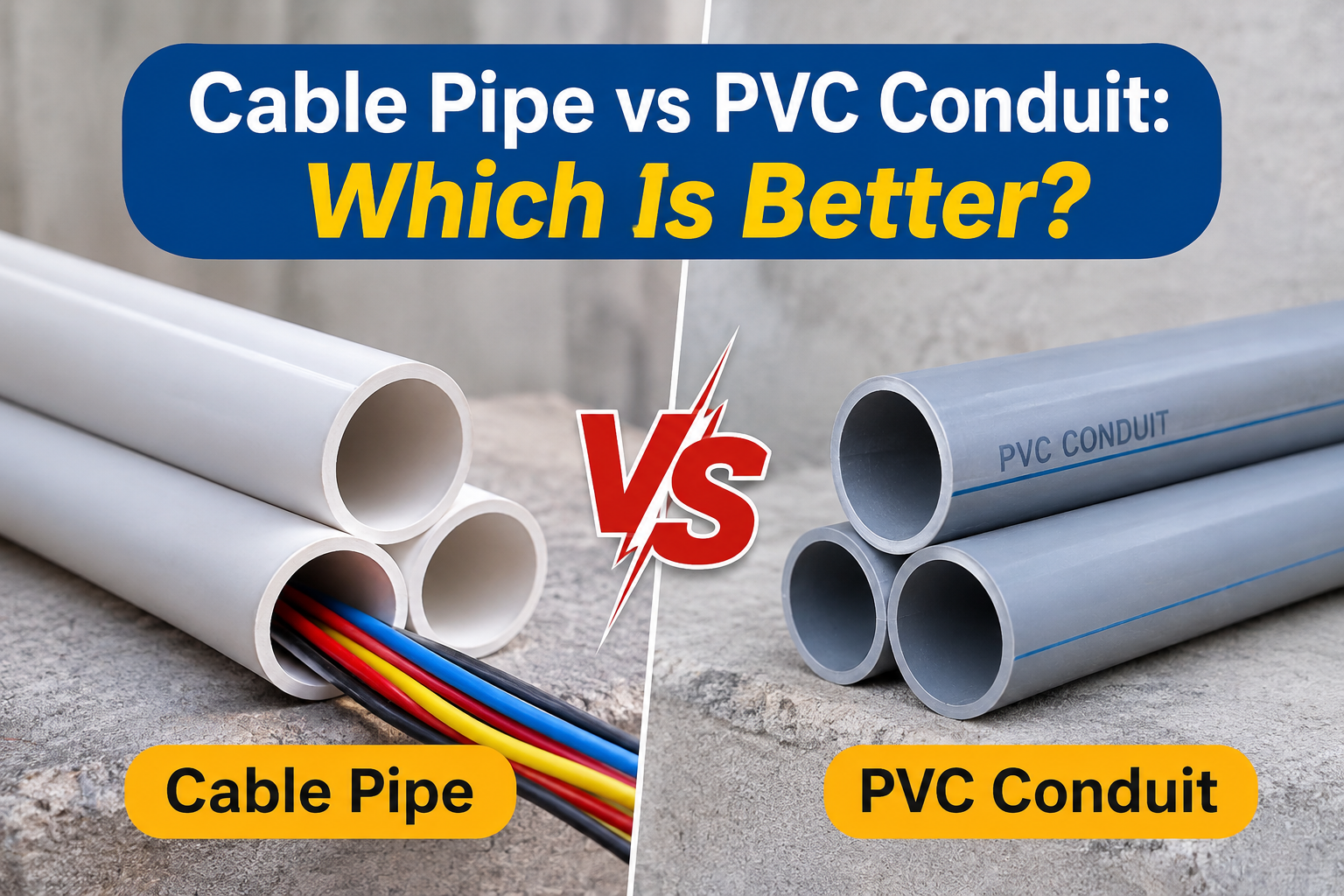
3. Cable Pipe vs PVC Electrical Conduit: Main Differences
This is the more useful comparison for a buyer who needs to route and protect electrical cables.
Both products may be designed for cable pipe management, but their actual performance depends on the specifications of the individual product. Neither should be selected only by its name or appearance.
| Comparison point | Cable protection pipe | PVC electrical conduit |
| Main purpose | Routing and protecting cables | Routing and protecting electrical wiring |
| Material | Depends on product construction | Commonly PVC |
| Selection | Based on declared application and specifications | Based on conduit class, application and specifications |
| Diameter | Must accommodate the cable arrangement | Must accommodate the cable arrangement |
| Installation | Follow product instructions and electrical requirements | Follow product instructions and electrical requirements |
| Underground use | Only when specifically suitable | Only when specifically suitable |
| Fittings | Must be compatible with the product | Must be compatible with the conduit system |
The comparison should always be between two products intended for cable protection. An ordinary water pipe should not be treated as an equivalent electrical conduit.
Which one is better?
There is no universal answer based only on the product name.
A cable protection pipe may be appropriate when its declared use and specifications match the installation. PVC electrical conduit may also be suitable when it meets the relevant requirements.
Before deciding, check the cable size, number of cables, installation location, expected physical loads, fittings and applicable standards.
4. Why Cable Protection Matters on Agricultural Farms
A farm’s electrical arrangement is connected to several daily activities. A motor may operate a borewell pump, a control panel may manage the system, and electrical equipment may support irrigation or farm operations.
When a cable route is left poorly planned, it can become difficult to identify during maintenance or nearby excavation.
Consider a simple situation: a farmer needs to dig a small section of land to repair an irrigation line. If an underground electrical cable route is not marked or documented, the digging work may create an avoidable risk.
A properly planned cable route can help reduce such confusion.
A. Borewell and pump installations
A borewell pumping arrangement may include a submersible pump, delivery pipe, electrical cable, control equipment and electrical connections.
Each component has a separate function. The delivery pipe carries water, while the electrical cable supplies power to the pump.
The cable and its insulation must be suitable for the operating environment. A conduit does not automatically make an unsuitable cable safe for wet or submerged conditions.
B. Irrigation equipment and motor controls
Agricultural irrigation systems may use motor starters, control panels, timers, sensors and automated equipment.
Where wiring needs a protective route, the selected conduit should be suitable for the installation location. Particular care is needed around areas exposed to machinery movement, digging or regular maintenance.
C. Farm sheds and storage areas
Farm buildings may contain electrical connections for lights, fans, pumps and equipment. Suitable conduit arrangements can help keep wiring organized and reduce exposure to accidental contact.
D. Gardens and landscaping
Outdoor lighting, irrigation controllers and other garden equipment may require cable routes through soil, pathways or landscaped sections.
Before installation, consider future gardening, planting and digging work. A clear record of cable locations can be useful when the area needs maintenance.
5. Special Considerations for Borewell Cable Protection
Borewell installations need careful planning because water, electrical equipment and maintenance activities are part of the same system.
One common misunderstanding is that putting a cable inside any pipe makes it suitable for a submerged environment. This is not correct.
A submersible pump cable must be designed for the conditions in which it will operate. Its insulation, connections and installation must follow the pump and cable manufacturer’s instructions.
What should be checked?

Cable type: Confirm that the cable is designed for the pump and operating environment.
Installation arrangement: Check whether the design requires a separate conduit or protective route.
Moisture exposure: Do not rely on an ordinary pipe to make an unsuitable cable waterproof.
Cable entry points: Sharp edges or poorly finished openings can damage cable insulation.
Maintenance access: Keep the route identifiable and arrange inspection according to the installation requirements.
Professional guidance: Have the pump installer or a qualified electrical professional confirm the arrangement.
Not every borewell requires a separate cable protection pipe. The correct design depends on the pump, cable, borewell arrangement and relevant electrical requirements.
6. Seven Things to Check Before Buying a Cable Pipe
For farmers, dealers and contractors, the right purchase starts with understanding the installation. A product that works for a small garden wiring route may not be suitable for a different underground or agricultural application.
Use this checklist before placing an order.
1. Intended application
Tell the supplier where the pipe will be installed:
- Inside a farm building
- Along an outdoor cable route
- Underground
- Around a pump installation
- In a garden or landscaped area
The supplier should be able to explain whether the product is intended for that particular use.
2. Cable outer diameter
Check the outside diameter of the cable and the number of cables that need to pass through the pipe.
The internal diameter must provide sufficient space for installation. Do not select the pipe using only its outside diameter.
3. Material and construction
Ask what material is used and what application the product is designed for.
Avoid assuming that every product made from PVC or another polymer has identical performance.
4. Wall dimensions and mechanical properties
Wall dimensions may affect how a product responds to physical loads. However, thickness alone does not prove that a pipe is suitable for a specific installation.
Ask for the relevant product specifications or test documentation where applicable.
5. Bends and cable pulling
A route with multiple sharp bends can make cable installation difficult.
Check the cable manufacturer’s recommended bending radius and plan the route accordingly. Use compatible bends and fittings.
6. Environmental exposure
Consider sunlight, moisture, soil contact, temperature changes and possible physical impact.
If the product will be installed underground or outdoors, confirm that it is specifically suitable for those conditions.
7. Fittings and availability
Check whether compatible couplers, bends, adapters and other fittings are available.
Before ordering, confirm the required quantity, product dimensions, delivery arrangements and technical details.
7. Common Cable Pipe Installation Mistakes Farmers Should Avoid
Even a suitable product can cause problems if the installation is not planned properly.
Mistake 1: Using a water pipe without checking its suitability
A pipe designed for water transportation should not automatically be used as an electrical conduit. Select a product intended for the electrical application.
Mistake 2: Choosing the wrong diameter
A pipe that is too narrow can make cable pulling difficult. Consider the cable dimensions, number of cables and installation guidance.
Mistake 3: Making too many sharp bends
Sharp bends can make installation harder and may damage cable insulation. Follow the cable manufacturer’s bending recommendations.
Mistake 4: Assuming every conduit is suitable for underground use
Underground installation can involve soil pressure, moisture and other conditions. Confirm that the selected product is approved or specified for the intended installation.
Mistake 5: Ignoring cable entry points
Rough edges and unsuitable openings may damage cable insulation. Use appropriate entry protection and compatible fittings.
Mistake 6: Not recording the cable route
When future digging or repair work is required, an undocumented cable route can create confusion. Keep a record of the route and mark it where appropriate.
Mistake 7: Buying only on the basis of price
A low price does not establish that a product is suitable. Compare specifications, application, quality documentation and supplier support before making a decision.
8. How to Find Reliable Cable Pipe Manufacturers

When comparing cable pipe manufacturers, farmers and contractors should look beyond product photographs and general claims.
A supplier should be able to explain what the product is designed for and provide clear information about its dimensions and application.
Before purchasing, ask:
- What is the product’s intended use?
- Which material is used?
- What sizes and dimensions are available?
- Is it suitable for the proposed installation environment?
- Are compatible fittings available?
- Can the supplier provide product specifications or relevant test documentation?
- What are the order quantity and delivery arrangements?
If the supplier cannot clarify the product’s intended use, do not make assumptions based on its appearance.
You can learn more about the business background and agricultural piping focus of Vishal Pipes and Fittings. For buyers comparing suppliers, this kind of company information should be considered alongside actual product specifications and application suitability.
9. Finding Cable Pipe Dealers Near Me: What Should You Compare?
A search for cable pipe dealers near me is often the first step when a farmer or contractor needs material for an upcoming installation.
A nearby supplier may make it easier to discuss dimensions, check availability and arrange delivery. But location should not be the only deciding factor.
Compare these points before buying:
Product category: Confirm that the product is meant for electrical cable protection, not simply water transportation.
Specifications: Ask for the actual dimensions and application details.
Availability: Check whether the required sizes and quantity are available.
Technical guidance: A supplier should be able to explain the product’s intended use and direct you to the manufacturer or technical documentation when needed.
Delivery: Confirm transport arrangements and expected delivery timelines.
If you are comparing local suppliers, make a list of the exact requirements before contacting them. This helps you compare like-for-like products rather than choosing based on price alone.
For agricultural piping requirements beyond cable routing, you can also review the available product range and check which products match your water-management needs.
10. Buying Cable Pipe in Madhya Pradesh: What Local Buyers Should Know
Agricultural installations across Madhya Pradesh can have different requirements. A farm near Indore may have a different borewell arrangement from a farm in Dewas, Ujjain, Dhar or Ratlam.
The right product depends on the installation, not just the district or location.
When searching for cable pipe in Madhya Pradesh, buyers should first identify whether they need a cable protection pipe, PVC electrical conduit or a different product altogether.
What should buyers ask manufacturers or dealers?
- Is the product intended for the proposed cable-routing application?
- What sizes and specifications are available?
- Is it suitable for outdoor or underground installation, if required?
- Are product documents or test details available?
- Can the supplier confirm quantity and delivery?
- Are compatible fittings available?
If you are comparing pipe manufacturers in Madhya Pradesh, also check whether their actual product range matches your requirement.
A business may specialised in agricultural water transportation products without manufacturing every type of electrical conduit. These product categories should not be mixed up.
Choosing an agricultural pipe supplier in Indore

Farmers looking for an irrigation pipe manufacturer in Indore should check whether the supplier’s range matches their water transportation requirements.
Irrigation pipes, suction pipes, sprinkler pipes and cable protection products serve different purposes. A supplier’s agricultural piping experience does not automatically establish that every product it offers is suitable for electrical wiring.
For this reason, always confirm the exact product category and technical specifications before ordering.
You can use the Vishal Pipes and Fittings product information as a starting point for understanding its agricultural piping range. For a specific product enquiry, share your application and required dimensions through the company contact page.
11. A Practical Farm-Site Checklist: Plan Before Installation
A cable route is easier to plan before the pump, electrical equipment and surrounding work are completed.
Before beginning a borewell or farm electrical installation, discuss these points with the installer:
- Where will the electrical cable run?
- Will the route pass through an area where digging or machinery movement is common?
- Does the cable meet the pump manufacturer’s requirements?
- Is a separate protective conduit required?
- Is the selected conduit suitable for the installation environment?
- Are the pipe dimensions and fittings compatible?
- How will the cable route be identified during future maintenance?
- Has a qualified electrical professional checked the arrangement?
This is a practical planning exercise, not a substitute for electrical design or professional inspection.
Real Experience: A Farmer’s Question About Choosing the Right Cable Pipe for Borewell Installation
A Small Pipe Selection Decision That Can Make a Difference on the Farm
A few months ago, a farmer named Ramesh Patidar from Dewas, Madhya Pradesh approached Vishal Pipes and Fittings with a question about selecting a suitable pipe for protecting the electrical cable used in his borewell pump installation.
His main concern was simple: he wanted to protect the pump cable from possible physical damage and avoid unnecessary maintenance expenses in the future.
During the discussion, he asked whether a regular PVC water pipe could be used instead of a dedicated cable protection pipe. At first glance, both products appeared suitable because they provided a hollow passage. However, their intended applications were different.
The team explained that a normal PVC water pipe is designed primarily for water transportation, whereas an electrical conduit or cable protection pipe is selected according to cable protection and installation requirements.
Before suggesting a suitable option, the following points needed to be considered:
- Pipe diameter: Whether the internal diameter would accommodate the cable properly.
- Material quality: Whether the material was suitable for the expected installation environment.
- Wall thickness: Whether the product met the required mechanical protection specifications.
- Installation conditions: Whether the pipe would be exposed to soil pressure, moisture or physical impact.
- Cable requirements: Whether the selected arrangement followed the pump and cable manufacturer’s recommendations.
The important lesson from this discussion was that selecting a pipe should never depend only on its appearance or price. Understanding its actual purpose is equally important.
For farmers planning borewell or irrigation installations, checking these details before purchasing can help avoid unsuitable product selection and unnecessary complications during maintenance.
At Vishal Pipes and Fittings, we believe that helping customers understand the right product for their application is just as important as supplying the product itself.
12. How Vishal Pipes and Fittings Supports Agricultural Buyers
Choosing piping material for a farm is not only about finding a product in the required size. Buyers also need to understand its purpose, installation conditions and compatibility with the rest of the system.
Vishal Pipes and Fittings focuses on agricultural piping requirements. Farmers, contractors and dealers can explore the company’s product information and learn more about its background through the About Us page.
For a specific cable protection requirement, first confirm whether the required product is part of the company’s current range. Share the application, dimensions and installation conditions so the product category can be checked before an order is discussed.
If you are planning a wider farm water-management project, the Vishal Pipes and Fittings website provides a starting point for exploring the business and its agricultural piping focus.
13. Final Verdict: Cable Pipe or PVC Electrical Conduit?
The better option depends on the actual products being compared and the conditions in which they will be installed.
If you are comparing a purpose-designed cable protection pipe with an ordinary PVC water pipe, do not treat them as interchangeable. A water pipe is manufactured for water transportation and should not automatically be used as an electrical conduit.
If you are comparing a cable protection pipe with PVC electrical conduit, check their specifications, mechanical properties, fittings, intended applications and relevant installation requirements.
For farmers, the most important thing is to plan the cable route before installation, select a product meant for that purpose and get the arrangement checked by a qualified electrical professional.
A well-planned farm installation considers more than the pump and water pipeline. It also considers the electrical system that keeps the pump running.
For product-related questions, you can contact Vishal Pipes and Fittings with your application and required dimensions. Confirm the product’s availability and suitability before purchasing.
Frequently Asked Questions
1. What is the difference between a cable pipe and a PVC pipe?
A cable protection pipe is intended to provide a route and physical protection for electrical cables. PVC is a material used in different products, including water pipes and electrical conduits. Their intended applications are different.
2. Is a PVC electrical conduit the same as a PVC water pipe?
No. A PVC electrical conduit is manufactured for routing electrical cables, while a PVC water pipe is designed for water transportation. One should not automatically be substituted for the other.
3. Which pipe is better for electrical cable protection?
A product specifically designed for electrical cable protection is the appropriate category. The final choice depends on cable dimensions, installation conditions, mechanical requirements and applicable electrical standards.
4. Can I use a normal PVC water pipe for electrical wiring?
Do not assume that an ordinary PVC water pipe is suitable for electrical wiring. Choose a conduit or protective product intended for the electrical application and consult a qualified professional if unsure.
5. Is cable protection necessary for a borewell pump?
The required arrangement depends on the borewell design, pump, cable type and electrical installation. The pump cable itself must be suitable for the operating environment. A conduit does not make an unsuitable cable waterproof.
6. Can a cable protection pipe be installed underground?
Only products suitable for the proposed underground application should be used. Check the manufacturer’s specifications, installation instructions and applicable electrical requirements before installation.
7. How do I choose the correct cable pipe size?
Check the cables outside diameter, the number of cables, the internal diameter required, bends and applicable installation guidance. Avoid selecting a size based only on the pipe’s outside measurement.
8. What should I check before buying a cable protection pipe?
Check the intended application, material, dimensions, mechanical properties, environmental suitability, compatible fittings and relevant product documentation.
9. Where can I find cable pipe dealers near me?
Search for local dealers and compare their product specifications, availability and technical support. Confirm that the product is intended for your particular electrical installation before purchasing.
10. How do I find cable pipe manufacturers in Madhya Pradesh?
Compare manufacturers based on their actual product range, manufacturing information, available dimensions, application guidance and relevant quality documentation. Confirm that they supply the specific cable protection product you need.
11. Is cable pipe used in agricultural irrigation systems?
Cable protection products may be used around electrical components of irrigation systems, such as pumps, motor controls and wiring routes. They are not substitutes for water-carrying irrigation pipes.
12. What is the difference between a cable pipe and an irrigation pipe?
A cable pipe provides a route for electrical cables, while an irrigation pipe carries water to crops or other agricultural areas. Each product should be selected according to its intended purpose.
About the Author
Komal Parmar – Agricultural & Piping Content Writer
Komal Parmar writes about agricultural piping, irrigation systems, HDPE pipes, pipe fittings and water-supply solutions. Her content aims to explain product selection and piping applications in straightforward language for farmers, contractors, dealers and businesses.
Review date: November, 2026