
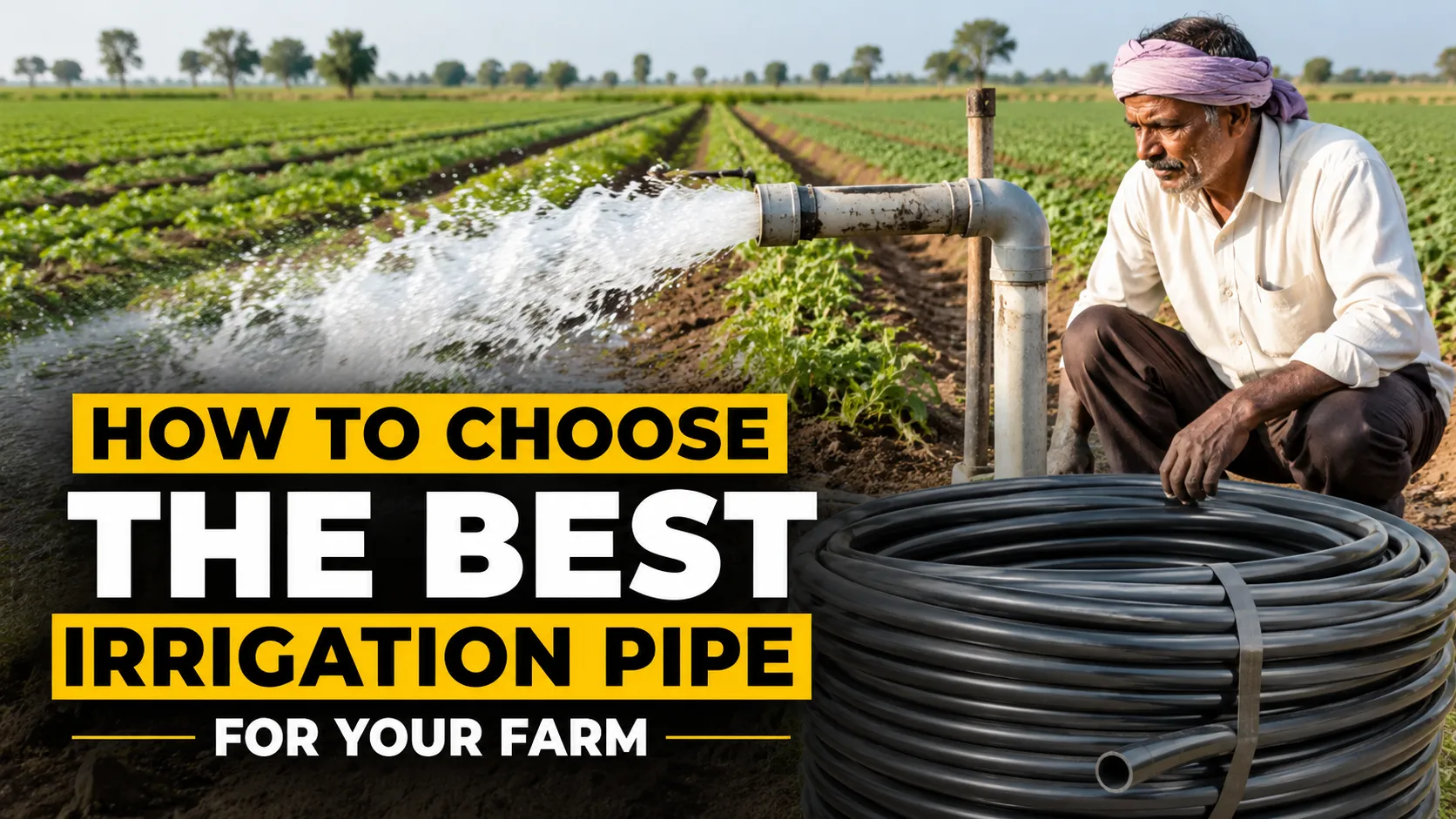
When Your Farm Depends on Every Drop of Water
Choosing the right Irrigation Pipe can make a bigger difference to your farm than many farmers realize. A pipe may look like a simple part of the irrigation system, but it controls how efficiently water travels from the source to the field. A poor choice can mean leakage, pressure loss, uneven watering, repeated repairs, and higher operating costs.
Imagine a farmer preparing a new field before the next crop season. The pump is ready, the sprinkler system is installed, and the crop plan is complete. Yet after switching on the water, some areas receive strong pressure while others barely get enough. The problem may not be the pump or the sprinkler. It could be the pipeline itself.
This is why farmers, contractors, dealers, and project managers should look beyond the price per metre. The better question is: Which pipe matches my water source, pressure, distance, irrigation method, soil conditions, and future requirements?
According to FAO, agriculture accounts for around 72% of global freshwater withdrawals, making efficient agricultural water management increasingly important.
For farmers in Indore and nearby agricultural regions, choosing a dependable product and supplier is equally important. Vishal Pipe supplies solutions including sprinkler pipes, HDPE pipes, suction hoses and column pipes for agricultural and other applications.
Why the Right Irrigation Pipe Matters on a Farm
A farm irrigation system is only as reliable as its weakest component. You may have a powerful pump, good sprinklers, and a reliable water source, but an unsuitable pipeline can still reduce the overall performance.
For example, a farmer may select a pipe simply because it is cheaper. After installation, the pipe develops leakage at joints or struggles under operating pressure. The farmer then spends more money on repairs and replacement.
On the other hand, selecting the correct material, diameter, pressure rating, and fittings at the beginning can make the system easier to operate and maintain.
If you are comparing products from an HDPE Pipe Manufacturer in Indore or a PVC Pipe Manufacturer in Indore, do not compare price alone. Compare the complete specification and understand where the pipe is intended to be used.
Start With Your Irrigation Method
The first question is simple: what type of irrigation system are you using?
Your requirements will be different for sprinkler irrigation, drip irrigation, surface irrigation, water transfer, or a pipeline connecting a borewell to the farm.
For sprinkler applications, pressure consistency becomes especially important because the sprinkler heads need suitable operating pressure to distribute water properly. For longer underground lines, flexibility, joint reliability, and resistance to environmental conditions also become important.
Farmers searching for a Sprinkler Pipe Manufacturer in Indore should therefore discuss the complete irrigation layout rather than asking only for a particular pipe size.
HDPE or PVC: Which Irrigation Pipe Should You Choose?
Two common choices for agricultural water systems are HDPE and PVC. Neither should automatically be considered the best for every farm.
The right choice depends on the installation, pressure, distance, budget, terrain, and handling requirements.
| Feature | HDPE | PVC |
|---|---|---|
| Flexibility | High | Lower than HDPE |
| Handling | Easy for many applications | Relatively easy |
| Corrosion resistance | Excellent | Excellent |
| Long-distance applications | Well suited | Suitable with proper design |
| Underground use | Commonly used | Commonly used |
| Jointing | Depends on system and fittings | Uses compatible fittings/joints |
| Typical advantage | Flexibility and durability | Cost-effective and rigid installation |
If your project needs flexibility around uneven farm terrain, HDPE can be an attractive option. PVC may be suitable where a more rigid pipeline layout is preferred and the application matches its specifications.
A reliable HDPE Pipe Supplier in Indore or PVC Pipe Supplier in Indore should help you select the material according to the application instead of pushing one product for every situation.
Vishal Pipe lists HDPE products for irrigation and water distribution applications and states that its HDPE range is available in different sizes and pressure ratings.
Check Your Water Source Before Buying
Do not purchase your pipeline before understanding where the water is coming from.
Your source could be a:
- Borewell
- Open well
- Farm pond
- Canal
- Storage tank
- Reservoir
- Pumping station
Each source can create different requirements.
For example, a borewell system may require a strong connection between the pump, column pipe, delivery pipeline, and irrigation network. A farm pond may require suction equipment and a suitable delivery arrangement.
If you need a Suction pipe delear in indore, check the hose construction, diameter, operating conditions, fittings, and compatibility with the pump before purchasing.
The suction side deserves special attention because poor selection can affect the pump’s ability to draw water properly.
Measure Water Pressure and Flow
One of the biggest mistakes is choosing pipe size without considering water pressure and required flow.
Think about a farmer who wants to operate several sprinklers at the same time. If the pipeline is too small for the required flow, pressure losses can occur along the route. The result may be uneven irrigation.
Before buying, find out:
- Available pump pressure.
- Required water flow.
- Pipeline length.
- Number of outlets or sprinklers.
- Difference in land elevation.
- Required operating pressure at the farthest point.
A professional irrigation contractor can calculate the expected pressure loss and recommend a suitable diameter.
This is also where an experienced Irrigation Pipe Manufacturer in Indore can provide useful practical guidance.
Why Pipe Diameter Matters
Bigger is not automatically better.
An oversized pipeline may increase initial project cost without providing a meaningful advantage for your application. An undersized line can create unnecessary pressure losses and restrict water delivery.
The goal is to select a diameter that matches the required flow and pressure.
For larger agricultural projects, contractors should calculate the complete network rather than selecting every section using the same diameter.
Consider the Distance From Water Source to Field
A 50-metre farm pipeline and a 500-metre pipeline should not automatically be designed in the same way.
As distance increases, the system must be evaluated for friction losses, elevation changes, fittings, bends, valves, and required pressure at the end of the line.
This is especially important for large farms.
If the water source is at one end of the property and the irrigation area is several hundred metres away, discuss the complete route with your supplier before ordering material.
A dependable Pipe Manufacturer in Indore can help you consider the pipe specification, fittings, and installation requirements together.
Think About Farm Terrain and Soil Conditions
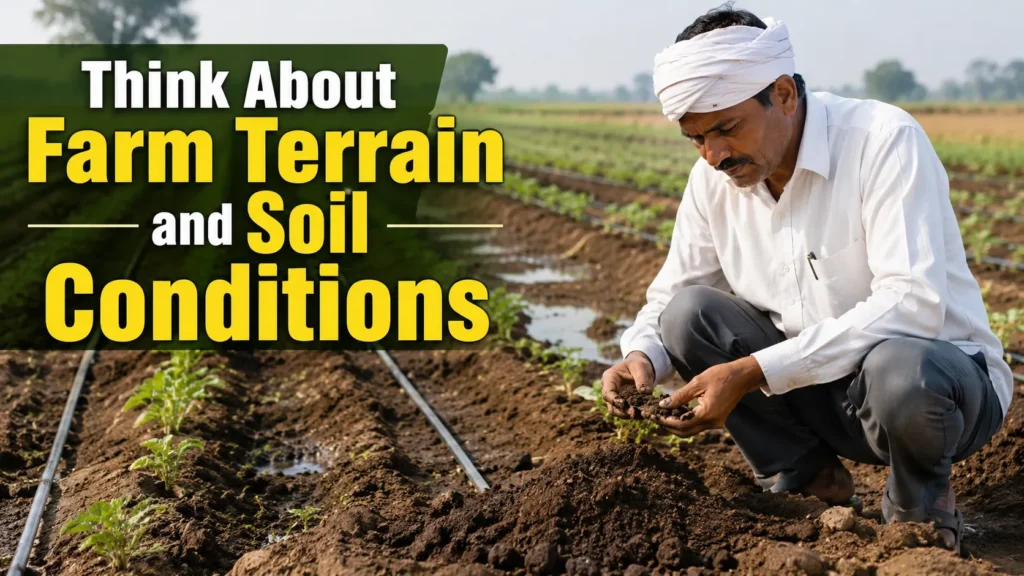
Look at the land before selecting the product.
Is the farm flat?
Does the pipeline need to cross a slope?
Will it be installed underground?
tractors regularly pass over the area?
the pipe be moved after every irrigation cycle?
These questions matter.
A flexible product can be useful where the pipeline needs to follow uneven ground. Underground installations require proper trench preparation and protection from sharp objects. Surface pipelines require attention to sunlight, movement, accidental impact, and storage when not in use.
Farm conditions should influence the decision just as much as the pipe material.
Don’t Ignore Pressure Rating
A pipe’s pressure rating is one of the most important specifications in an irrigation project.
The operating pressure should remain within the appropriate limits of the selected product and system. Pump pressure, elevation, water hammer, valves, and sudden changes in flow can all influence the actual conditions experienced by the pipeline.
Do not select a pipe only by diameter.
Ask the supplier about:
- Pressure rating
- Material grade
- Applicable standard
- Operating conditions
- Temperature range
- Compatible fittings
- Recommended installation method
For polyethylene water-supply pipes, BIS lists IS 4984:2016 as the applicable specification for polyethylene pipes for water supply.
Choose Quality Over the Cheapest Price
A low initial price can look attractive, particularly when a farm requires hundreds or thousands of metres of pipeline.
But the purchase price is only one part of the total cost.
Suppose a cheaper product requires frequent repairs. Every repair can involve labour, fittings, transportation, crop disruption, and water loss.
A slightly better-quality product that performs reliably may provide better value over the life of the irrigation system.
When comparing an HDPE pipe manufacturer in indore, High density pipe dealer in indore, or Plastic pipe manufacturer in Indore, ask for specifications and product information rather than comparing only quotations.
A Simple Farm Example: The Cost of Choosing Wrong
Consider a farmer with a medium-sized field who wants to install a sprinkler system.
He chooses a pipeline based entirely on the lowest quotation. The pipe is installed, but after the system starts operating, the farthest sprinklers do not receive the expected pressure.
The farmer initially thinks the sprinklers are faulty.
After checking the system, the contractor identifies inadequate pipeline sizing and pressure loss.
The farmer now faces two choices: accept uneven irrigation or spend more money modifying the system.
The lesson is simple: the cheapest pipe is not necessarily the cheapest irrigation solution.
A better approach would have been to calculate the flow requirement, pressure, distance, elevation, and number of sprinklers before purchasing.
A Practical Success Story From the Field
Consider another common situation.
A farmer plans to expand cultivation next season. Instead of purchasing only enough pipeline for today’s field, he discusses the expansion plan with his supplier.
The main line is selected with future capacity in mind, while smaller distribution sections are planned according to individual field requirements.
When the farm expands, much of the existing infrastructure can continue to be used.
This kind of planning can reduce unnecessary replacement work.
The same principle applies to contractors and government projects. A good pipeline design should consider present requirements while avoiding unnecessary oversizing.
Step-by-Step Guide to Choosing the Right Irrigation Pipe
Step 1: Identify the Irrigation Method
Decide whether the farm will use sprinkler, drip, surface, or another irrigation method.
Step 2: Identify the Water Source
Record whether the source is a borewell, pond, canal, tank, or another supply.
Step 3: Measure the Pipeline Distance
Measure the approximate distance from the source to the main irrigation area.
Step 4: Check Pump Capacity
Record the pump’s flow and pressure specifications.
Step 5: Calculate Required Flow
Estimate how much water the field needs and how many outlets will operate together.
Step 6: Select the Material
Compare HDPE, PVC, and other suitable options based on the application.
Step 7: Select Diameter and Pressure Rating
Choose these according to actual hydraulic requirements rather than guesswork.
Step 8: Select Compatible Fittings
Elbows, tees, couplers, valves, connectors, and other components should match the pipeline.
Step 9: Plan Installation
Decide which sections will remain above ground and which will be buried.
Step 10: Inspect Before Installation
Check pipes for visible damage, deformation, cracks, or defects before putting them into service.
When Should You Choose a Sprinkler Pipeline?
Sprinkler irrigation can be useful when water needs to be distributed over a wider field area.
If you are planning a sprinkler network, look for a supplier who understands the complete system.
Farmers searching for Sprinkler pipe dealers near me, Sprinkler irrigation pipe dealer in indore, or a Sprinkler system dealer in indore should ask about pipe compatibility, pressure requirements, fittings, sprinkler spacing, and installation support.
Do not purchase sprinklers and pipes separately without checking whether they are designed to work together.
What About Suction Hoses?
The pipeline carrying water after the pump and the suction side of the pump have different roles.
The suction hose must be suitable for the pump’s requirements and water source. It should maintain its shape under operating conditions and have properly fitted connections.
This is why farmers searching for a Pipe hose shop near me should explain whether they need a suction hose, delivery hose, irrigation line, or garden hose.
The word “hose” alone is not enough information for selecting the correct product.
Don’t Forget Borewell Requirements
A farm relying on a borewell needs more than a surface pipeline.
The submersible pump installation may require a column pipe designed to support the pump assembly and operate reliably inside the borewell.
If you are looking for the Best column pipe dealer in indore, ask about the correct diameter, pump compatibility, installation depth, load requirements, and product specifications.
A column pipe should be selected as part of the borewell system rather than as an isolated purchase.
What Farmers Should Ask a Supplier
Before placing an order, ask five simple questions:
Is this pipe suitable for my application?
What pressure rating do I need?
Which diameter matches my required flow?
Which fittings should I use?
What installation method is recommended?
A trustworthy supplier should be willing to discuss these points.
For larger projects, contractors and dealers can also ask about bulk availability, delivery schedules, product documentation, and after-sales support.
Common Mistakes to Avoid
Choosing Only by Price
Low purchase cost does not always mean low total cost.
Ignoring Pressure
A pipeline must match the operating conditions of the irrigation system.
Using the Same Diameter Everywhere
Different sections may have different flow requirements.
Buying Incompatible Fittings
Even a good pipe can perform poorly when fittings are unsuitable or badly installed.
Ignoring Future Expansion
A farm may grow, and the irrigation network may need additional outlets later.
Neglecting Installation Quality
Poor trench preparation, sharp objects, improper joints, and careless handling can reduce system life.
Buying From an Unknown Seller
Product authenticity, specifications, consistency, and support matter when your irrigation system is critical to crop production.
Choosing a Reliable Pipe Supplier in Indore
For farmers and contractors, finding the right local supplier can make purchasing easier.
If you search for Pipe Supplier Near Me, HDPE Pipe Dealer Near Me, Garden pipe dealer near me, or Plastic pipe dealer in Indore, don’t stop at the nearest shop.
Check whether the supplier can provide the product specification you need, appropriate fittings, consistent supply, and useful technical guidance.
For projects in and around Indore, Vishal Pipe offers agricultural and industrial piping solutions and identifies itself as a sprinkler irrigation pipe manufacturer and dealer. Its product range includes sprinkler pipes, HDPE pipes, suction hoses and column pipes.
For farmers who need local support, choosing an established Best Pipe Manufacturer in Indore can also make repeat purchases and replacement requirements easier to manage.
Why Local Expertise Can Make a Difference

A farmer may know exactly how much land needs irrigation but may not know the technical calculations behind pipeline sizing.
A good local supplier can bridge that gap.
Whether you are a farmer, dealer, civil contractor, builder, or government project manager, discuss your complete requirement instead of asking for a generic pipe.
This is particularly useful when working with an HDPE Pipe Manufacturer in Indore for a large agricultural pipeline or a PVC pipe manufacturer in indore for a specific water distribution application.
The best purchasing decision is one where the product, application, installation, and budget all match.
Quick Irrigation Pipe Buying Checklist
- Identify the irrigation method.
- Check the water source.
- Measure pipeline length.
- Check pump flow and pressure.
- Calculate the required flow.
- Consider elevation changes.
- Select the appropriate material.
- Confirm diameter and pressure rating.
- Buy compatible fittings.
- Check product specifications.
- Inspect pipes before installation.
- Plan for future expansion.
- Choose a reliable supplier.
Industry Trend: Smarter Water Management
Modern agriculture is moving toward better water management rather than simply using more water.
Farmers are increasingly combining efficient irrigation methods, better pumps, pressure management, filtration, automation, and improved pipelines.
The reason is straightforward. Water availability is becoming a more important planning factor, while farmers also need to control operating costs.
FAO notes that agriculture remains the world’s largest freshwater-using sector and that improving agricultural water management is important for long-term food and water security.
For this reason, the irrigation pipeline should be treated as part of a complete water-management system.
Expert Insight: Buy for the Farm, Not Just for Today
The best selection is rarely the pipe that looks best on a quotation sheet.
It is the pipe that performs correctly under the conditions where you actually plan to use it.
Before buying, think about the complete journey of water:
Source → Pump → Suction → Main Pipeline → Distribution Line → Sprinkler/Drip → Crop
Every section should work together.
If one component is incorrectly sized or poorly matched, the complete system can suffer.
Frequently Asked Questions
Which material is best for farm irrigation?
HDPE and PVC can both be suitable depending on the application. The decision should consider pressure, flow, distance, installation conditions, flexibility, budget, and fittings.
Is HDPE better than PVC for irrigation?
Not in every situation. HDPE is valued for flexibility and durability, while PVC can be a practical choice for suitable rigid pipeline installations. Select according to the project rather than choosing only by material name.
How do I choose the correct pipe size?
Start with required flow, pump capacity, pipeline length, elevation, pressure, and the number of outlets operating at the same time. Professional hydraulic calculation is recommended for larger systems.
Can one pipe size be used throughout a farm?
It can be used in some smaller systems, but larger networks often benefit from different sizes for mainlines and distribution sections. Proper design should determine the sizes.
What should I check before buying from a pipe dealer?
Check product specifications, pressure rating, applicable standards, material, fittings, availability, installation guidance, and supplier reliability.
Where can I find irrigation pipes in Indore?
Farmers can compare local manufacturers and suppliers based on product range, specifications, technical support, and delivery. Vishal Pipe provides agricultural piping solutions in Indore.
Final Takeaway: Choose the Pipe That Fits Your Farm
Choosing the right Irrigation Pipe is not simply a matter of selecting HDPE or PVC.
It is about understanding your farm’s water source, pump capacity, required flow, pressure, pipeline distance, terrain, irrigation method, and future needs.
A properly planned system can help reduce leakage, avoid unnecessary pressure problems, simplify maintenance, and deliver water more consistently across the field.
Whether you are a farmer planning a new irrigation system, a contractor managing an agricultural project, a dealer sourcing products, or a government department working on rural infrastructure, start with the application and work backward to the product.
If you are comparing an HDPE Pipe Manufacturer in Indore, PVC Pipe Manufacturer in Indore, Irrigation Pipe Manufacturer in Indore, or Sprinkler Pipe Manufacturer in Indore, ask for the right specification instead of simply asking for the lowest price.
For your next farm irrigation project, talk to Vishal Pipe about your water source, pipeline distance, pressure, flow requirement, and irrigation method. The right discussion before purchase can save you from expensive changes after installation.
Ready to choose the right pipeline for your farm? Contact Vishal Pipe and discuss your irrigation requirement before you buy.
