
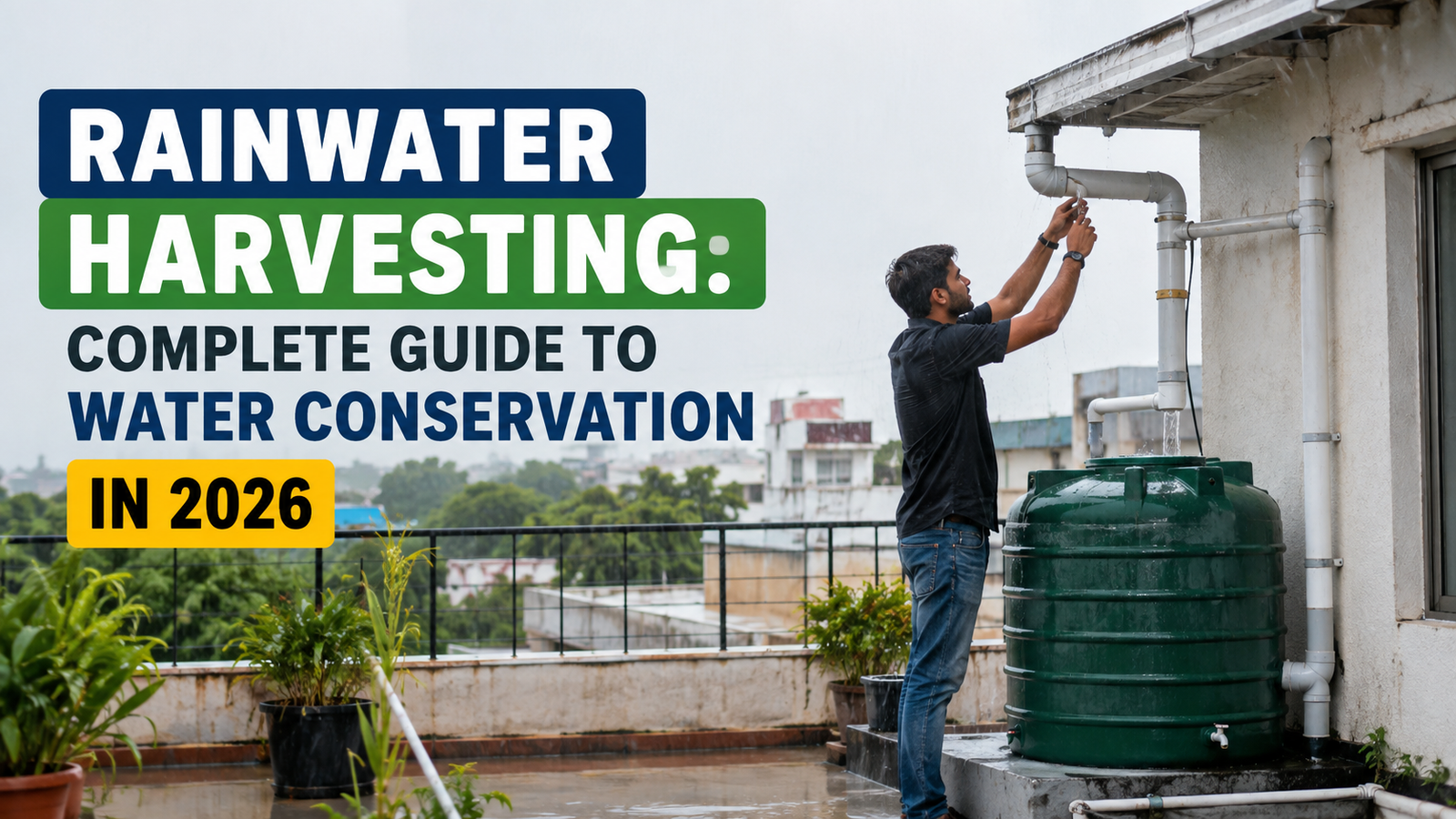
Every Drop of Rain Can Become a Water Asset
Imagine a farmer watching heavy rain run off his field while, a few months later, the same land depends on a borewell for irrigation. That water cycle tells an important story. We often receive plenty of rain, but without proper collection and storage, much of it disappears as runoff.Rainwater Harvesting offers a practical way to capture this valuable resource, store it for later use, or direct it into the ground to support groundwater recharge. For farmers, builders, contractors, industries, and government projects, it is no longer simply an environmental concept. It is becoming an important part of modern water management.
India’s 2025 groundwater assessment estimated annual groundwater extraction at about 247.2 billion cubic metres, while the national stage of groundwater extraction was around 60.6%. Around one-fourth of assessment units were classified as over-exploited, critical, or semi-critical.
That makes water conservation a practical necessity.
For a farmer, captured rainwater can support irrigation. builder, it can become part of a sustainable building design. contractors, it can reduce pressure on conventional water sources. For government and infrastructure projects, it can support long-term water security.
Why Rainwater Harvesting Matters in 2026
Water demand is increasing while groundwater cannot be treated as an unlimited resource. Agriculture is particularly dependent on groundwater, making efficient water management essential.
A well-designed Rainwater Harvesting system works in two simple ways: collect rainwater for future use or allow suitable water to recharge the ground.
The Central Pollution Control Board describes rooftop collection and groundwater recharge as sustainable approaches for dealing with increasing pressure on freshwater resources.
Consider a simple example.
Suppose a building has a 100-square-metre roof and receives 800 mm of annual rainfall. With an assumed runoff coefficient of 0.8, the potential collection is approximately 64,000 litres.
That is not a promise of actual usable water because roof material, first-flush losses, filtration, rainfall intensity, storage capacity, and system design all matter. Still, the calculation shows how much water can be available from a relatively small surface.
The same principle can be applied to farm buildings, warehouses, schools, factories, residential projects, and public infrastructure.
Rainwater Harvesting for Farmers and Irrigation
For farmers, the biggest advantage is not simply storing water. It is improving water availability when rainfall stops.
A farm can collect runoff from rooftops, sheds, paved areas, and suitable land surfaces and direct it toward a storage pond, tank, recharge structure, or irrigation system.
When combined with efficient irrigation, collected water can be used more carefully. This is where quality piping becomes important.
A farmer searching for an Irrigation Pipe Manufacturer in Indore should consider pipe strength, diameter, pressure requirements, installation conditions, fittings, and expected service life rather than selecting only on price.
For sprinkler-based agriculture, the right pipe network can help distribute water more uniformly. Buyers looking for Sprinkler pipe dealers near me or a Sprinkler irrigation pipe dealer in Indore should check whether the supplier understands the actual field requirement.
Rainwater collection and efficient irrigation should work together. Capturing water but losing it through poor distribution defeats much of the purpose.
How Rainwater Harvesting Systems Work
Most systems follow a simple journey:
Rainfall → Catchment → Conveyance → First Flush → Filtration → Storage or Recharge → End Use
The catchment area may be a rooftop, farm structure, paved surface, or another suitable area.
Gutters and pipes carry the water toward a filter or storage point. A first-flush arrangement helps divert the initial flow, which can contain dust, leaves, bird droppings, and other contaminants.
After filtration, the water can either enter a storage tank or be directed to an appropriate recharge structure.
For larger projects, pipe selection becomes even more important. A HDPE Pipe Manufacturer in Indore can be considered where durable polyethylene piping is suitable for the project. Similarly, a PVC Pipe Manufacturer in Indore may be relevant where PVC piping matches the application, pressure, and installation requirements.
The right solution depends on engineering conditions rather than choosing a material simply because it is popular.
Step-by-Step Rainwater Harvesting Guide
1. Measure the Catchment Area
Start by measuring the roof or other collection surface. Larger catchment areas generally provide greater collection potential.
Also consider whether the surface is clean and suitable for collecting water.
2. Understand Local Rainfall
Study the rainfall pattern of the project location. Annual rainfall alone is not enough.
A location receiving most of its rain during a short monsoon period needs sufficient temporary storage, safe overflow arrangements, and an appropriate recharge strategy.
3. Estimate Potential Water Collection
A basic planning formula is:
Potential collection = Roof area × Rainfall × Runoff coefficient
For example:
100 m² × 0.8 m × 0.8 = 64 m³
That equals approximately 64,000 litres.
The actual recoverable quantity will be lower or different depending on system losses and site conditions.
4. Select the Conveyance Pipes
Pipes should be selected according to expected flow, distance, pressure, installation method, and durability requirements.
For agricultural projects, buyers may compare options from an HDPE Pipe Supplier in Indore, PVC Pipe Supplier in Indore, or other qualified local suppliers.
For specialized farm applications, even a search for a Suction pipe delear in indore can lead to very different products, so buyers should confirm the required suction capacity, size, flexibility, and application before purchasing.
5. Add First-Flush and Filtration
Do not send the first dirty roof runoff directly into the storage tank.
A suitable first-flush arrangement and filtration system can improve water quality and protect downstream components.
6. Choose Storage or Recharge
Storage makes sense when water is required later for gardening, washing, irrigation, livestock-related applications, or other suitable non-potable uses.
Recharge is useful when the objective is to return water to the groundwater system. However, recharge structures must be designed according to local soil, geology, groundwater conditions, contamination risks, and applicable regulations.
7. Plan Overflow and Maintenance
A system should never be designed without an overflow route.
During intense rainfall, excess water needs a safe path. Filters, gutters, tanks, and recharge structures also require regular inspection.
Choosing the Right Pipes for Water Conservation
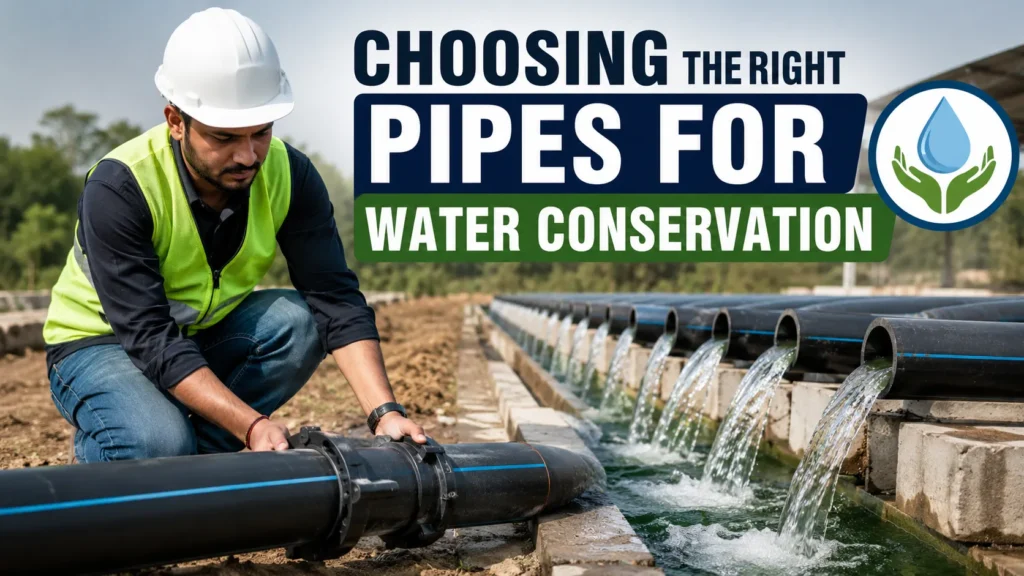
The pipe is one of the less visible components of a water harvesting system, but it can strongly influence performance.
For underground or long-distance applications, HDPE may offer useful flexibility and durability. PVC can also be appropriate for many water conveyance applications when correctly selected and installed.
If you are evaluating a Pipe Manufacturer in Indore, ask about material quality, specifications, pressure ratings, sizes, fittings, testing, and suitability for your project.
For farmers and irrigation contractors, a High density pipe dealer in indore may be relevant when HDPE-based solutions are being considered.
For flexible watering applications, a Pipe hose shop near me may offer garden or agricultural hose products, but the product should match the required pressure and operating conditions.
Similarly, buyers looking for a Garden pipe dealer near me should distinguish between light-duty garden watering and higher-demand agricultural applications.
Comparison: Storage vs Groundwater Recharge
| Factor | Water Storage | Groundwater Recharge |
|---|---|---|
| Main purpose | Future water use | Restore groundwater |
| Best suited for | Farms, buildings, gardens | Suitable sites with recharge potential |
| Water availability | Directly accessible after storage | Available through groundwater system |
| Space requirement | Tank or pond required | Recharge structure required |
| Maintenance | Tank and filtration maintenance | Structure and filtration maintenance |
| Planning priority | Storage capacity | Soil, geology and groundwater suitability |
Neither method is automatically better. The correct choice depends on the site’s water demand, rainfall, soil conditions, available space, and intended use.
Real-Life Example: A Farm Can Turn Runoff Into Opportunity
Consider a hypothetical 5-acre farm where monsoon runoff previously flowed away from the property.
Instead of allowing all runoff to leave the site, the farmer can create a planned collection and recharge strategy. Water from suitable farm structures can be collected through a pipe network and directed toward storage or recharge points.
The stored water can later support irrigation during dry periods.
Now add a sprinkler system.
Water collected during rainfall is no longer treated as an isolated conservation project. It becomes part of an integrated system involving storage, piping, filtration, pressure management, and efficient irrigation.
A farmer working with a Sprinkler system dealer in Indore should therefore discuss the complete water requirement rather than buying sprinklers separately from the rest of the system.
Industry Trends Shaping Water Conservation in 2026
Water management is moving toward integrated solutions rather than individual products.
Three trends are especially important.
First, recharge is becoming more strategic. The latest national groundwater assessment shows why groundwater management remains important.
Second, agriculture is focusing more on efficient distribution. Rainwater collection becomes significantly more valuable when paired with suitable irrigation methods.
Third, infrastructure projects are considering water resilience during planning. Rainwater systems, recharge structures, water reuse, efficient irrigation, and monitoring can work together as one management strategy.
Government policy discussions also increasingly emphasize rainwater harvesting, wastewater reuse, conservation agriculture, and integrated watershed management.
Common Mistakes and Practical Solutions
One common mistake is installing a tank without calculating actual water demand. Solution: estimate rainfall, catchment area, storage needs, and seasonal demand before installation.
Another mistake is choosing pipes only because they are cheaper. Solution: compare pressure rating, size, material, expected flow, installation conditions, and long-term durability.
Some projects also ignore first-flush systems. Solution: include suitable first-flush and filtration arrangements.
Poor maintenance is another issue. Leaves and sediment can block gutters and filters. Solution: inspect the system before and during the rainy season.
Finally, many projects install recharge structures without considering site conditions. Solution: assess soil, groundwater, contamination risks, and local technical requirements before recharge.
Rainwater Harvesting Checklist for 2026
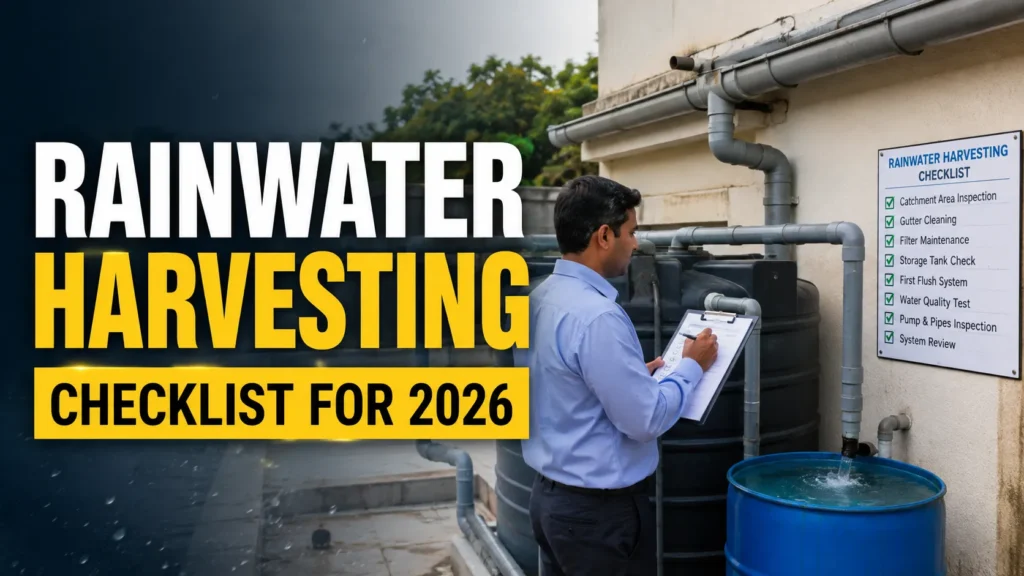
Before starting a project, check:
- Catchment area measured
- Local rainfall pattern studied
- Water demand calculated
- Storage requirement estimated
- First-flush system planned
- Filtration method selected
- Pipe diameter and material checked
- Overflow route planned
- Recharge feasibility assessed
- Regular cleaning schedule created
- Irrigation requirement considered
- Local regulations reviewed
A contractor may also need to coordinate with a Best Pipe Manufacturer in Indore or suitable distributor to ensure the selected pipe system matches the project’s technical requirements.
For larger construction projects, a Plastic pipe manufacturer in indore may be evaluated alongside other suppliers based on product specifications and project requirements.
Farm and irrigation buyers may also search for a Plastic pipe dealer in indore, but the final decision should be based on application suitability rather than the search ranking of a supplier.
Likewise, someone searching for a HDPE pipe manufacturer in indore should compare technical specifications, consistency, availability, and after-sales support.
Success Starts With the Right Water Strategy
The most successful water conservation projects do not depend on one product.
They combine good planning, suitable catchment areas, proper filtration, correctly sized pipes, storage or recharge, efficient irrigation, and regular maintenance.
For dealers and distributors, understanding these complete systems creates better customer solutions. civil and irrigation contractors, it reduces the risk of mismatched components. builders, it can support more responsible water planning. For government and infrastructure departments, integrated water management can contribute to long-term resilience.
A business evaluating a Pipe Supplier Near Me should therefore look beyond immediate availability and consider whether the supplier can support the technical requirements of the complete project.
For agricultural applications involving vertical water systems, buyers may also research a Best column pipe dealer in indore and compare product specifications before installation.
Expert Insight: Think Beyond Rainwater Collection
The biggest mistake is thinking that harvesting rain simply means putting rainwater into a tank.
A better approach is to ask four questions:
Where does the rain fall?
Where does the water currently go?
When will the water be needed?
How can the water be stored, reused, or recharged safely?
These questions turn a basic collection system into a complete water-management plan.
For farmers, that could mean combining harvested water with sprinkler irrigation. builders, it may mean integrating rooftop collection into site planning. contractors, it can mean designing the complete conveyance and filtration network. For public projects, it can mean combining harvesting, recharge, reuse, and monitoring.
That is the real value of Rainwater Harvesting in 2026.
FAQs About Rainwater Harvesting
What is Rainwater Harvesting?
Rainwater Harvesting is the process of collecting rainfall from suitable surfaces and either storing it for later use or directing it toward an appropriate groundwater recharge system.
Is rainwater harvesting useful for farmers?
Yes. When properly designed, harvested rainwater can supplement irrigation, reduce runoff, and support water availability during dry periods. It works particularly well when combined with efficient irrigation methods.
Which pipes are suitable for rainwater systems?
The appropriate pipe depends on flow, pressure, distance, installation conditions, and application. HDPE and PVC are commonly considered for different water conveyance requirements.
Can rainwater harvesting recharge groundwater?
Yes, where site conditions are suitable. Recharge should be planned according to soil, geology, groundwater conditions, filtration requirements, and local technical guidance.
How much rainwater can a roof collect?
A basic estimate can be calculated using roof area × rainfall × runoff coefficient. Actual usable collection will vary because of first-flush diversion, filtration, evaporation, overflow, and other system losses.
Does rainwater harvesting require regular maintenance?
Yes. Gutters, filters, first-flush components, storage tanks, pipes, and recharge structures should be inspected and maintained regularly, especially before and during the rainy season.
Start Building a Smarter Water Future
Rainfall should not be viewed as water that simply arrives and disappears.
With thoughtful planning, it can become a valuable resource for agriculture, construction, infrastructure, and communities.
Whether you are a farmer planning an irrigation system, a contractor designing a water network, a builder developing a new project, a government department planning infrastructure, or a dealer helping customers select the right products, the goal remains the same: capture more, waste less, and manage every drop intelligently.
If you are planning a water conservation, irrigation, or rainwater collection project, choosing the right pipe and system components is an important first step. Explore suitable pipe solutions and discuss your project requirements with a reliable manufacturer or supplier before making your final decision.
The rain will come. The real question is: will you be ready to use it?