Modern farming isn’t just about sowing seeds and hoping for rain. It is about precision resource management. With changing climate patterns and depleting water tables, optimizing every drop of water has become a necessity for farmers across India. Sprinkler irrigation has emerged as a definitive answer, offering up to 39% water savings and an over 35% boost in fertilizer application efficiency compared to traditional flood irrigation (Chauhdary et al., 2023).
However, a sprinkler system is only as good as the network of pipes supporting it. Choosing the wrong pipe material leads to frequent leaks, pressure drops, and expensive replacements that eat into your seasonal profits. Whether you are looking for a reliable sprinkler pipe dealer in Indore or trying to understand which plastic compound can withstand harsh agricultural environments, this guide will walk you through the essential factors to make an informed decision.
Why Pipe Selection Matters in Sprinkler Irrigation
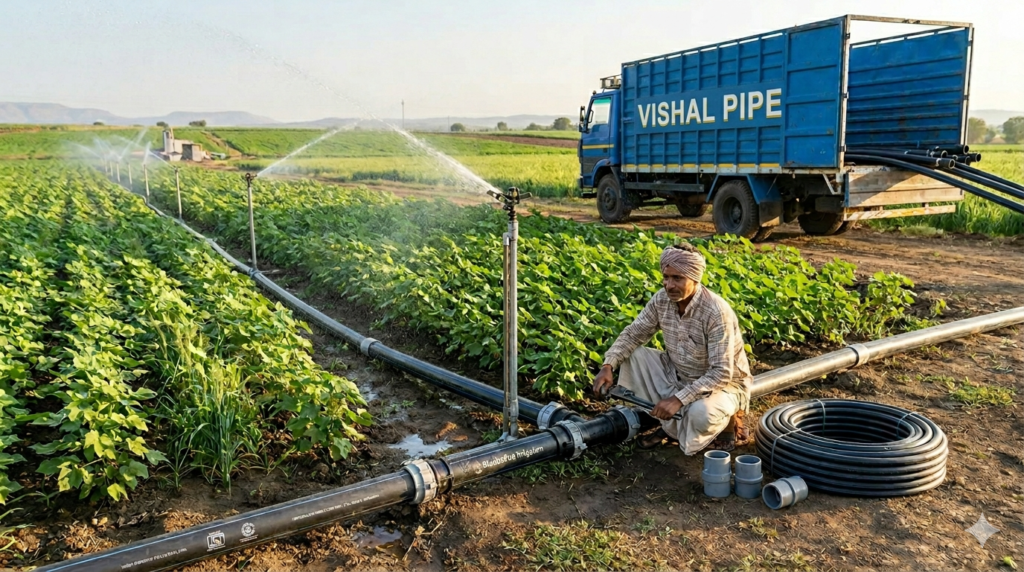
An agricultural sprinkler system functions under significant mechanical stress. Pipes must endure constant internal water pressure, friction from flowing water, and external environmental hazards. Poor-quality piping causes systemic pressure drops, resulting in uneven water distribution where some crops end up waterlogged while others stay parched.
Investing in high-quality materials ensures structural integrity, UV degradation resistance, and chemical compatibility with liquid fertilizers. Over time, selecting the right material lowers your total cost of ownership by eliminating recurring maintenance expenses.
Key Types of Plastic Sprinkler Pipes for Agriculture
Modern agricultural systems have transitioned away from heavy, corrosion-prone metal piping toward advanced polymers (Chauhdary et al., 2023). When visiting a plastic pipe manufacturer in Indore, you will generally choose between three primary types of piping materials.
1. High-Density Polyethylene (HDPE) Pipes
High-Density Polyethylene is the industry standard for portable and mainline sprinkler systems. HDPE pipes are highly valued for their exceptional impact resistance, flexibility, and rugged durability.
- Benefits: They feature a service life of at least 50 years under standard conditions (Wang et al., 2023). They can flex around field curves without cracking and handle high pressure thresholds effortlessly. Quick-action couplers allow sections to be connected or dismantled rapidly when moving the system across different plots (Sunita).
- Best Used For: Mainlines, sub-lines, and portable sprinkler sets that require frequent shifting across rugged, uneven terrain.
2. Polyvinyl Chloride (PVC) Pipes
PVC pipes are a rigid, cost-effective alternative widely utilized in permanent, underground agricultural networks.
- Benefits: They offer excellent tensile strength and structural rigidity, maintaining their shape under heavy soil loads. PVC pipes exhibit superior technical and mechanical performance in static setups (Simion et al., 2024). They are also highly resistant to chemical corrosion from fertilizers and pesticides.
- Best Used For: Permanently buried mainlines and deep underground delivery systems where the pipe will not be exposed to direct sunlight or structural shifting.
3. Linear Low-Density Polyethylene (LLDPE) / Micro-Sprinkler Tubing
For close-range, low-pressure micro-sprinkler or drip-sprinkler hybrid systems, thinner LLDPE tubes are utilized.
- Benefits: Extremely pliable and easy to punch holes into for custom micro-nozzle layouts.
- Best Used For: Horticultural setups, greenhouses, and closely spaced vegetable rows where delicate, targeted watering is required.
Technical Comparison: HDPE vs. PVC
| Feature | High-Density Polyethylene (HDPE) | Polyvinyl Chloride (PVC) |
| Flexibility | Highly flexible; bends around obstacles without breaking | Rigid; requires specific directional elbow fittings |
| Lifespan | 50+ years; exceptional environmental stress resistance (Wang et al., 2023) | Long-lasting but prone to brittle failure if subjected to soil shifting |
| UV Resistance | High (when formulated with carbon black stabilizers) | Moderate; can become brittle over long-term direct sunlight exposure |
| Joint Type | Quick-action couplers (Sunita) or butt-fusion welding | Solvent cement or threaded joints |
| Best Application | Portable, surface-level sprinkler lines | Permanent, buried irrigation mains |
Step-by-Step Selection Guide for Farmers
Choosing the right piping involves aligning your farm’s physical layout with proper mechanical specifications. Use this structured approach when assessing your options:
1.Evaluate Your System Layout:Permanent vs. Portable.
Determine if your sprinkler network needs to move between different fields seasonally or remain permanently buried. Portable systems require lightweight HDPE pipes with quick-connect couplers, while permanent setups benefit from buried rigid PVC.
2.Calculate the Required Pressure Rating (PN/SDR):Match Pump Output.
Check the operating pressure of your water pump. Sprinkler systems typically require working pressures between 2.0 to 2.5 kg/sq cm at the field level (Sunita). Ensure the pipe’s Pressure Number (PN) or Standard Dimension Ratio (SDR) rating can safely handle your pump’s maximum pressure output without bursting.
3.Size the Diameter Appropriately:Optimize Flow & Minimize Friction.
Select a diameter that prevents excessive friction-induced pressure loss. Standard field models typically use 50 mm, 63 mm, or 75 mm diameters depending on total land area and the number of active sprinkler nozzles (Sunita). Minimizing diameter beyond functional limits chokes the flow and spikes energy costs (Abu Laila, 2025).
4.Verify Certifications and Material Standards:Check for ISI Marks.
Always inspect pipes for official standardization marks, such as the ISI stamp in India. Certified pipes ensure consistent wall thickness, high-grade virgin polymer composition, and proper blending with UV stabilizers to prevent premature breakdown in the sun (Wang et al., 2023).
A Quick Word on UV Degradation:
Polyethylene materials are naturally susceptible to photo-oxidation when exposed to sunlight and outdoor heat over long periods (Wang et al., 2023). When purchasing surface lines, always verify with your supplier that the pipes contain integrated carbon black or UV-inhibiting additives to ensure they don’t turn brittle within a few seasons.
Local Sourcing: Finding the Right Partner in Indore
Sourcing your agricultural components from reputable regional businesses saves on logistics and ensures your products meet local soil and water conditions.
- Locating Suppliers Near Your Farm: Finding reliable sprinkler pipe dealers near me simplifies logistics, gives you access to physical material inspections, and ensures reliable post-purchase service or warranty claims if a manufacturing defect occurs.
- Sourcing in Madhya Pradesh’s Agri-Hub: If you operate near Malwa or central India, sourcing directly through an authorized sprinkler irrigation pipe dealer in Indore provides access to regional distribution hubs. This often translates to better wholesale rates, reliable bulk supply, and direct guidance on state agricultural equipment subsidies (Sunita).
- Industrial Manufacturing Links: For customized lengths or high-volume corporate farming projects, working directly with a high density pipe dealer in in Indore connects you with manufacturers specializing in heavy-duty agricultural grades. This ensures your pipelines match precision flow rates and pressure profiles without third-party retail markups.
Investing time into selecting high-quality irrigation pipes safeguards your farm’s primary life-support system. By choosing the right material, calculating correct pressure tolerances, and sourcing through reputable regional suppliers, you protect your crop yields and ensure sustainable, water-efficient farming for decades to come.