
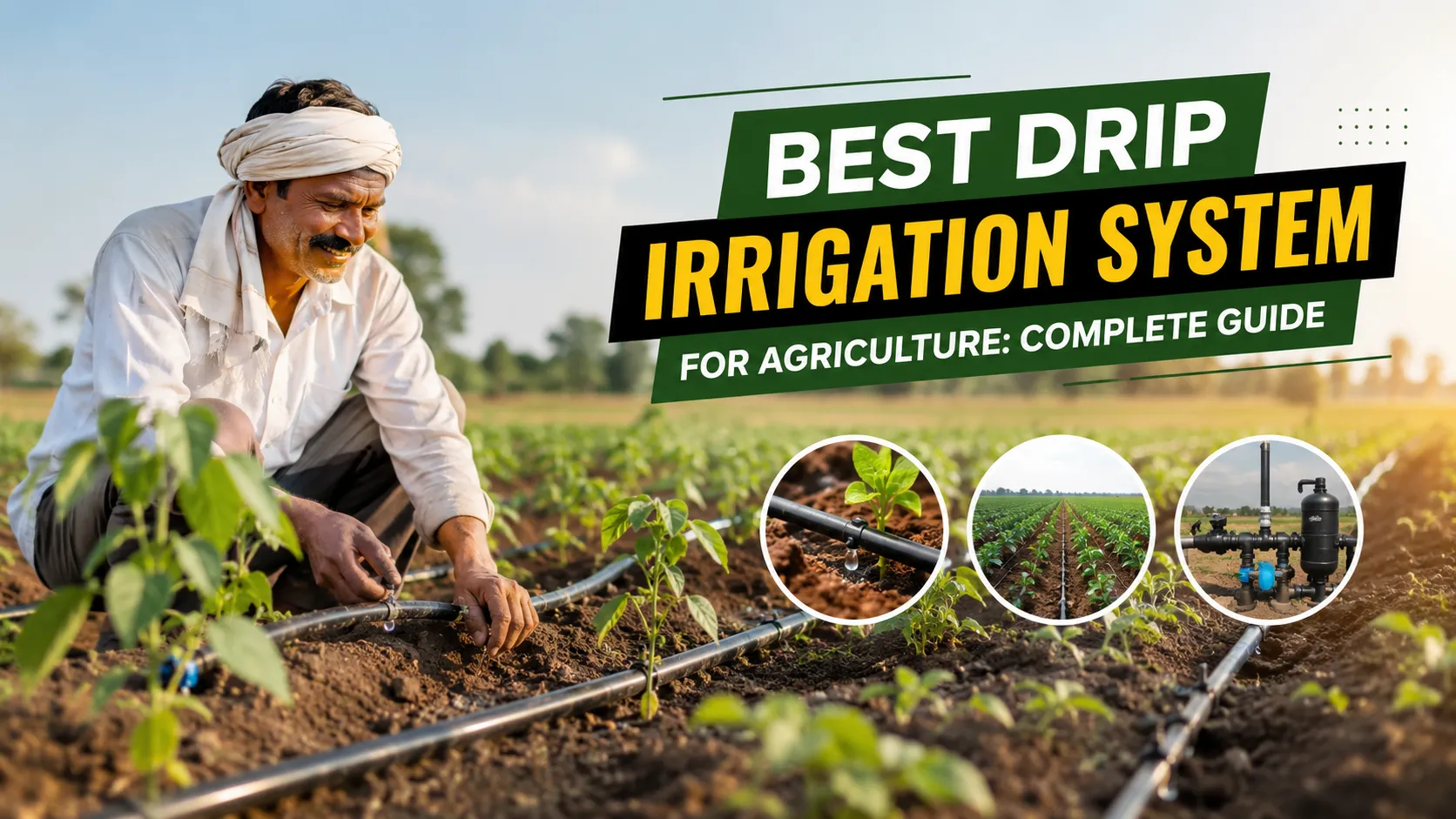
When Every Drop Matters on the Farm
Drip Irrigation is changing the way farmers manage water, fertilizer, labour, and crop growth. Instead of flooding the entire field, it delivers water slowly and directly near the root zone of plants. For farmers dealing with rising irrigation costs, irregular water availability, or the need to improve crop productivity, choosing the right irrigation system can make a major difference.
Think about a farmer growing vegetables, cotton, banana, grapes, or other high-value crops. If water is applied through traditional flood irrigation, a large amount can be lost through runoff, evaporation, and deep percolation. With a properly designed system, water can be delivered where the crop actually needs it.
This is also why the demand for quality irrigation pipes and accessories is increasing. A good system is not simply about buying drip lines. The mainline, sub-main, filters, valves, connectors, pressure management, laterals, and water source must work together.
Government programmes in India have also encouraged micro-irrigation as a way to improve water-use efficiency. Under the Per Drop More Crop initiative, financial assistance has been provided for micro-irrigation installation, subject to applicable scheme and state conditions.
For farmers, irrigation contractors, dealers, builders, and infrastructure departments, the real question is not just, “Should I install drip?” It is, “Which system will suit my land, crop, water source, soil, and budget?”
This complete guide will help you answer that question.
What Is Drip Irrigation and How Does It Work?
A drip system is a controlled irrigation network that carries water from the source to individual plants or crop rows. Emitters or drippers release water at a controlled rate near the root zone.
The basic flow is simple:
Water source → Pump → Filter → Mainline → Sub-main → Laterals → Emitters → Plant root zone
The system can also include a fertigation unit, pressure regulators, air-release valves, control valves, and other components depending on the farm.
Unlike flood irrigation, the objective is not to wet the whole field. The objective is to maintain suitable moisture around the crop root zone.
This makes system design extremely important. A poor-quality pipe, incorrect pressure, blocked filter, unsuitable dripper spacing, or badly planned layout can reduce the performance of the entire setup.
Why Drip Irrigation Is Becoming Important for Agriculture
Water management is becoming one of the biggest challenges in modern farming. According to the Government of India, micro-irrigation systems can provide significant water savings compared with conventional methods, while also helping reduce certain input and labour costs.
India has also expanded its use of micro-irrigation considerably. A 2026 government update reported that more than 110.92 lakh hectares had been brought under micro-irrigation through the Per Drop More Crop scheme since its inception.
But saving water should not be the only reason to adopt the technology.
A well-designed system can help farmers:
- Apply water more precisely
- Reduce unnecessary runoff
- Maintain more consistent soil moisture
- Support fertigation
- Reduce manual irrigation work
- Improve irrigation scheduling
- Use available water more efficiently
- Manage fields with different crop requirements
The actual result depends on crop, soil, climate, system design, maintenance, and how the farmer operates the equipment.
How to Choose the Best Drip Irrigation System for Your Farm
There is no single system that is perfect for every farm. A banana plantation and a vegetable farm may require completely different layouts.
Before purchasing anything, consider these seven factors.
1. Understand Your Crop
Start with the crop rather than the pipe.
Ask:
- How much water does the crop require?
- What is the spacing between plants?
- Is the crop grown in rows?
- How deep is the root zone?
- How frequently should irrigation take place?
- Will fertigation be required?
Crops such as vegetables, fruit orchards, cotton, sugarcane, grapes, and banana can benefit from carefully planned micro-irrigation.
2. Check Your Water Source
The water source determines the basic design.
It could be a:
- Borewell
- Open well
- Farm pond
- Reservoir
- Canal
- Storage tank
Water quality also matters. Sand, silt, algae, organic matter, or other particles can block emitters.
This is why filtration should never be treated as an optional component.
3. Select the Right Pipe Network
The mainline carries water from the source to the field. Sub-main pipes distribute it into different sections, while laterals carry water along crop rows.
For larger agricultural projects, selecting a reliable HDPE pipe manufacturer in Indore can be important when you need durable water conveyance solutions.
For certain applications, farmers and contractors may also compare options from a PVC pipe manufacturer in Indore based on pressure requirements, installation conditions, pipe size, and project specifications.
The right choice depends on the application rather than simply choosing the cheapest pipe.
4. Consider Pipe Diameter
Pipe diameter should be selected according to flow rate, field size, length of the network, elevation changes, and pressure requirements.
A pipe that is too small can create excessive pressure loss. An oversized pipe may increase initial project costs unnecessarily.
This is one reason contractors should calculate the irrigation requirement before purchasing materials.
5. Choose Suitable Emitters
Emitters determine how water reaches the crop.
Common considerations include:
- Flow rate
- Dripper spacing
- Pressure compensation
- Soil type
- Crop spacing
- Required irrigation frequency
For sandy soil, water movement can differ significantly from clay soil. FAO notes that the wetting pattern created by drip application depends on factors such as discharge rate and soil type.
6. Plan for Filtration
A good filter protects the system.
Depending on water quality, the system may require screen, disc, or sand-media filtration.
Skipping filtration to reduce the initial cost can become expensive later because blocked emitters can reduce uniformity and increase maintenance requirements.
7. Think About Future Expansion
If the farm may expand, plan the network accordingly.
A system designed only for today’s field may become difficult to modify later. Farmers, irrigation contractors, and project planners should consider future crop areas and additional irrigation zones before finalising the mainline.
Drip Irrigation vs Sprinkler Irrigation
Both systems are useful, but they work differently.
| Feature | Drip System | Sprinkler System |
|---|---|---|
| Water application | Near root zone | Sprayed over crop/soil |
| Suitable crops | Orchards, vegetables, row crops and many high-value crops | Field crops, lawns and selected agricultural applications |
| Wind effect | Generally lower | Can be affected by wind |
| Fertigation | Highly suitable | Possible with suitable setup |
| Water control | Highly targeted | Wider area coverage |
| Initial planning | Requires detailed layout | Also requires pressure and sprinkler planning |
| Best use | Precise root-zone irrigation | Broader field coverage |
For farmers looking for Sprinkler irrigation pipe dealer in Indore services, the decision should be based on crop, field layout, water source, and irrigation objectives rather than choosing one technology for every farm.
A reliable Sprinkler system dealer in Indore can also help with system components when sprinkler irrigation is more appropriate for the project.
Best Drip Irrigation System for Agriculture: Complete Guide
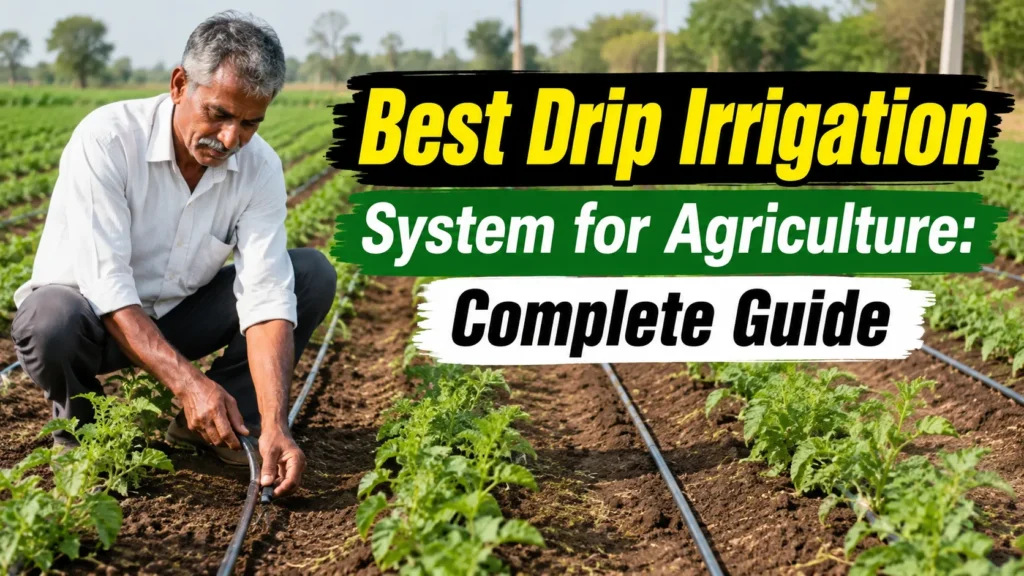
Pipes are the backbone of an irrigation network.
Different sections can require different pipe types and sizes. The selection depends on pressure, flow, field layout, soil conditions, installation method, and expected service life.
Farmers and contractors commonly evaluate HDPE and PVC solutions for water conveyance.
If you are comparing a HDPE Pipe Manufacturer in Indore or a PVC Pipe Manufacturer in Indore, do not compare only the price per metre. Check specifications, pressure class, dimensions, application suitability, quality consistency, and supplier support.
A dependable Irrigation Pipe Manufacturer in Indore should be able to help buyers identify suitable products for the intended application.
For dealers and distributors, working with a reliable Pipe Manufacturer in Indore can also make inventory planning easier.
HDPE vs PVC Pipes: Which Is Better?
Both materials can be useful when selected for the right application.
HDPE is known for flexibility and suitability for various water-conveyance applications. PVC can be attractive where rigid pipe networks and specific installation conditions are preferred.
Instead of asking, “Which material is always better?”, ask:
Which material is better for my particular irrigation layout?
Consider:
- Required pressure
- Pipe diameter
- Installation method
- Soil conditions
- Field movement
- Length of pipeline
- Expected operating conditions
- Budget
- Availability of fittings
A knowledgeable HDPE Pipe Supplier in Indore or PVC Pipe Supplier in Indore can help match the product to the application.
Step-by-Step Guide to Installing a Drip Irrigation System
Step 1: Survey the Farm
Measure the field and identify the water source, crop rows, elevation changes, and proposed irrigation zones.
Step 2: Calculate Water Requirement
Estimate crop water demand and determine the required flow for each irrigation section.
Step 3: Design the Mainline
Plan the main pipeline from the pump or storage point to the field.
Step 4: Install Filtration
Place the appropriate filtration unit before water enters the distribution network.
Step 5: Install Sub-Mains
Divide the field into practical irrigation zones.
Step 6: Connect Laterals
Lay laterals along the crop rows according to plant spacing and the selected emitter arrangement.
Step 7: Test Pressure
Open the system gradually and check pressure at different points.
Step 8: Flush the Network
Flush mainlines, sub-mains, and laterals before regular operation.
Step 9: Inspect Emitters
Check whether water is being discharged uniformly.
Step 10: Start an Irrigation Schedule
Irrigation should be based on crop requirements, soil moisture, weather, and growth stage rather than simply following a fixed routine.
A Simple Farm Example
Imagine a farmer growing vegetables on a medium-sized plot.
Earlier, irrigation required moving water across the field and monitoring the area manually. Some sections became too wet while other sections remained comparatively dry.
The farmer changes to a properly designed micro-irrigation layout with filtration, separate irrigation zones, suitable laterals, and controlled application.
The biggest improvement may not be dramatic on the first day. The real benefit comes from better control.
The farmer can schedule irrigation by crop stage, apply water closer to the roots, and combine suitable fertiliser application with irrigation.
This is the practical value of precision irrigation: better control rather than simply more water.
Case Study: What Indian Field Research Shows
Field research under India’s micro-irrigation programmes provides useful evidence.
A study covering sugarcane, banana, and cotton in Maharashtra reported yield increases after farmers shifted from flood irrigation to drip irrigation. The reported increases were 35.5% for sugarcane, 73.3% for banana, and 79.9% for cotton in the surveyed cases. The study also reported reductions in pumping hours and improvements in labour and electricity use.
These numbers should not be treated as a guaranteed result for every farm. Crop variety, climate, soil, water availability, farm management, and system quality all influence outcomes.
The bigger lesson is clear: irrigation technology works best when it is combined with good farm management.
Common Drip Irrigation Mistakes Farmers Should Avoid
Buying Only on Price
The cheapest component can become expensive if it fails early or creates repeated maintenance problems.
Ignoring Water Quality
Dirty water can cause emitter clogging.
Using the Wrong Pipe Size
Incorrect pipe sizing can create pressure problems and uneven water distribution.
Poor Field Layout
Long laterals, elevation changes, and badly planned zones can affect irrigation uniformity.
Skipping Regular Flushing
Even a good system needs cleaning and flushing.
Not Checking Filters
Filters should be inspected and cleaned according to operating conditions.
Overwatering
More irrigation does not automatically mean better crop growth. The aim is to supply the crop’s required water efficiently.
Neglecting Repairs
A small leak or damaged lateral can become a larger problem if ignored.
Maintenance Checklist for Farmers
Before every irrigation season, inspect the complete network.
- Clean and inspect filters
- Check pump performance
- Inspect mainline joints
- Check valves
- Flush sub-mains
- Flush laterals
- Inspect clogged emitters
- Check pressure
- Repair damaged pipes
- Replace worn connectors
- Check fertigation equipment
- Record recurring problems
Regular maintenance protects the investment and helps maintain more uniform irrigation.
Where Can Farmers Find the Right Pipe Supplier?
Buying irrigation material from the right source is just as important as selecting the right system.
Farmers often search online for a Pipe Supplier Near Me, HDPE Pipe Dealer Near Me, or Sprinkler pipe dealers near me when they need quick access to agricultural pipe products.
For local buyers, searches such as Suction pipe delear in indore, Pipe hose shop near me, and Garden pipe dealer near me are also common when looking for related water-management products.
For specialised agricultural requirements, buyers may also look for a High density pipe dealer in indore, Plastic pipe manufacturer in indore, or Plastic pipe dealer in indore.
The important point is to verify the product specification before purchasing. A local supplier is useful, but product suitability should always come first.
For specialised farm applications, some buyers may also search for the Best column pipe dealer in indore when selecting column pipes for borewell and water-lifting applications.
How Contractors and Dealers Can Choose Better Products

Civil and irrigation contractors handle projects where consistency matters.
Before finalising a supplier, check:
- Product specifications
- Available sizes
- Pressure ratings
- Raw material quality
- Fittings and accessories
- Delivery capability
- Technical support
- Replacement availability
- Project requirements
- Long-term supplier reliability
A professional Best Pipe Manufacturer in Indore should focus not only on selling pipes but also on helping customers select suitable solutions for their applications.
Dealers should also maintain products that serve different customer requirements instead of relying on a single pipe type.
Industry Trend: Precision Irrigation Is Moving Forward
Agriculture is gradually moving towards more controlled water management.
The focus is shifting from simply increasing irrigation availability to improving how efficiently available water is used.
Government initiatives continue to promote micro-irrigation, while farmers are increasingly interested in systems that can support water management, fertigation, automation, and better crop monitoring.
The Government of India reported that micro-irrigation coverage under PDMC had reached 96.97 lakh hectares by March 2025, including 46.37 lakh hectares under drip and 50.60 lakh hectares under sprinkler irrigation.
The future is likely to involve better filtration, improved emitters, automated irrigation scheduling, soil-moisture monitoring, fertigation, and data-based farm management.
For contractors and infrastructure departments, this also means irrigation projects will increasingly need reliable pipe networks that can support efficient water distribution.
How to Decide Which System Is Right for You
Before placing an order, ask yourself:
What crop am I growing?
How large is my field?
What is my water source?
What is the water quality?
How much pressure is available?
What type of soil do I have?
What is my budget?
Will the farm expand later?
Do I need fertigation?
Who will install and maintain the system?
If you can answer these questions, it becomes much easier to design a practical irrigation solution.
Final Thoughts: Choose the System, Not Just the Pipe
A successful irrigation project is a complete system. Buying good pipe alone will not guarantee good irrigation, just as buying expensive equipment cannot compensate for poor design.
The best approach is to understand the crop, measure the field, test the water, calculate the flow, select suitable pipes and components, install the network correctly, and maintain it regularly.
For farmers, the goal is simple: deliver the right amount of water to the right place at the right time.
dealers and distributors, the opportunity is to provide dependable products and practical guidance.
For irrigation and civil contractors, proper design and quality materials can improve project performance.
And for builders, government departments, and infrastructure teams, reliable water-conveyance systems are essential for long-term project efficiency.
If you are planning an agricultural irrigation project, explore suitable HDPE, PVC, irrigation, sprinkler, suction, and related pipe solutions before making your purchase. Choosing the right manufacturer and supplier at the beginning can help reduce problems throughout the life of the system.
Looking for reliable irrigation pipe solutions for your agricultural or infrastructure project? Connect with Vishal Pipe to discuss your pipe requirements and choose the right solution for your application.
