When Every Drop Can Make a Difference
A healthy crop does not depend only on good seeds, fertile soil, and proper fertilizers. Water management can decide whether a crop grows strongly or struggles through the season. Crop Irrigation Techniques help farmers deliver the right amount of water to crops at the right time while reducing unnecessary water loss. With changing rainfall patterns, rising input costs, and increasing pressure on groundwater, choosing a suitable irrigation method has become an important part of modern farming.
Imagine a farmer growing vegetables during a dry summer. The crop looks healthy after irrigation, but within a few hours, water has collected in some areas while other parts of the field remain dry. The farmer may increase watering, but the problem is not always a lack of water. It can be an unsuitable irrigation method, poor water distribution, leaking pipes, incorrect pressure, or weak field planning.
This is where efficient irrigation makes a real difference.
According to the Food and Agriculture Organization (FAO), agriculture accounts for more than 70% of global freshwater withdrawals. FAO also highlights modernizing irrigation infrastructure and improving agricultural water management as important ways to produce more with limited water resources.
For farmers, irrigation contractors, pipe dealers, builders, and government infrastructure teams, the objective is simple: move water efficiently from the source to the crop without unnecessary loss.
What Are Crop Irrigation Techniques?
Crop irrigation techniques are different methods used to supply water to agricultural land when natural rainfall is insufficient or unreliable. The right method depends on crop type, soil condition, field size, water availability, terrain, budget, and local climate.
A farmer growing wheat across a large field may use a different system from someone cultivating vegetables, fruits, flowers, or a small kitchen garden. Similarly, a government irrigation project requires different planning from a small farm.
Modern systems generally focus on controlled water delivery. Pipes, valves, pumps, sprinklers, filters, fittings, and distribution networks work together to carry water from the source to the required location.
This is why selecting quality irrigation pipes is not a minor decision. A well-planned network can improve distribution, reduce leakage, and make daily farm operations easier.
Why Crop Irrigation Techniques Matter for Modern Farming
Traditional irrigation can work well in suitable conditions, but uncontrolled watering may result in runoff, evaporation, waterlogging, and uneven distribution.
Modern irrigation focuses on giving crops water according to their actual requirements.
Consider a vegetable farmer with two sections of land. In the first section, water is released without proper flow control. Some plants receive excessive water while plants at the far end receive less. In the second section, a properly designed pipeline and sprinkler arrangement distributes water more evenly. The farmer can monitor pressure and irrigation duration instead of simply flooding the field.
The difference is not only about saving water. Better irrigation can support healthier root development, improve field management, reduce labour requirements, and protect soil structure.
FAO reports that agriculture remains the largest freshwater user globally, making better water management increasingly important for food production and long-term water security.
Major Crop Irrigation Techniques Every Farmer Should Know
Surface Irrigation
Surface irrigation is one of the oldest methods of watering crops. Water moves across the soil surface through gravity.
Flood irrigation, basin irrigation, border irrigation, and furrow irrigation are common examples.
It can be useful for suitable crops and level fields, especially where water is readily available. However, poor field levelling or uncontrolled flow can cause uneven watering.
Farmers should pay attention to soil type and field slope before selecting this method. Heavy soils may retain water longer, while sandy soils can require more frequent irrigation.
Drip Irrigation
Drip irrigation delivers water slowly near the root zone of individual plants.
It is particularly useful for vegetables, fruit crops, nurseries, flowers, and many high-value crops. Since water is delivered close to the plant, unnecessary wetting between crop rows can be reduced.
A typical system includes a water source, pump, filter, mainline, sub-main, laterals, valves, and emitters.
For farmers considering drip systems, pipe quality is important because the network needs to maintain consistent water flow throughout the field.
Sprinkler Irrigation
Sprinkler irrigation distributes water through pressurized pipes and sprinkler heads. Water is sprayed over the field in a way that resembles rainfall.
It can be suitable for vegetables, pulses, cereals, fodder, lawns, nurseries, and many other applications.
The performance of a sprinkler system depends on pressure, sprinkler spacing, nozzle selection, wind conditions, pipe diameter, and field layout.
Farmers searching for Sprinkler irrigation pipe dealer in Indore or Sprinkler system dealer in Indore should compare product quality, pipe specifications, fittings, after-sales support, and suitability for their particular farm rather than selecting only on price.
Centre Pivot Irrigation
Centre pivot systems use rotating equipment to distribute water across large circular fields. They are more common in large-scale commercial agriculture.
Their installation requires careful planning because the equipment, water source, field size, energy requirements, and operating costs must be considered together.
Hose and Portable Irrigation Systems
Flexible hoses and portable pipes can be useful for smaller farms, nurseries, gardens, and temporary irrigation requirements.
A farmer looking for a Pipe hose shop near me may find several options, but the hose should be selected according to pressure, diameter, application, durability, and expected operating conditions.
Crop Irrigation Techniques: Which Method Is Right for You?
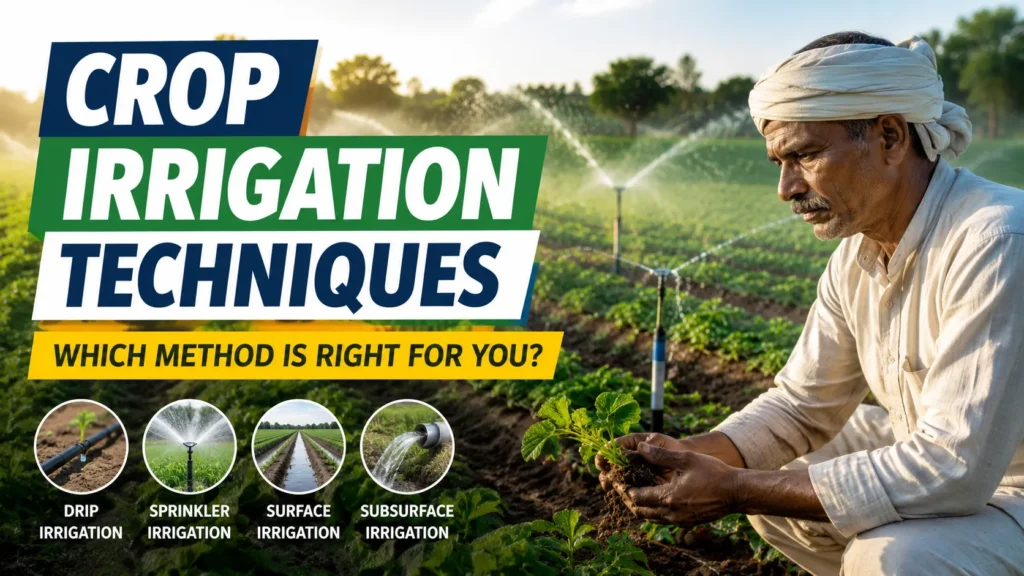
There is no single irrigation system that is best for every farm.
| Irrigation Method | Suitable For | Main Advantage | Main Concern |
|---|---|---|---|
| Surface | Field crops | Simple operation | Uneven distribution |
| Drip | Vegetables, fruits, flowers | Targeted watering | Requires filtration and maintenance |
| Sprinkler | Crops, fodder, nurseries | Broad coverage | Wind and pressure affect performance |
| Centre Pivot | Large farms | Automated coverage | Higher installation investment |
| Hose/Portable | Small farms and gardens | Flexible use | Manual handling |
Before making a purchase, farmers should consider water availability, crop spacing, soil type, field size, electricity or pump capacity, and the expected irrigation schedule.
Why Pipes Matter in an Irrigation System
An irrigation system is only as dependable as its water-carrying network.
Pipes transport water from the source to the field and distribute it through different sections. If pipes are poorly selected, leakage, pressure loss, cracking, blockages, and frequent repairs can affect the entire irrigation operation.
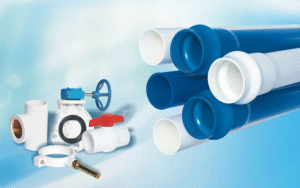
HDPE pipes are widely considered for agricultural water transportation because of their flexibility, durability, and suitability for different installation conditions. PVC pipes are also commonly used where their characteristics match the application and system design.
Farmers, contractors, and project managers often compare options from an HDPE Pipe Manufacturer in Indore, PVC Pipe Manufacturer in Indore, or Irrigation Pipe Manufacturer in Indore before finalizing their system.
The important point is not simply choosing a material. Pipe diameter, pressure rating, wall thickness, jointing method, installation conditions, and water flow requirements should all be evaluated.
How to Plan Crop Irrigation Techniques Step by Step
Step 1: Understand the Crop
Start with the crop rather than the equipment.
Different crops have different water requirements. Root depth, crop spacing, growth stage, and sensitivity to excess moisture should influence the irrigation plan.
Step 2: Check Your Water Source
Identify whether the water comes from a borewell, open well, canal, reservoir, pond, or another source.
Measure the available flow and consider whether the source can meet the irrigation requirement during peak demand.
Step 3: Study the Soil
Sandy soil generally drains water faster, while clay-heavy soil can retain moisture for longer periods.
A basic soil assessment can help determine irrigation frequency and duration.
Step 4: Measure the Field
Field dimensions, slope, elevation differences, crop rows, and access paths should be mapped before designing the pipeline.
This is especially important for sprinkler and pressurized irrigation systems.
Step 5: Select the Pipe Network
Choose the mainline, sub-main, laterals, hoses, valves, and fittings according to the required flow and pressure.
For large agricultural projects, working with a reliable Pipe Manufacturer in Indore or HDPE Pipe Supplier in Indore can help contractors evaluate suitable specifications.
Step 6: Calculate Flow and Pressure
A sprinkler system cannot perform correctly if the pressure is too low. Excessive pressure can also damage components or increase operating costs.
Pump capacity, pipe diameter, pipe length, elevation, and outlet requirements should be considered together.
Step 7: Install and Test the System
Do not wait until the crop is under water stress to test the network.
Run the system before the main irrigation season. Check joints, valves, sprinkler coverage, leakage points, pressure, and flow.
Step 8: Monitor and Adjust
Irrigation is not a one-time installation.
Observe soil moisture, plant growth, weather conditions, and water usage. Adjust irrigation frequency when crop requirements change.
Real-Life Example: A More Controlled Approach to Irrigation
Consider a vegetable farmer cultivating several acres of land.
Earlier, the farmer depended on uncontrolled surface watering. Water reached the beginning of the field quickly, while the far end required more time. Some areas became too wet, creating unnecessary water loss and affecting crop uniformity.
The farmer later shifted to a planned sprinkler network with properly sized irrigation pipes and controlled outlets. Instead of increasing the amount of water, the farmer focused on improving distribution.
The result was better control over irrigation timing and more consistent coverage.
This example shows an important lesson: better irrigation does not always mean using more water. It often means delivering available water more intelligently.
A Practical Case Study for Irrigation Contractors
Suppose an irrigation contractor is developing a 50-acre agricultural project.
The contractor has to connect the water source with multiple crop zones. A basic approach may involve one large pipeline and several outlets. But differences in elevation and distance can create pressure problems.
A better plan divides the land into manageable irrigation zones. The contractor can use a properly sized mainline, sub-mains, valves, and sprinkler lines.
The project should then be tested zone by zone.
For such projects, sourcing from an experienced HDPE pipe manufacturer in Indore or PVC pipe manufacturer in Indore can simplify procurement and specification matching.
The same approach is useful for infrastructure projects where a Plastic pipe manufacturer in Indore or Plastic pipe dealer in Indore is required to supply agricultural or water-management materials.
How to Choose the Right Irrigation Pipe
When comparing irrigation pipes, do not focus only on the purchase price.
Check the pipe’s intended application, pressure rating, diameter, material quality, flexibility, jointing system, durability, and installation requirements.
A good supplier should be able to explain where a particular product is appropriate.
Farmers looking for an HDPE pipe dealer near me may compare local availability and technical support. Contractors searching for a High density pipe dealer in Indore should also check whether the supplied pipe matches the project’s pressure and flow requirements.
Similarly, a PVC Pipe Supplier in Indore can be considered when PVC is suitable for the planned network.
Irrigation Accessories Should Not Be Ignored
Pipes are only one part of the system.
Filters help reduce unwanted particles entering the network. Valves help control different irrigation zones. Connectors and fittings create reliable joints. Pressure regulators can help maintain suitable operating conditions.
For sprinkler systems, nozzle selection and spacing are equally important.
A farmer searching for Sprinkler pipe dealers near me should therefore look beyond the pipe alone and consider the complete irrigation setup.
For smaller applications, people may also search for a Garden pipe dealer near me, but garden hoses and agricultural irrigation pipes should not automatically be treated as interchangeable products.
Common Irrigation Mistakes and Practical Solutions
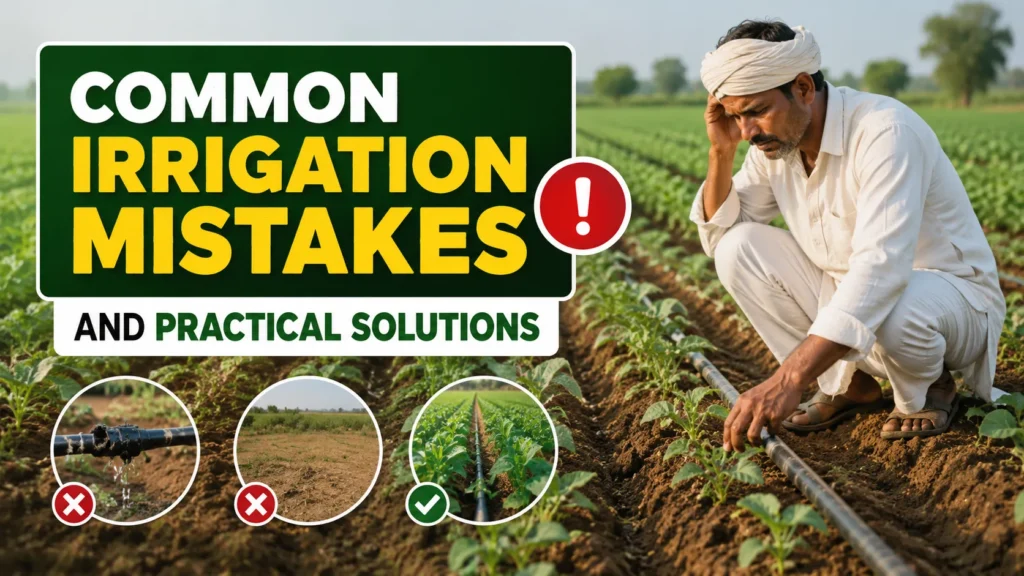
One common mistake is selecting a pipe based only on price. A cheaper product may not be suitable for the operating pressure or installation conditions. The better approach is to compare specifications and total operating value.
Another mistake is using the same irrigation schedule throughout the crop cycle. Plants generally do not need identical water quantities at every growth stage. Monitor crop condition and soil moisture before changing the schedule.
Poor maintenance is another problem. Small leaks can become major losses over time. Inspect joints, valves, sprinkler heads, and exposed sections regularly.
Farmers also sometimes ignore filtration. Dirt and suspended particles can block emitters or affect sprinkler performance. Appropriate filtration and routine cleaning can reduce these issues.
Finally, avoid over-irrigation. More water does not automatically mean better growth. Excess water can reduce soil aeration, encourage disease, and waste energy.
Industry Trends in Modern Irrigation
The future of irrigation is moving toward precision, automation, and better data.
Farmers are increasingly interested in soil-moisture monitoring, automated valves, weather-based scheduling, remote pump control, and sensor-supported irrigation.
Smart farming is also receiving greater attention because agriculture faces water scarcity, climate variability, rising costs, and pressure to produce more efficiently. FAO’s 2026 smart farming work highlights the growing role of data and technology in sustainable agrifood systems.
For irrigation contractors and government departments, this means future projects are likely to focus more strongly on measurable water efficiency, reliable infrastructure, automation, and long-term maintenance.
Irrigation Checklist Before You Start
- Identify the crop and its water requirements.
- Check the water source and available flow.
- Study soil type and field slope.
- Measure the total irrigation area.
- Select the appropriate irrigation method.
- Calculate required pipe size and pressure.
- Choose suitable pipes, fittings, valves, and filters.
- Test the complete system before regular operation.
- Inspect leakage and pressure regularly.
- Adjust irrigation according to weather and crop growth.
Questions Farmers and Contractors Should Ask
Before purchasing an irrigation system, ask yourself: How much water is actually available? How large is the field? What pressure can the pump provide? Does the crop need targeted watering or broad coverage? What type of soil is present? Will the system be expanded later?
If you are working on a larger agricultural or infrastructure project, also ask whether the supplier can provide consistent product specifications and technical guidance.
For buyers searching for the Best Pipe Manufacturer in Indore, these questions can help separate a suitable long-term supplier from a seller focused only on the initial transaction.
A farmer looking for a Sprinkler system dealer in Indore should also ask about sprinkler coverage, pipe compatibility, pressure requirements, installation, and maintenance.
Those searching for a Best column pipe dealer in Indore should similarly compare product specifications and application suitability instead of choosing only by price.
Frequently Asked Questions About Crop Irrigation Techniques
Which irrigation technique is best for crops?
It depends on the crop, soil, water availability, field size, and budget. Drip works well for targeted root-zone watering, while sprinklers can provide wider coverage for many crops.
Are HDPE pipes suitable for agricultural irrigation?
HDPE pipes can be suitable for agricultural water transportation when the pipe specification matches the project’s pressure, flow, installation, and operating requirements.
Is sprinkler irrigation suitable for all crops?
No. Sprinkler irrigation can work well for many crops, but wind, crop height, soil type, water quality, pressure, and sprinkler spacing should be evaluated before installation.
How often should irrigation pipes be inspected?
A visual inspection should be carried out regularly, particularly before and during the irrigation season. Check joints, valves, exposed sections, sprinkler heads, and leakage points.
How can farmers reduce irrigation water loss?
Better field planning, suitable irrigation methods, proper pipe sizing, leak prevention, controlled irrigation schedules, soil-moisture monitoring, and regular system maintenance can all help reduce avoidable water loss.
Should farmers choose irrigation pipes based only on price?
No. Material quality, pressure rating, diameter, durability, installation requirements, supplier support, and long-term operating costs should also be considered.
Final Thoughts: Better Water Management Builds Better Farms
Successful farming is not simply about putting more water onto a field. It is about understanding where the water is needed, when it is needed, and how efficiently it can be delivered.
The right Crop Irrigation Techniques can help farmers manage water more carefully while supporting healthier and more consistent crop growth. For contractors and infrastructure teams, proper irrigation planning can also improve system reliability and reduce avoidable maintenance problems.
Whether you are a farmer planning a new irrigation network, a contractor handling a large agricultural project, a dealer sourcing irrigation products, or a government department developing water infrastructure, begin with the fundamentals: crop needs, water availability, soil, field design, pipe specifications, pressure, and maintenance.
If you are planning an agricultural irrigation project, explore suitable pipe solutions and discuss your application requirements with a reliable supplier before finalizing your system. Choosing the right irrigation infrastructure today can make water management easier for many growing seasons ahead.
Plan carefully. Choose suitable materials. Control water flow. Maintain the system. Grow smarter.
Ready to Plan Your Irrigation System?
Whether you need agricultural pipelines, sprinkler solutions, water transportation pipes, or project-specific irrigation support, start by understanding your field requirements and selecting products that match the application.
For farmers and project teams searching for an Irrigation Pipe Manufacturer in Indore, HDPE Pipe Supplier in Indore, PVC Pipe Supplier in Indore, or Pipe Supplier Near Me, always compare technical specifications, product quality, availability, and service before making the final decision.
The right irrigation system is an investment in both water and crop productivity.