Start With the Right Commercial Water Systems
Choosing the right Commercial Water Systems is an important decision for farmers, builders, contractors, dealers, and infrastructure departments. A water pipeline may look like a simple combination of pipes and fittings, but the performance of the entire system depends on many factors. Water source, flow rate, pressure, pipe material, diameter, installation conditions, and future requirements all need to be considered before purchasing.
Think about a large agricultural project where water needs to travel from a pump to fields several hundred metres away. If the pipeline is too small, water flow can become weak. the pressure is not considered properly, sprinklers may not work evenly. If the pipe is unsuitable for the site conditions, leakage and maintenance problems may appear sooner than expected.
The same situation can happen in commercial buildings, construction projects, industrial sites, and government infrastructure.
This is why choosing a water pipeline should not begin with the question, “Which pipe is cheapest?”
Instead, start with a better question:
“Which water system will give this project reliable performance for years?”
That simple change in thinking can help buyers make better decisions and avoid unnecessary replacement and maintenance costs.
What Are Commercial Water Systems?
Commercial Water Systems are planned water distribution networks designed to move and manage water for commercial, agricultural, construction, institutional, industrial, and infrastructure applications.
Depending on the project, a system can include main pipelines, sub-main lines, suction pipes, delivery pipes, sprinkler lines, valves, fittings, pumps, storage connections, and other components.
For example, a farmer may need a complete irrigation network that moves water from a borewell or storage tank to different parts of a field. A builder may require water supply pipelines for a residential or commercial development. A civil contractor may need a dependable network for a larger infrastructure project.
Every application has different requirements.
That is why selecting pipes only by size or price can create problems later. The entire network should be considered before the first pipe is purchased.
Why the Right Commercial Water Systems Matter
A properly planned water system can improve reliability, reduce unnecessary maintenance, and help deliver water where it is actually needed.
Poor planning can create the opposite result.
Imagine a contractor installing a long irrigation pipeline using a pipe that does not match the required pressure. Initially, the system appears to work. After regular operation, however, joints start developing problems and the water flow becomes inconsistent.
The contractor now has to inspect the system, locate the problem, purchase replacement materials, and spend additional labour costs.
A better approach is to consider these factors before installation.
The U.S. Environmental Protection Agency also highlights water-use monitoring, leak detection, metering, and efficient water management as important practices for commercial facilities.
For Indian farms and infrastructure projects, the basic lesson is equally useful: water efficiency starts with proper planning and suitable equipment.
How to Select Commercial Water Systems Step by Step
1. Understand the Water Requirement
Before selecting a pipe, understand how much water the project actually needs.
Start by identifying the water source and the final destination. Then consider the distance, flow requirement, elevation, number of outlets, operating hours, and expected pressure.
For agricultural applications, the requirement may depend on crop type, field size, irrigation method, and frequency of watering.
For a commercial building, the calculation may include bathrooms, kitchens, landscaping, cleaning, storage, and general water consumption.
This information gives you a starting point for selecting suitable Commercial Water Systems.
2. Select the Correct Pipe Material
Pipe material has a direct effect on installation, durability, flexibility, and overall system performance.
HDPE and PVC are two common options considered for water supply and irrigation applications. Each has different characteristics, so the decision should be based on the project rather than simply choosing one material for every situation.
If you are searching for an HDPE Pipe Manufacturer in Indore, check the product specifications, available sizes, pressure ratings, application suitability, and supply capability.
Similarly, anyone looking for a PVC Pipe Manufacturer in Indore should compare products according to the actual water application.
HDPE can be a practical choice for applications where flexibility and impact resistance are important. PVC can be useful where rigid pipeline installation is preferred.
The right material is the one that matches the conditions of your project.
3. Check the Operating Pressure
Pressure is one of the most important factors in pipeline selection.
A pipe must be suitable for the pressure generated by the pumping and distribution system. Pressure can also change during pump operation, changes in elevation, or sudden flow variations.
For example, a sprinkler irrigation network requires adequate pressure at different outlets. If the pressure is not planned correctly, sprinklers located farther from the pump may receive less water.
Before selecting a product, discuss pressure requirements with your supplier or system designer.
An experienced Irrigation Pipe Manufacturer in Indore can help buyers understand the available pipe options and select products according to the intended application.
4. Choose the Correct Pipe Diameter
Pipe diameter affects water flow, pressure loss, installation cost, and pump performance.
A pipe that is too small can restrict flow and create unnecessary pressure losses. On the other hand, using a much larger pipe than required can increase material and installation costs.
The correct diameter depends on several factors, including:
- Required flow rate
- Pipeline length
- Pump capacity
- Number of outlets
- Elevation difference
- Operating pressure
- Type of water application
Instead of selecting a diameter based on guesswork, calculate the requirements before ordering materials.
Commercial Water Systems: HDPE vs PVC
One of the most common questions from buyers is whether HDPE or PVC is the better option.
The answer depends on the application.
| Factor | HDPE | PVC |
|---|---|---|
| Flexibility | High | Comparatively lower |
| Weight | Lightweight | Lightweight |
| Impact resistance | Generally high | Good depending on product |
| Long pipeline applications | Suitable for many projects | Suitable for many projects |
| Agriculture | Widely used | Widely used |
| Irrigation | Suitable for many systems | Suitable for many systems |
| Final selection | Based on project design | Based on project design |
There is no universal winner.
A farmer, contractor, or project manager should consider the installation environment, pressure, pipe length, required flexibility, budget, fittings, and maintenance requirements.
If you are comparing an HDPE Pipe Supplier in Indore with a PVC Pipe Supplier in Indore, do not compare only the quoted price. Compare product specifications, quality consistency, delivery capacity, technical assistance, and long-term suitability.
Match Commercial Water Systems to the Application
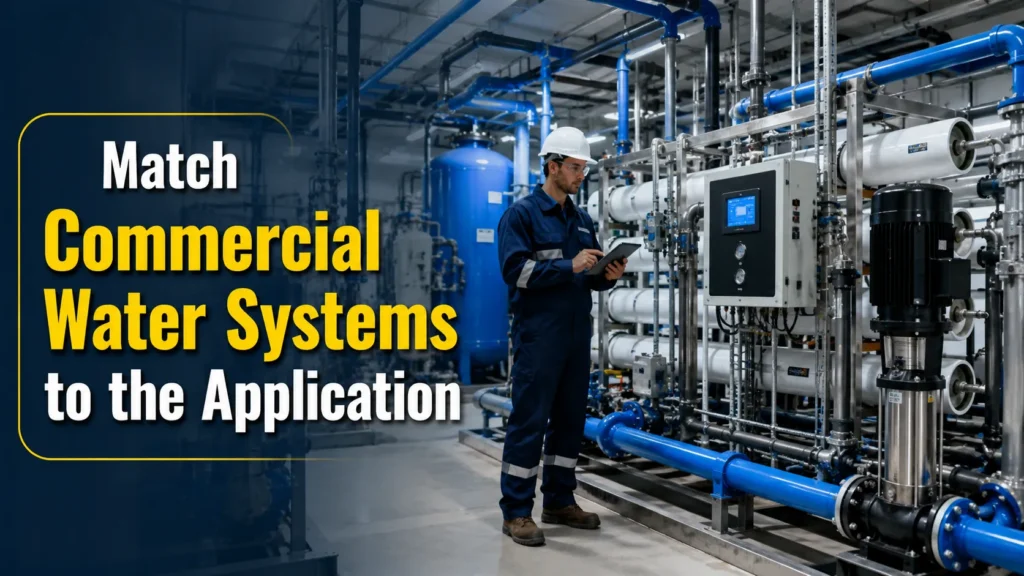
Different users have different water requirements.
A farmer may need an irrigation pipeline for several acres of agricultural land. A civil contractor may need water lines for a construction project. A builder may need water distribution for a commercial development.
This means the same pipe solution may not work equally well everywhere.
For agricultural applications, the system may include suction lines, main pipelines, sub-main pipelines, sprinkler lines, and connectors.
For example, someone searching for a Suction pipe delear in indore should consider the pipe’s compatibility with the pump, water source, required diameter, and operating conditions.
The suction arrangement should work smoothly with the rest of the network instead of being treated as a separate purchase.
Commercial Water Systems for Irrigation Projects
Irrigation requires careful planning because water needs to reach different areas of a field with suitable pressure and flow.
A good irrigation system begins at the water source and continues through the pump, mainline, sub-main lines, and finally the irrigation outlets.
Farmers looking for Sprinkler pipe dealers near me should first understand their field layout and irrigation requirements. This makes it easier to select suitable pipes and accessories.
For larger agricultural projects, working with a reliable Sprinkler irrigation pipe dealer in indore can help with product selection, availability, and project requirements.
The objective is not simply to move water through the pipeline. It is to distribute water efficiently across the required area.
Choosing Commercial Water Systems for Sprinkler Irrigation
Sprinkler irrigation is useful where controlled water distribution is required across agricultural fields, gardens, landscaping areas, and other applications.
However, the pipe network needs to support the required pressure and flow.
A Sprinkler Pipe Manufacturer in Indore can be considered when farmers or contractors require products for larger irrigation projects.
Before buying, check the required pipe diameter, operating pressure, length, fittings, connectors, and compatibility with the sprinkler system.
A well-designed network can help avoid uneven watering and unnecessary water loss.
Don’t Forget Suction, Hose and Garden Applications
Not every water requirement involves a large underground pipeline.
Commercial farms, nurseries, landscaping companies, institutions, and construction sites may also require flexible water hoses and related products.
For example, a buyer searching for a Pipe hose shop near me may need a flexible hose for cleaning, gardening, water transfer, or site operations.
Similarly, a landscaping contractor searching for a Garden pipe dealer near me may need flexible garden hoses for commercial properties, nurseries, parks, or residential developments.
The same basic rule applies here: choose according to pressure, length, flexibility, frequency of use, and application.
How to Find the Right Pipe Manufacturer and Supplier
Supplier selection can have a major effect on the success of a project.
A reliable supplier should be able to provide consistent products, clear specifications, timely delivery, and useful technical guidance.
If you are searching for a Pipe Manufacturer in Indore, look beyond the company name. Check the product range, manufacturing capability, quality practices, available sizes, project experience, and supply capacity.
For urgent requirements, searches such as Pipe Supplier Near Me can help identify nearby suppliers.
However, being close to the project site does not automatically mean a supplier is the right choice.
Quality and reliability should remain the priority.
Commercial Water Systems and Total Project Cost
The initial pipe price is only one part of the total project cost.
Suppose one supplier offers a lower quotation while another offers a slightly higher price but provides better product consistency and technical support.
The cheaper option may appear attractive at first. However, if it results in more repairs, replacements, leakage, or installation difficulties, the actual project cost can become higher.
A better buying decision considers:
Purchase cost + installation cost + maintenance + replacement risk + operating efficiency + expected service life
This is particularly important for large agricultural, commercial, and infrastructure projects.
A buyer comparing a Plastic pipe manufacturer in indore should therefore evaluate both price and long-term value.
What Farmers Should Check Before Buying
Farmers should start with the irrigation requirement rather than the pipe itself.
Consider the field size, water source, pump capacity, distance, elevation, irrigation method, required pressure, and future expansion.
For example, a farmer planning a sprinkler system should know how many sprinklers will operate at one time and how much water each section requires.
A buyer comparing a High density pipe dealer in indore should also ask about product specifications and whether the pipe is suitable for the intended agricultural application.
Good planning can prevent unnecessary material purchases and reduce future modifications.
What Builders and Civil Contractors Should Consider
Builders and civil contractors often work under strict deadlines.
A delay in pipe delivery can affect labour, equipment, and project schedules.
For this reason, contractors should evaluate both product quality and supplier capacity.
When searching for the Best Pipe Manufacturer in Indore, consider whether the supplier can handle the required quantity, provide the required sizes, maintain consistency, and deliver according to the project schedule.
It is also important to confirm pipe and fitting compatibility before ordering large quantities.
Commercial Water Systems for Government and Infrastructure Projects
Government and infrastructure projects generally involve larger quantities and more detailed specifications.
The purchasing process may require technical documentation, product compliance, delivery planning, and consistent supply.
Infrastructure departments should therefore evaluate suppliers based on their ability to meet project specifications rather than selecting products only because of their price.
A capable Plastic pipe dealer in indore can be useful for sourcing different pipe requirements, but every product should still be checked against the project’s technical needs.
For large projects, planning the complete pipeline network before procurement can reduce the risk of delays and material mismatches.
Common Mistakes to Avoid
Buying Only on Price
A low initial price does not always mean lower overall cost. Product quality and long-term performance should also be considered.
Ignoring Pressure Requirements
Pressure should be checked before selecting the pipe. This is especially important for pumping and sprinkler applications.
Choosing the Wrong Diameter
Incorrect pipe sizing can affect flow and increase energy or operating costs.
Mixing Incompatible Components
Pipes, fittings, connectors, valves, and other components should work together as part of one system.
Ordering Without a Layout
Large projects should have a basic pipeline plan before materials are purchased.
Ignoring Future Expansion
If the project may expand later, consider future water requirements during the initial planning stage.
Choosing an Unreliable Supplier
Inconsistent supply can delay installation and increase project costs.
A Practical Commercial Water Systems Checklist
Before placing your final order, review the complete project.
- Identify the water source.
- Calculate the required flow.
- Check operating pressure.
- Select the appropriate pipe material.
- Confirm pipe diameter.
- Measure the total pipeline length.
- Consider elevation differences.
- Select compatible fittings and valves.
- Check installation conditions.
- Confirm product specifications.
- Verify supplier availability.
- Discuss delivery requirements.
- Consider maintenance and future expansion.
This simple process can help farmers, contractors, builders, dealers, and infrastructure teams make more informed decisions.
Industry Trends in Commercial Water Systems
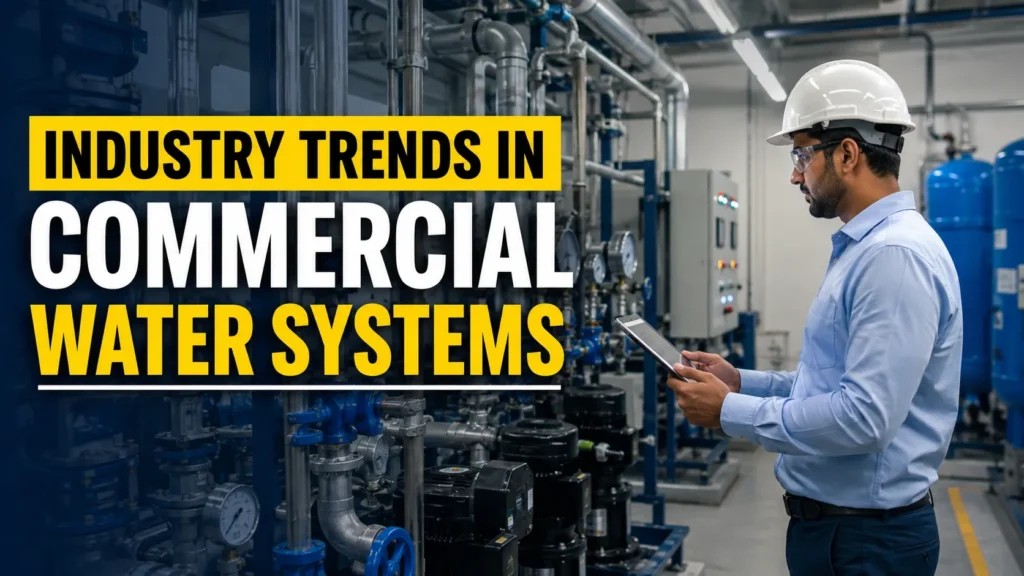
Water management is becoming increasingly focused on efficiency, monitoring, and reducing avoidable losses.
Commercial facilities are paying greater attention to water meters, leak detection, monitoring, and efficient equipment. The EPA’s WaterSense resources also encourage commercial facilities to identify leaks, monitor consumption, and improve water-management practices.
Agricultural irrigation is also moving toward better distribution and more controlled water application.
The future is not simply about installing more pipelines. It is about designing systems that deliver the required water with less waste and better control.
This makes proper pipe selection more important for farmers, contractors, builders, and infrastructure departments.
Real-Life Example: When Better Planning Saves a Project
Consider a hypothetical agricultural project covering a large farming area.
The initial plan is based mainly on purchasing inexpensive pipes. After installation, the farmer notices that the sprinklers close to the pump perform well, while sprinklers farther away receive less pressure.
The contractor reviews the system and finds that the pipe diameter, pipeline length, pressure requirements, and sprinkler arrangement were not considered together.
Instead of immediately replacing the complete system, the contractor redesigns the distribution layout and selects more suitable pipe sizes and components.
The experience highlights an important lesson:
A water system should be designed as one connected network, not as a collection of individual products.
The same principle applies to commercial buildings, construction sites, farms, and infrastructure projects.
Expert Tips for Buying Commercial Water Systems
Before finalizing your purchase, ask these questions:
What is the actual water requirement?
What pressure will the pipe experience?
Which material suits the installation conditions?
What diameter will provide the required flow?
Will the supplier be able to provide additional material later?
Are the fittings and accessories compatible?
What happens if the project expands in the future?
These questions may take only a few minutes to answer, but they can prevent expensive mistakes later.
A professional supplier can also help you understand the available options based on your application instead of simply recommending the most expensive product.
Why Choose the Right Pipe Supplier?
The right supplier does more than sell pipes.
A good supplier understands that a farmer may have different requirements from a builder. A civil contractor may need bulk supply, while a dealer may need consistent stock across different sizes.
For this reason, customers should look for suppliers that understand agriculture, irrigation, construction, and infrastructure applications.
If you are looking for a Sprinkler system dealer in indore, Best column pipe dealer in indore, or other pipe-related solutions, compare suppliers based on product suitability, quality, availability, and service.
The goal should be to build a long-term supply relationship rather than simply complete one purchase.
Frequently Asked Questions
What are Commercial Water Systems used for?
Commercial Water Systems are used for water distribution in commercial properties, agriculture, irrigation, construction, institutions, industries, and infrastructure projects.
How do I choose between HDPE and PVC?
The choice depends on the application’s pressure, flexibility requirements, installation conditions, expected service, and project design. Neither material is automatically suitable for every project.
Are HDPE pipes suitable for agriculture?
HDPE pipes can be suitable for many agricultural and irrigation applications. The correct specification should be selected according to flow, pressure, diameter, installation conditions, and system design.
How do I select the correct pipe diameter?
Pipe diameter should be selected based on flow rate, pressure, pipeline length, pump capacity, elevation, and the number of outlets.
How can I find a reliable pipe supplier in Indore?
Compare suppliers based on product quality, specifications, manufacturing or stocking capacity, delivery reliability, technical support, and experience with your type of project.
Should I buy pipes before designing the water network?
It is better to understand the basic water-system design first. Buying pipes before calculating flow, pressure, diameter, and application can lead to unnecessary costs.
Final Thoughts: Build the Water System Around Your Project
The right water pipeline is not simply the cheapest pipe available. It is the solution that fits the project’s water requirement, pressure, flow, environment, installation method, and future needs.
Farmers need dependable irrigation. Contractors need products that can perform under demanding site conditions. Builders need predictable supply and installation. Dealers need consistent products. Government departments need reliable solutions for larger infrastructure requirements.
That is why selecting Commercial Water Systems should always begin with planning.
Understand the water source. Calculate the flow. Check the pressure. Select the right material and diameter. Choose compatible fittings. Then evaluate suppliers based on quality, availability, technical support, and long-term value.
At Vishal Pipe, customers can explore pipe solutions for agricultural, irrigation, construction, and water-management requirements. Whether you are a farmer, pipe dealer, civil contractor, builder, or infrastructure professional, selecting the right product for the right application can make your project more reliable and easier to manage.
Planning a new irrigation, commercial, construction, or infrastructure water project? Contact Vishal Pipe today to discuss your requirements and find a suitable pipeline solution for your application.