Why the Right Industrial Piping Matters
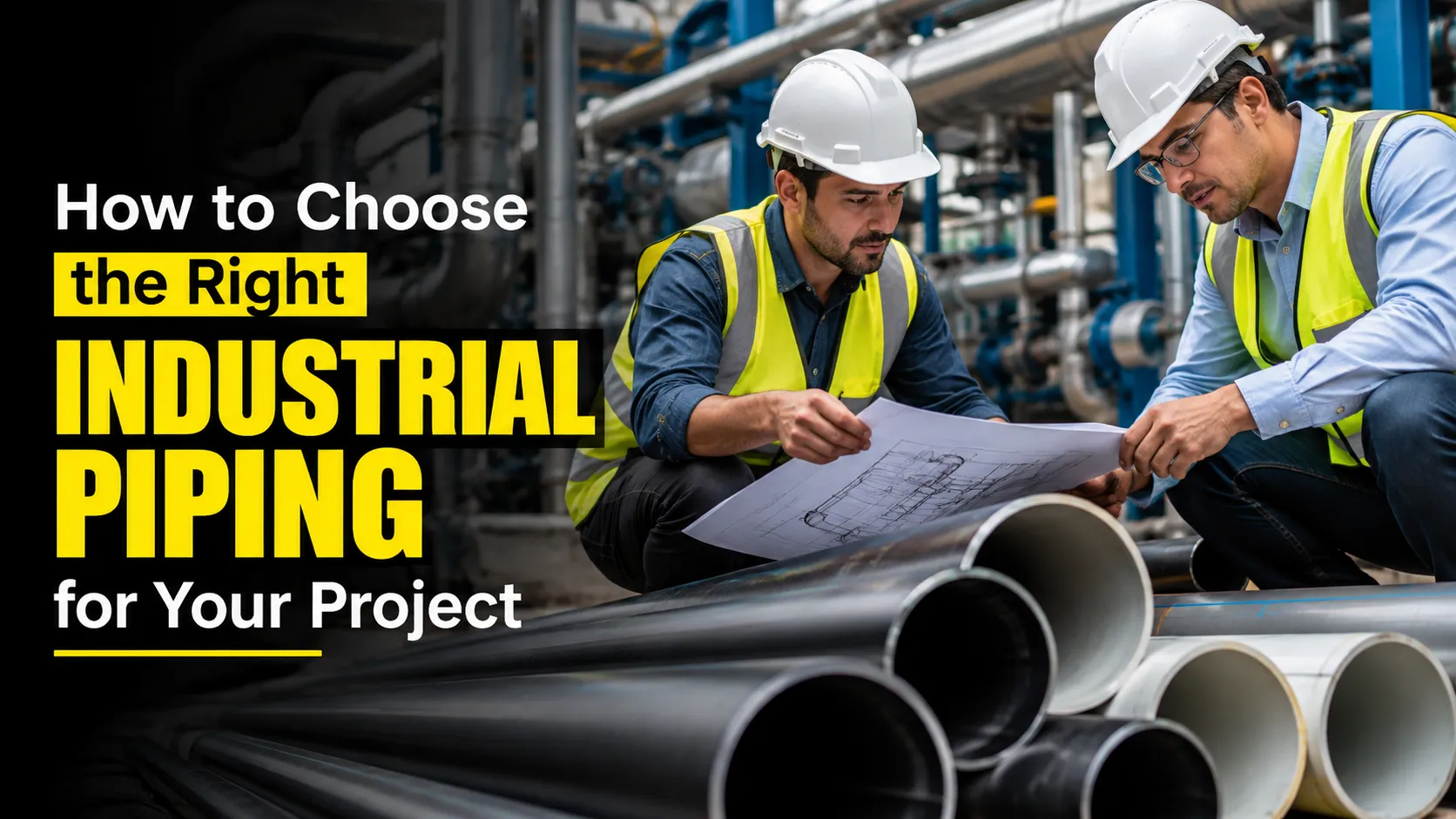
Choosing the right Industrial Piping can have a major impact on the performance, safety, and long-term cost of your project. Whether you are developing an agricultural irrigation system, constructing a commercial building, managing a civil project, or planning large infrastructure work, the piping system needs to match the actual requirements of the application.
Imagine a farmer installing a new irrigation network. The pipes may look strong when purchased, but after a few months, water pressure drops and several joints begin leaking. The farmer now faces repair costs, wasted water, additional labor, and delays. The problem may not be the installation. It could simply be that the wrong pipe was selected for the working conditions.
The same situation can happen on construction sites and infrastructure projects. A pipe that works well in one application may not be suitable for another.
This is why farmers, pipe dealers, civil and irrigation contractors, builders, construction companies, and government departments should consider pressure, material, diameter, flow, installation conditions, durability, and total cost before purchasing.
If you are searching for an HDPE Pipe Manufacturer in Indore, PVC Pipe Manufacturer in Indore, or a dependable supplier for a large project, selecting the right product should always come before comparing prices.
Industrial Piping: Start With Your Project Requirements
Before choosing a pipe, understand exactly what the piping system needs to do.
Ask yourself a few basic questions. What will flow through the pipe? What pressure will it handle? How far does the pipeline need to travel? Will it be installed underground or above ground? Will it face sunlight, soil movement, heavy loads, or changing temperatures?
For agricultural projects, the answer may involve irrigation water, pumps, sprinklers, and long field pipelines. A construction project may require water distribution across multiple buildings. A government infrastructure project may require consistent quality, technical documentation, and large-volume supply.
A professional Pipe Manufacturer in Indore can help buyers evaluate these requirements before finalizing the product.
The first step is therefore simple: understand the job before selecting the pipe.
Industrial Piping and Material Selection
Pipe material affects flexibility, strength, installation, maintenance, and service life. HDPE and PVC are widely used for different water supply, agriculture, irrigation, construction, and infrastructure applications.
Industrial Piping With HDPE
HDPE pipes are valued for their flexibility, corrosion resistance, impact resistance, and ability to handle different installation conditions. They can be useful for water transportation, irrigation networks, infrastructure projects, and other applications where durability is important.
For projects requiring flexible and dependable water pipelines, buyers can consult an HDPE Pipe Supplier in Indore to understand the available sizes and specifications.
Farmers may also compare products from an HDPE pipe manufacturer in indore when developing irrigation systems or extending existing pipelines.
The right HDPE product still depends on pressure, diameter, application, installation method, and project requirements.
Industrial Piping With PVC
PVC pipes are another popular choice for water distribution, irrigation, drainage, and other applications. Their lightweight construction makes transportation and handling easier in many situations.
A PVC Pipe Supplier in Indore can help buyers compare pipe sizes and specifications according to their application.
Similarly, a PVC pipe manufacturer in indore can be considered when the project requires a dependable source for PVC piping in different sizes and quantities.
The important point is not to assume that one material is automatically better than another. The correct material depends on where and how the pipe will be used.
Industrial Piping and Pressure Requirements
Pressure is one of the most important factors in pipe selection.
A pipeline may carry water continuously under pressure from a pump. Pressure can also change because of elevation, pipe length, valves, fittings, and the number of outlets operating at the same time.
For example, consider a sprinkler irrigation project. Water is pumped from a source and distributed through multiple lines. If the selected pipe is not appropriate for the system pressure, leakage or premature failure may become a problem.
Before purchasing Industrial Piping, determine the expected operating pressure and maximum pressure of the system.
You should also consider:
- Pump capacity
- Pipeline length
- Elevation differences
- Number of outlets
- Required flow
- Fittings and valves
- Operating conditions
A knowledgeable Irrigation Pipe Manufacturer in Indore can help you understand which specifications are suitable for your irrigation requirements.
Industrial Piping and Correct Pipe Size
Pipe diameter directly affects water flow and pressure loss.
Choosing a smaller pipe simply because it costs less can create problems later. Water may not reach distant sections efficiently, and the pump may need to work harder.
However, selecting an unnecessarily large pipe can increase the initial project cost without providing a useful benefit.
The correct diameter depends on flow rate, pressure, distance, elevation, pump capacity, and the number of outlets.
For example, a large farm with long irrigation lines will have different requirements from a small garden watering system.
This is why a contractor should not simply tell a supplier, “Give me a pipe of this size.” The supplier should understand why that size is required.
Industrial Piping for Different Applications
Every application has its own requirements.
Farmers generally need reliable water distribution for irrigation. Civil contractors may require pipes for underground water networks. Builders need dependable systems for residential and commercial developments. Government departments may require products that meet project specifications and quality requirements.
An experienced Sprinkler Pipe Manufacturer in Indore can be useful for agricultural projects involving sprinkler irrigation.
If you are planning a complete sprinkler network, you may also need assistance from a Sprinkler irrigation pipe dealer in indore who understands pipes, fittings, sprinklers, and system requirements.
For pump-related applications, buyers may also search for a Suction pipe delear in indore. Here, pipe size, flexibility, connections, and pump compatibility should be considered together.
The piping system should always be treated as a complete solution rather than a collection of individual products.
Industrial Piping for Agriculture and Irrigation
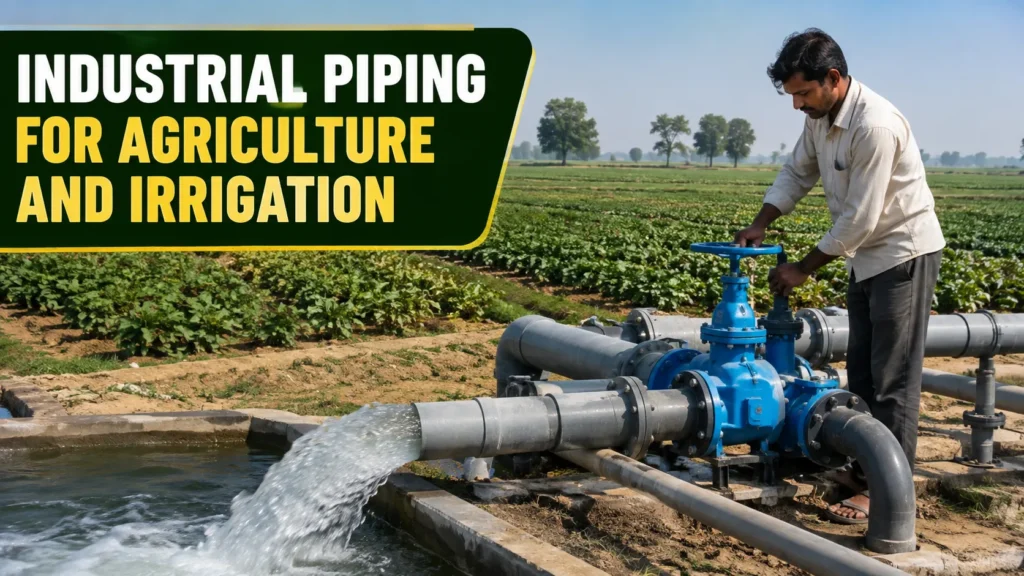
Agriculture is one of the areas where pipe selection can directly affect water management.
A farmer investing in irrigation wants water to reach the required area with minimum leakage and unnecessary pressure loss. The pipeline may also need to withstand regular outdoor use, movement, installation changes, and seasonal conditions.
Suppose a farmer wants to install a sprinkler system across a large field. Instead of purchasing the cheapest available pipe, the farmer checks the pump pressure, field size, pipe distance, required flow, fittings, and sprinkler layout.
This small amount of planning can prevent expensive changes later.
Farmers searching for Sprinkler pipe dealers near me or a Sprinkler system dealer in indore should therefore look for suppliers who understand the complete irrigation requirement.
The same approach applies to dealers and distributors. Customers increasingly expect guidance rather than simply a product price.
Industrial Piping for Construction and Infrastructure
Construction and infrastructure projects often involve larger quantities and longer installation periods.
For underground applications, the pipe may be exposed to soil movement, external loads, moisture, and traffic above the installation area. Once the pipeline is buried, repairing it can be more expensive and time-consuming.
This makes initial product selection particularly important.
Builders and contractors should evaluate the pipe material, pressure class, diameter, installation method, expected service conditions, and availability before placing a bulk order.
Government and infrastructure departments may also have specific technical specifications that need to be followed.
For such projects, working with a reliable Plastic pipe manufacturer in indore can help ensure consistent supply of suitable plastic piping products.
How to Compare Industrial Piping Options
Price is important, but it should never be the only factor.
Imagine two pipes that appear similar. One costs less, while the other has specifications that better match the project’s operating conditions. The cheaper product may initially save money, but if it requires frequent maintenance or replacement, the total project cost can become higher.
A simple comparison can help:
| Factor | What to Check |
|---|---|
| Material | HDPE, PVC or other suitable material |
| Diameter | Match required flow |
| Pressure | Match working conditions |
| Installation | Underground or above ground |
| Quality | Check specifications |
| Availability | Confirm required quantity |
| Maintenance | Consider long-term needs |
| Delivery | Confirm project schedule |
| Total cost | Include installation and maintenance |
The goal should be the best overall value, not simply the lowest purchase price.
Industrial Piping: Step-by-Step Selection Guide
Step 1: Define the Application
Identify whether the system is intended for irrigation, water supply, construction, drainage, infrastructure, or another application.
Step 2: Calculate Flow Requirements
Determine how much water needs to move through the pipeline.
Step 3: Check Pressure
Identify normal and maximum operating pressure.
Step 4: Select the Material
Compare HDPE, PVC, and other suitable options based on the application.
Step 5: Select the Diameter
Choose the size according to flow, distance, pressure, and system design.
Step 6: Check Installation Conditions
Consider soil, traffic, sunlight, temperature, and other environmental factors.
Step 7: Review Product Specifications
Check dimensions, pressure classification, applicable standards, and quality information.
Step 8: Compare Suppliers
Look at quality, availability, technical support, delivery, and consistency.
Step 9: Calculate Total Cost
Consider pipe, fittings, transportation, installation, maintenance, and possible replacement.
Step 10: Confirm Compatibility
Ensure that pipes, fittings, valves, pumps, and other components work together properly.
Industrial Piping: Common Mistakes to Avoid
One of the biggest mistakes is choosing a product based only on price.
Another is ignoring pressure requirements. Even a good-quality pipe can perform poorly if it is unsuitable for the system conditions.
Incorrect sizing is another common problem. A pipe that is too small may restrict flow, while an unnecessarily large pipe may increase project costs.
Buyers should also avoid mixing components without checking compatibility.
Another mistake is purchasing from a supplier without confirming availability. Large construction and infrastructure projects cannot afford long delays because the required pipe size is suddenly unavailable.
If you are looking for a Pipe Supplier Near Me, check whether the supplier can consistently provide the quantity and specifications required for your project.
Choosing the Right Industrial Piping Dealer
The right supplier can make the buying process much easier.
For smaller requirements, buyers may prioritize availability and convenience. Large contractors may need bulk quantities, consistent specifications, technical support, and reliable delivery.
Someone searching for a Garden pipe dealer near me may have a simple watering requirement. A contractor, however, may need thousands of meters of piping with specific technical requirements.
Likewise, buyers searching for a High density pipe dealer in indore should compare quality, specifications, product range, and project suitability rather than price alone.
For borewell-related applications, a buyer looking for the Best column pipe dealer in indore should also check whether the product is suitable for the intended installation and operating conditions.
A good dealer should help you select the right product instead of simply selling whatever is available.
Industrial Piping Industry Trends

The piping industry is moving toward solutions that support durability, efficient water management, easier handling, and lower long-term maintenance.
Agricultural users are showing increasing interest in efficient irrigation systems. Construction companies are looking for products that can simplify installation and reduce future maintenance. Infrastructure projects are placing greater importance on long-term performance and dependable supply.
HDPE and PVC continue to be important materials for a wide range of applications because of their practical advantages.
This creates opportunities for manufacturers and suppliers that can provide consistent quality and application-based guidance.
When searching for the Best Pipe Manufacturer in Indore, buyers should therefore consider more than product price. Manufacturing capability, product consistency, technical knowledge, availability, and customer support all matter.
A Simple Industrial Piping Buying Checklist
Before placing your order, review these points:
Application clearly defined
Material selected according to the application
Correct pipe diameter calculated
Operating pressure confirmed
Installation environment evaluated
Fittings and accessories checked
Product specifications verified
Required quantity calculated
Delivery schedule confirmed
Supplier reliability checked
Future requirements considered
Total project cost compared
This checklist can help farmers, dealers, contractors, builders, and infrastructure teams avoid many common purchasing mistakes.
Real-World Success Approach: Plan Before You Purchase
Consider a civil contractor working on a large water distribution project.
Instead of immediately ordering pipes based on the lowest quotation, the contractor first studies the water flow, pressure, pipeline length, installation conditions, and future requirements.
The contractor then compares suitable products and selects a supplier that can provide consistent quality and timely delivery.
The result is a smoother installation process with fewer unexpected problems.
This approach works for almost every project. Industrial Piping should be selected as part of the overall system design rather than treated as a simple material purchase.
Expert Tips for Better Industrial Piping Selection
Think about the complete lifecycle of the system.
Ask how difficult the pipe will be to install. Consider what happens if a section needs repair. Think about future expansion. Check whether replacement products will be easily available.
For agricultural projects, consider seasonal changes and field requirements. construction projects, consider installation schedules. For government projects, carefully review technical specifications and supply requirements.
If you need guidance, speak with an experienced manufacturer or supplier before finalizing the order.
A few questions at the beginning can prevent expensive mistakes after installation.
Frequently Asked Questions About Industrial Piping
What is the best material for Industrial Piping?
There is no single material that is best for every application. HDPE and PVC can both be suitable depending on pressure, flow, installation conditions, and project requirements.
How do I choose the correct pipe size?
Pipe size should be selected based on flow rate, pressure, distance, elevation, pump capacity, and the number of outlets.
Is HDPE better than PVC?
Both materials have different advantages. HDPE is known for flexibility and impact resistance, while PVC is widely used for many water distribution and irrigation applications.
Why is pressure rating important?
Pressure rating helps determine whether the pipe is suitable for the operating conditions of the system. Choosing an unsuitable rating can increase the risk of leakage or premature failure.
How can I find a reliable pipe supplier in Indore?
Compare manufacturers and dealers based on product quality, specifications, availability, technical guidance, delivery capability, and customer support.
Should I select pipes only according to price?
No. Consider quality, application suitability, service life, installation, maintenance, and total project cost before making the final decision.
Final Thoughts: Choose the Pipe for the Job
The right Industrial Piping solution starts with understanding the project.
Whether you are a farmer developing an irrigation system, a pipe dealer supplying customers, a civil contractor managing a construction project, a builder developing a property, or a government department planning infrastructure, the selection process should focus on application, pressure, material, size, installation, quality, and long-term performance.
A low purchase price may look attractive today, but a properly selected pipe can provide better value throughout the life of the project.
If you are planning your next piping project, discuss your requirements with an experienced manufacturer or supplier before placing your order.
Vishal Pipe provides pipe solutions for agriculture, irrigation, construction, and infrastructure requirements. Get in touch with the team to discuss your application and find a suitable piping solution for your project.
