Pipe Installation Mistakes in Agriculture & How to Avoid
In agricultural water supply and irrigation systems, selecting the right pipe is only half the job. Even good-quality pipes can fail or underperform if they are not installed correctly. Many farmers face leakage, low water pressure, and frequent repairs due to pipe installation mistakes in agriculture.
At companies like Vishal Pipes, years of experience in manufacturing agricultural and water supply pipes have shown that proper installation plays a major role in the long-term performance of any piping system.
Understanding these mistakes and learning how to avoid them can save time, money, and water while ensuring long-term system performance and better irrigation efficiency.
Why Proper Pipe Installation Matters
Agricultural pipelines operate under continuous water pressure, soil load, and changing weather conditions. Improper installation can lead to leakage, pipe damage, uneven irrigation, and increased maintenance costs.
Using high-quality pipes from a reliable pipe manufacturer is important, but correct installation ensures that those products deliver their full performance throughout their service life.
1. Choosing the Wrong Pipe Size
Selecting an incorrect pipe diameter is a common mistake in agricultural pipe installation. Pipes that are too small restrict water flow, while oversized pipes increase cost without real benefit.
- Low water pressure in fields
- Uneven irrigation coverage
- Increased load on pumps
How to avoid: Always calculate water flow requirements and match the pipe size with pump capacity and field layout. Consulting product specifications available on the product pages helps in making the right choice.
2. Improper Jointing and Connections
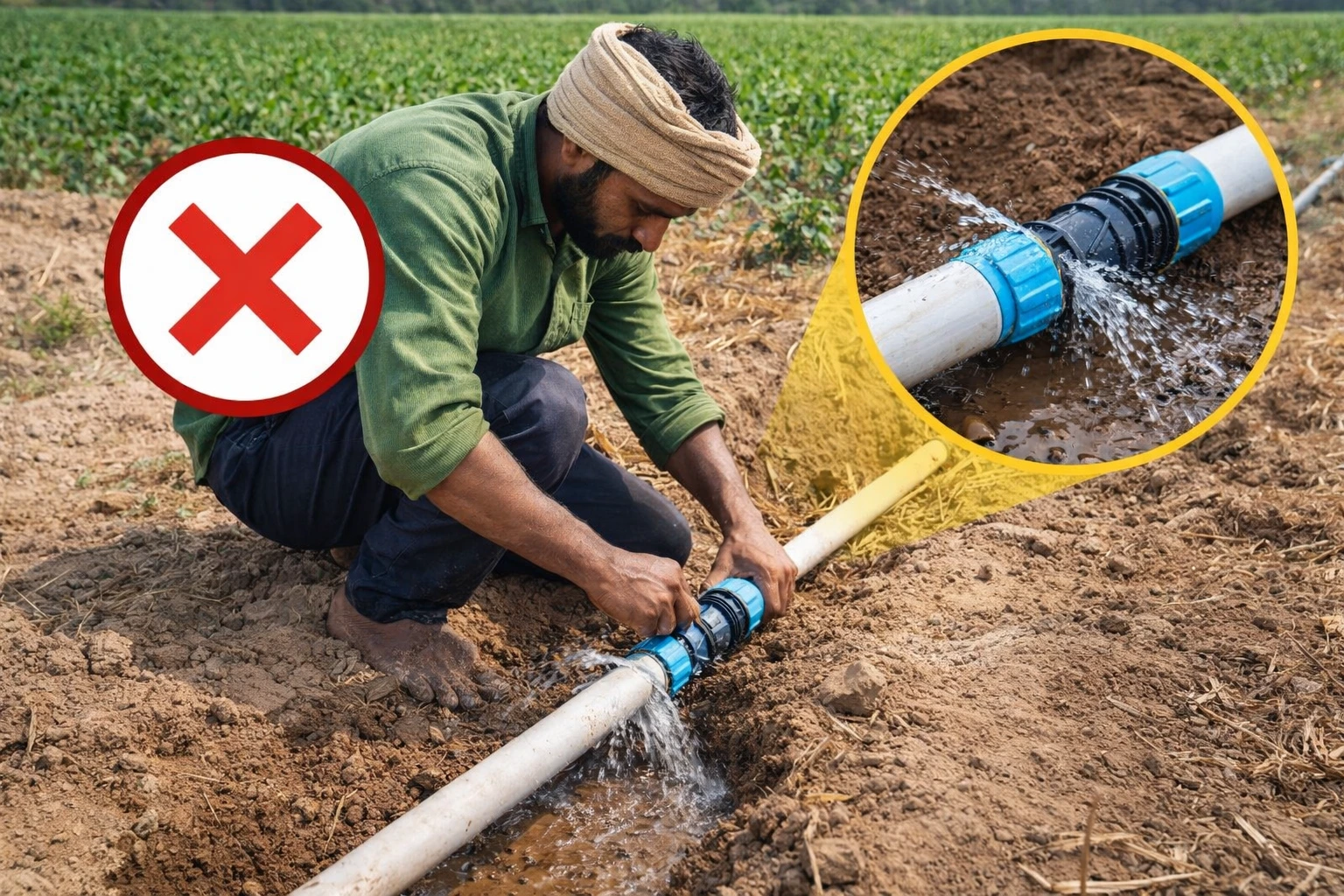
Loose or poorly sealed joints are a major cause of leakage in irrigation systems. Even minor gaps at joints can lead to water loss and pressure drop.
How to avoid: Ensure clean joint surfaces, proper alignment, and use recommended joining methods suggested by the pipe manufacturer.
3. Lack of Proper Bedding and Support
Pipes placed directly on uneven ground, stones, or hard surfaces are more likely to crack or deform over time.
How to avoid: Prepare a level trench and use sand or soft soil bedding to support the pipe properly and reduce stress.
4. Ignoring Pressure Ratings
Using pipes that cannot handle the required water pressure is a serious installation mistake that can cause sudden failures.
How to avoid: Always check pressure ratings mentioned on product specifications and select pipes suitable for main supply and irrigation lines.
5. Poor Alignment in Underground Installation
Misaligned underground pipes create stress points that eventually lead to joint leakage and pipe breakage.
How to avoid: Maintain straight alignment and use proper fittings wherever direction changes are required.
6. No Provision for Pipe Expansion
Temperature changes cause pipes to expand and contract, especially in surface-level installations.
How to avoid: Allow expansion gaps and avoid rigid fixing in long pipelines to prevent cracking and joint damage.
7. Skipping Pressure Testing
Many irrigation systems are put into operation without proper pressure testing, leading to hidden leaks.
How to avoid: Conduct pressure testing before final backfilling to identify and fix leaks early.
Benefits of Correct Pipe Installation
- Consistent and reliable water flow
- Reduced leakage and water loss
- Lower maintenance and repair costs
- Longer pipe lifespan
- Improved irrigation efficiency and crop yield
Conclusion
Avoiding common pipe installation mistakes in agriculture is essential for efficient irrigation and water supply. Proper planning, correct pipe selection, and careful installation ensure long-term reliability and better farm productivity.
To learn more about the company, products, and agricultural pipe solutions, visit our About Us or explore our complete Products section.