How to Choose the Right Column Pipe for Borewell & Agricultural Water Supply
In agriculture and rural water supply systems, borewells play a crucial role in ensuring a consistent and reliable water source. However, the performance of a borewell does not depend only on the pump—it also depends heavily on the quality of the column pipe used to lift water from deep underground.
Choosing the right column pipe is essential for smooth pump operation, long service life, and uninterrupted water flow. In this blog, we explain what a column pipe is, why it matters, and how to choose the right column pipe for borewell and agricultural use under Indian conditions.
What Is a Column Pipe?
A column pipe is a vertical pipe connected between the submersible pump and the delivery outlet in a borewell. Its main function is to carry water from the pump to the surface while supporting the pump’s weight and handling internal water pressure.
- Transports water from borewell to surface
- Supports the weight of the submersible pump
- Withstands pressure and tensile load
Why Choosing the Right Column Pipe Is Important
Many borewell failures occur not because of pump issues, but due to poor-quality column pipes. A wrong selection can result in leakage, pipe breakage, reduced efficiency, and frequent maintenance.
Selecting a strong and reliable column pipe ensures better performance, reduced downtime, and long-term savings for agricultural users.
Key Features of a Good Column Pipe
1. High Load-Bearing Capacity
Column pipes must support the full weight of the pump and water column. Pipes with low tensile strength may fail over time.
2. Leak-Proof Joints
Strong threading and precise joint design help prevent water leakage and pressure loss.
3. Corrosion Resistance
Borewell water may contain minerals and chemicals, so corrosion-resistant materials ensure longer life.
4. Smooth Inner Surface
A smooth internal surface improves water flow and reduces friction losses, improving pump efficiency.
Types of Column Pipes Used in Borewells
PVC Column Pipes
PVC column pipes are widely used in agriculture and domestic borewells due to their lightweight nature and corrosion resistance.
- Lightweight and easy to install
- Rust-free and corrosion-resistant
- Cost-effective solution
- Suitable for small to medium-depth borewells
HDPE Column Pipes
HDPE column pipes are preferred for deeper borewells and high-load applications where strength and flexibility are required.
- High tensile strength
- Excellent pressure resistance
- Long service life
- Suitable for deeper installations
How to Choose the Right Column Pipe
1. Borewell Depth
Deeper borewells require column pipes with higher load-bearing capacity. Always select pipes based on depth.
2. Pump Horsepower (HP)
Higher HP pumps create more stress on column pipes. Match pipe strength with pump capacity.
3. Water Quality
If borewell water contains chemicals or minerals, corrosion-resistant materials such as PVC or HDPE are recommended.
Column Pipes in Agricultural Irrigation
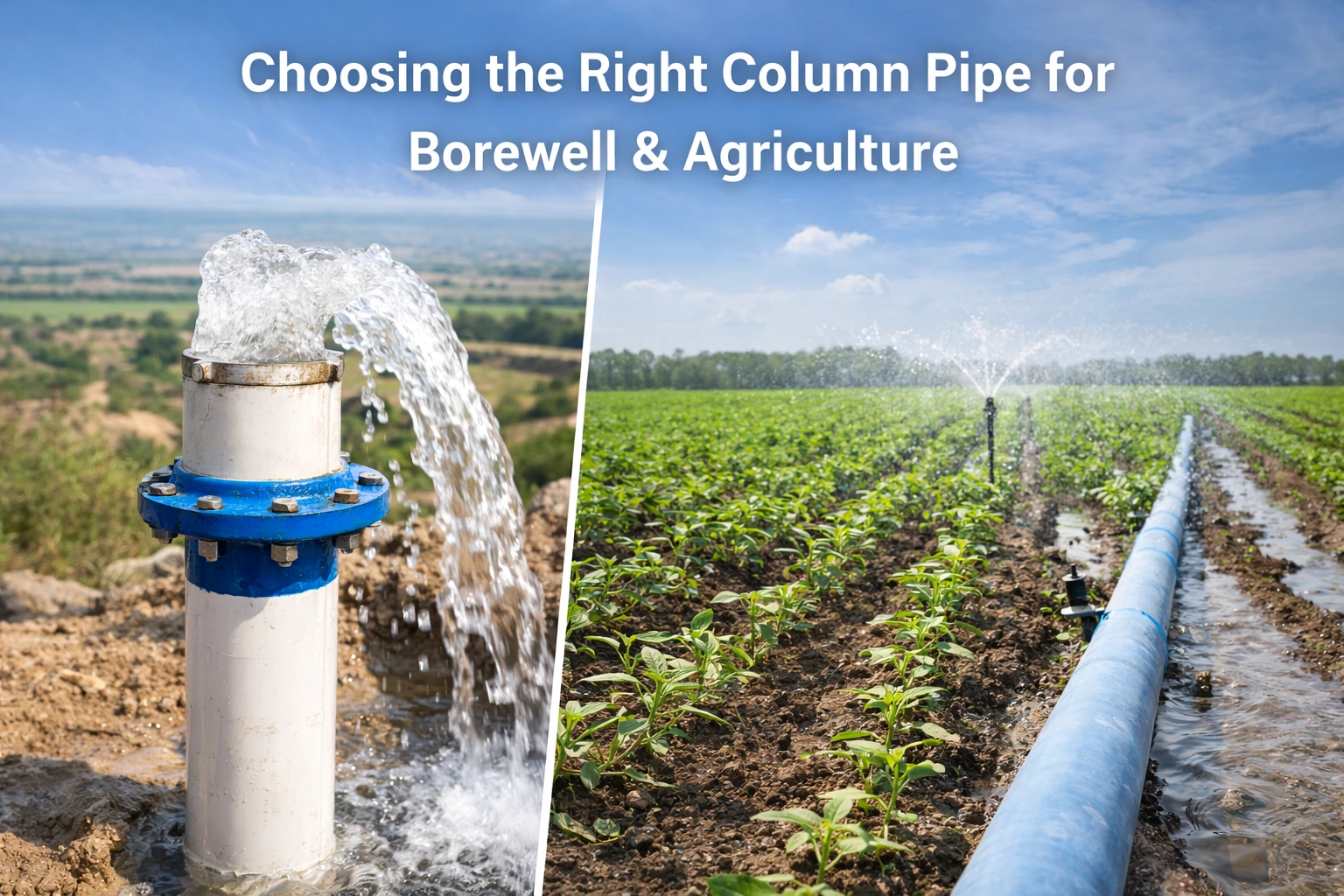
In agriculture, borewell water is commonly used for field irrigation, sprinkler systems, drip irrigation, and livestock water supply. A quality column pipe ensures continuous water flow and reduced maintenance.
Common Mistakes to Avoid
- Choosing pipes based only on low price
- Ignoring borewell depth and pump load
- Using low-quality threaded joints
- Not checking pipe specifications
Conclusion
Choosing the right column pipe is a critical decision for borewell and agricultural water supply systems. By considering borewell depth, pump capacity, and material quality, users can ensure long-term reliability, improved efficiency, and reduced maintenance costs.